KKR vs MI: How Kolkata and Mumbai Redefined IPL Rivalries
“`html
From Mumbai to Kolkata: Two Cities, One Obsession
The Kolkata Knight Riders and the Mumbai Indians don’t just play cricket—they stage a spectacle that has quietly become one of the most watched sporting rivalries in the world. While leagues like the English Premier League or the NBA dominate global conversations, the IPL’s Kolkata vs Mumbai matchup thrives in the shadows, fueled by history, emotion, and a shared language of resilience. These aren’t just teams; they’re cultural institutions in their respective cities, each representing the spirit of urban ambition.
Mumbai, India’s financial capital, has long been the epicenter of Indian cricket. Home to the Board of Control for Cricket in India (BCCI), the Wankhede Stadium, and legends like Sachin Tendulkar and Rohit Sharma, the city breathes cricket. Kolkata, by contrast, is the intellectual heart of the country—a city of poets, protesters, and passionate fans. The Eden Gardens, one of the world’s largest cricket stadiums, has hosted some of the loudest, most electric atmospheres in sports history. When KKR and MI step onto the field, they’re not just playing for points—they’re battling for city pride.
The Business of Rivalry: How Two Teams Built Global Brands
The Mumbai Indians are more than a franchise—they’re a billion-dollar empire. Owned by Reliance Industries, one of India’s largest conglomerates, MI has leveraged star power, strategic signings, and a winning culture to become the most successful team in IPL history, with five titles. Their approach blends Bollywood glamour with high-performance analytics, making them a magnet for global investors and fans alike. The team’s blue jerseys are as recognizable in Dubai as they are in Delhi.
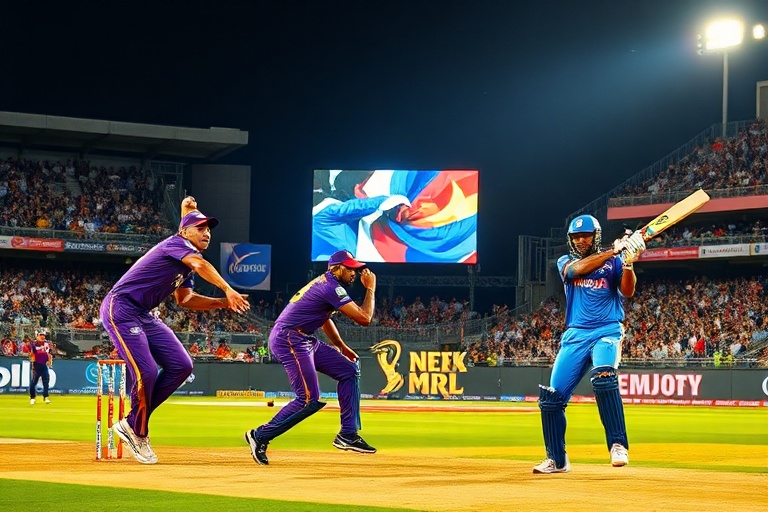
KKR, though financially robust under Shah Rukh Khan’s leadership, has always been the underdog with a heart of gold. The team’s rise under Gautam Gambhir and later Andre Russell transformed them from cellar dwellers to champions in 2012 and 2014. Unlike MI’s corporate sheen, KKR’s identity is rooted in emotion—fan loyalty that borders on cult-like devotion. The team’s purple and gold colors have become synonymous with Kolkata’s unapologetic passion. Their matches at Eden Gardens are less about cricket and more about collective catharsis.
This contrast isn’t just symbolic—it’s a business case study. MI thrives on consistency and star power. KKR survives on unpredictability and fanaticism. Together, they’ve helped turn the IPL into a $10 billion-plus industry, proving that sport, when tied to culture and commerce, can transcend borders.
The Global Fanbase: How Kolkata and Mumbai Conquered the World
The KKR vs MI rivalry isn’t confined to India. In cities like London, Toronto, and Dubai, expat communities gather to watch these matches, streaming live on mobile devices or gathering in sports bars. Social media amplifies every six, every wicket—hashtags like #KKRvMI trend globally during match days, with fans from Australia to the UAE weighing in on every decision.
The rivalry has also inspired creative expression. Fan art, memes, and even musical parodies circulate across platforms like Instagram and TikTok, blending cricket with urban culture. In Bangladesh and Sri Lanka, local broadcasters carry the matches live, while commentary in regional languages adds layers of cultural nuance. The game has become a soft power tool—India exporting entertainment, emotion, and excellence to cricket-loving nations worldwide.
Notably, the rise of fantasy cricket platforms has globalized fan engagement. Apps like Dream11 and MyTeam11 allow users in the US, UK, and Southeast Asia to create virtual squads featuring KKR and MI players, turning casual viewers into invested stakeholders. This digital democratization has turned a regional league into a global phenomenon.
Key Moments That Cemented the Rivalry
- 2012 Final: KKR defeated MI in a nail-biter at Eden Gardens, with Manvinder Bisla’s blitzkrieg and Sunil Narine’s mystery spin leading to a 5-wicket win. The victory was hailed as a David vs Goliath moment.
- 2014 Qualifier 2: MI’s collapse against KKR in a must-win game—culminating in Yusuf Pathan’s cameo—propelled KKR to the final, where they beat Kings XI Punjab in a thriller.
- 2020 IPL: In Sharjah, KKR pulled off a last-ball win over MI, with Andre Russell smashing a 15-ball 48* to chase 196. The game was called “one of the greatest IPL finishes ever.”
- 2023 Season: KKR’s 5-wicket win at Wankhede marked MI’s first-ever loss at their fortress during the league stage, signaling a shift in momentum.
Why This Rivalry Matters Beyond the Game
The KKR vs MI rivalry reflects deeper currents in Indian society. Mumbai represents ambition, order, and scale—think skyscrapers, stock markets, and systemic power. Kolkata embodies resistance, artistry, and emotional depth—think poetry, protests, and unstructured creativity. When these two worlds collide on the cricket field, they create a cultural dialogue that resonates far beyond the boundary ropes.
It’s also a microcosm of how sport can bridge divides. Despite political tensions or economic disparities, fans from both cities unite in their love for the game. In a country as diverse as India, cricket remains a unifying language. The KKR vs MI rivalry, in its raw, unfiltered form, is a testament to that unity.
From a global perspective, this rivalry offers lessons in brand building. While MI shows how to combine entertainment with performance, KKR demonstrates how authenticity and fan connection can outlast star power. The IPL’s success isn’t just about cricket—it’s about storytelling, identity, and emotion. And few rivalries tell that story as vividly as KKR vs MI.
The next time these two teams meet, don’t just watch the game. Listen to the roar of Eden Gardens. Feel the pulse of Wankhede. Witness two cities, two dreams, and one unforgettable rivalry unfold.
For more on the evolution of T20 cricket and its cultural impact, visit our Sports section. To explore how franchises shape fan identity, check out our Culture archives.
Conclusion: The Rivalry That Keeps Evolving
The KKR vs MI rivalry isn’t static—it’s a living, breathing entity that grows with every season. With young talents like Tilak Varma and Varun Chakravarthy rising through the ranks, the next chapter promises even more drama. What began as a regional contest has become a global narrative: of underdogs, empires, and the unbreakable bond between a team and its city.
In a world of fleeting trends and viral moments, this rivalry endures because it’s rooted in something timeless—identity, pride, and the simple joy of watching two teams give everything for a single game. That’s not just sport. That’s soul.