Norwegian Journalist Challenges Modi on Press Freedom During Oslo Visit
“`html
Norwegian Journalist Question Narendra Modi on Press Freedom and Human Rights
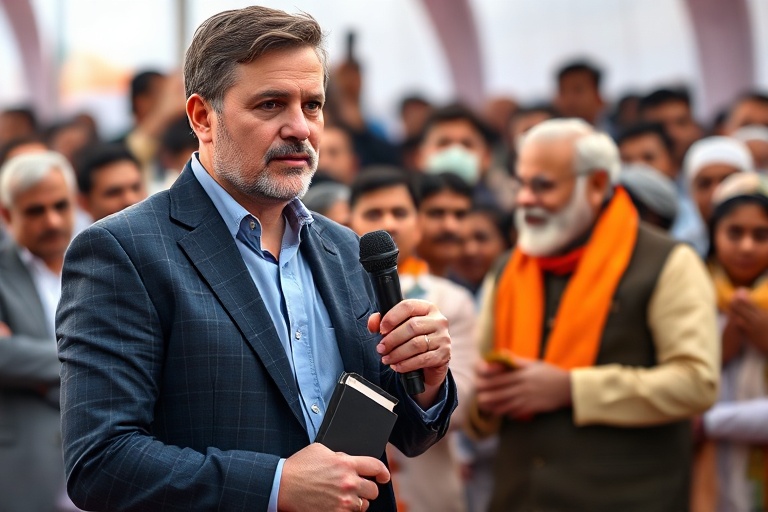
The recent press conference held by Indian Prime Minister Narendra Modi in Oslo, Norway, became a focal point for discussions on press freedom and human rights. A Norwegian journalist’s pointed question to Modi about India’s media environment has sparked international attention and renewed scrutiny of the country’s democratic practices.
The exchange occurred during a joint press briefing with Norwegian Prime Minister Jonas Gahr Støre. When asked about the increasing restrictions on press freedom in India, Modi responded with characteristic deflection, emphasizing India’s “vibrant democracy” while sidestepping specific concerns about media censorship and journalist arrests.
The Question That Sparked Discussion
Norwegian journalist Tine Sundtoft from Dagens Næringsliv asked Modi directly: “India is often described as the world’s largest democracy. However, international organizations like Reporters Without Borders have ranked India 161st out of 180 countries in their Press Freedom Index. How do you respond to these concerns?”
Modi’s response focused on India’s “strong democratic traditions” and “freedom of expression,” without addressing the specific allegations of media suppression. This pattern of non-response has become increasingly common in Modi’s international appearances when confronted with uncomfortable questions about India’s domestic policies.
International Reactions to the Exchange
The question and Modi’s response have generated reactions across global media outlets. Norwegian newspapers highlighted the confrontation, while Indian media outlets largely either ignored the question or framed it as an attempt to “tarnish India’s image.”
International press freedom organizations have been more vocal. The Committee to Protect Journalists issued a statement noting that “India’s ranking in the Press Freedom Index reflects a troubling reality that cannot be dismissed with generalities about democracy.”
- Reporters Without Borders’ 2023 report cited “increasing censorship, legal harassment of journalists, and internet shutdowns” as key factors in India’s low ranking.
- The Editors Guild of India has documented over 100 cases of attacks on journalists since 2020, with many cases involving police or political figures.
- India remains one of the most dangerous countries for journalists, with at least six media workers killed in connection with their work in 2023 alone.
Modi’s Handling of Press Questions: A Pattern of Avoidance
This wasn’t the first time Modi has faced tough questions about press freedom. During his 2015 visit to Silicon Valley, a journalist from the Wall Street Journal asked about internet restrictions in Kashmir. Modi responded by citing ancient Indian philosophy about “freedom within boundaries.”
In 2019, during a visit to the UK, a journalist from The Guardian questioned him about the arrest of several journalists critical of his government. Modi’s response focused on India’s “ancient tradition of tolerance” without addressing the specific arrests.
This pattern suggests a deliberate strategy to deflect criticism rather than engage with substantive questions about press freedom. Political analysts note that such responses serve to reinforce the narrative that international criticism stems from misunderstanding rather than legitimate concerns.
Domestic Press Under Pressure
While international journalists have some protection, India’s domestic media faces increasing pressure. Recent years have seen a growing number of journalists arrested under laws such as the Unlawful Activities (Prevention) Act and sedition laws.
The government’s use of the Foreign Contribution Regulation Act (FCRA) to freeze bank accounts of media organizations critical of the government has raised particular concern. In 2022, the New Delhi-based news portal NewsClick had its accounts frozen under FCRA, a move condemned by press freedom advocates as an attempt to silence dissent.
Many Indian journalists now practice self-censorship to avoid legal repercussions, particularly when reporting on sensitive topics such as Kashmir, communal violence, or government corruption.
International Relations and Human Rights Concerns
Norway’s decision to host Modi despite these concerns reflects the complex balance between economic interests and human rights considerations in international diplomacy. Norway has significant investments in India and has been actively pursuing trade agreements with the country.
This incident follows similar situations in other European countries. During Modi’s 2023 state visit to France, journalists questioned him about the erosion of press freedom. The response was similarly evasive, focusing on India’s “democratic spirit” while avoiding specific details.
These exchanges highlight the growing tension between India’s aspirations as a global power and its domestic record on democratic values. While India has positioned itself as a counterbalance to China in the region, its human rights record remains a point of contention with Western partners.
The Broader Context of Media Freedom in South Asia
India’s press freedom challenges are part of a broader regional trend. Neighboring countries such as Bangladesh, Pakistan, and Sri Lanka have also seen significant declines in press freedom in recent years.
However, India’s case is particularly significant due to its size, global influence, and status as the world’s largest democracy. The country’s membership in the G20 and its strategic position in the Indo-Pacific region give its domestic policies outsized importance in global discussions about democracy and human rights.
International organizations have called on India to take concrete steps to improve press freedom, including repealing laws used to silence journalists, ending internet shutdowns, and ensuring the safety of media workers. To date, however, these calls have gone largely unheeded.
What This Means for India’s Global Standing
The Norwegian journalist’s question and Modi’s response reflect broader challenges facing India’s international image. While the country seeks to position itself as a responsible global leader, its domestic policies often tell a different story.
For international observers, the exchange served as a reminder that India’s democratic credentials are increasingly coming under scrutiny. The country’s low ranking in press freedom indices suggests that the challenges are not merely temporary setbacks but systemic issues that require attention.
For Indian citizens, the incident highlighted the ongoing struggle for press freedom in a country where independent journalism is facing unprecedented challenges. The ability to ask tough questions and hold leaders accountable is a cornerstone of democracy, and its erosion raises fundamental questions about India’s future direction.
As India continues to grow as an economic and military power, the world will be watching not just its GDP numbers or military capabilities, but also its commitment to democratic values. The Norwegian journalist’s question was more than just a momentary exchange—it was a reflection of these broader concerns.
For now, the international community appears divided in its response. Some countries continue to prioritize economic relationships over human rights concerns, while others have become more vocal in their criticism. Within India, the debate continues among journalists, activists, and citizens about the future of press freedom in the world’s largest democracy.
The Norwegian journalist’s question may have been brief, but it opened a window into these complex issues. As India navigates its path between global ambitions and domestic realities, the world will be watching to see whether its commitment to democratic values matches its economic and strategic aspirations.
For those interested in following these developments, Dave’s Locker News section provides ongoing coverage of international press freedom issues and their implications for global democracy.