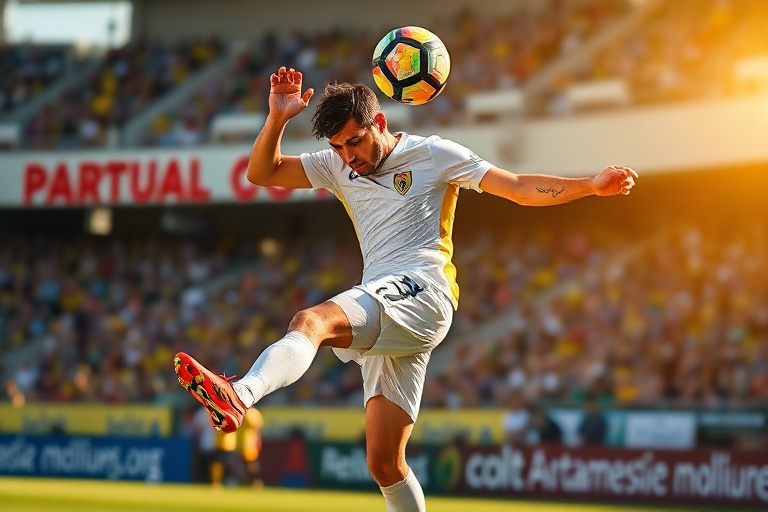
Pau Francisco Torres, born on January 16, 1997, in Vila-real, Spain, has emerged as one of Europe’s most promising central defenders. His journey from the youth ranks of Villarreal CF to representing the Spanish national team illustrates a career marked by technical refinement, tactical intelligence, and resilience. As football evolves toward a more possession-oriented and high-pressing style, players like Torres embody the modern defender—one who is comfortable on the ball, capable of initiating attacks, and reliable in defensive transitions.
Torres’ rise reflects broader trends in Spanish football. La Liga, long celebrated for its emphasis on technical skill and tactical discipline, has increasingly produced defenders who excel in both defensive solidity and ball distribution. This evolution mirrors Spain’s historical dominance in midfield creativity, now extending to defensive positions where positional awareness and composure under pressure are paramount. For fans and analysts, Torres represents not just individual excellence, but the next generation of Spanish footballing philosophy.
The Making of a Modern Defender
Torres began his professional journey at Villarreal, a club synonymous with youth development and tactical identity. His progression through the academy system was not meteoric, but steady and purposeful. By the 2016–17 season, he made his senior debut for Villarreal B in Segunda División B, quickly displaying the composure and passing range that would later define his senior career.
His breakthrough came during the 2017–18 season, when he was loaned to Segunda División side Real Valladolid. The experience proved transformative. Under manager Sergio González, Torres started 37 league matches, helping the club secure promotion to La Liga. His performances earned widespread praise for his reading of the game, aerial dominance, and ability to play out from the back—a hallmark of modern defenders.
Upon returning to Villarreal, Torres became a cornerstone of the team’s defense. His partnership with center-backs like Gabriel Paulista and Rubén Peña allowed Villarreal to build attacks from deep, a strategy that aligned with the club’s possession-based identity. By the 2019–20 season, he had firmly established himself as a first-team regular, contributing to Villarreal’s strong defensive record and run to the UEFA Europa League knockout stages.
Defensive Traits and Technical Profile
Torres stands at 6’3”, a physical presence that complements his technical attributes. His primary strengths include:
- Ball-Playing Ability: Torres ranks among La Liga’s most accurate passers from deep positions, often initiating attacks with long-range distribution to wingers or midfielders.
- Positional Discipline: His awareness in one-on-one situations and ability to intercept passes reflect a high football IQ.
- Aerial Dominance: With a career aerial success rate above 70%, he is a constant threat during set-pieces and clearances.
- Progressive Carrying: Unlike traditional “no-nonsense” defenders, Torres advances the ball with purpose, often bypassing midfield pressure.
These traits align with the tactical demands of contemporary football, where defenders are expected to function as auxiliary playmakers. As clubs increasingly prioritize control in build-up play, Torres’ profile becomes more valuable—especially in leagues like La Liga and the Premier League, where positional play is emphasized.
From Club Success to National Recognition
Torres’ consistent performances at Villarreal did not go unnoticed. In September 2019, he received his first call-up to the Spanish national team under manager Luis Enrique. His debut came in a friendly against Germany, a match that ended 1–1. While he did not start, the call-up signaled his arrival among Spain’s elite defensive prospects.
His international breakthrough came during the UEFA Nations League in 2020–21. As Spain reached the finals, Torres partnered with Aymeric Laporte and Eric García in a back three, a tactical setup that allowed him to showcase his range of skills. His composure under pressure and ability to play forward passes were crucial in high-stakes matches against Italy and France.
By the time of the UEFA Euro 2020 tournament (held in 2021), Torres had become a regular starter. His partnership with Laporte in central defense helped Spain concede just two goals in the group stage and reach the semifinals. Though Spain ultimately fell to Italy on penalties, Torres’ performances solidified his status as a key figure in Spain’s defensive rebuild.
His inclusion in the UEFA Euro 2020 Team of the Tournament underscored his impact. Analysts highlighted his ability to combine defensive solidity with progressive passing—a rare blend in modern defenders.
Global Influence and Market Value
Torres’ rise has not only shaped his club and country’s fortunes but also influenced the transfer market. At the peak of his Villarreal tenure, his market value surpassed €50 million, attracting interest from top European clubs including Manchester United, Arsenal, and Atlético Madrid. While he remained at Villarreal through 2023, his contract negotiations reflected his growing stature as a global defender.
His style has drawn comparisons to players like Gerard Piqué and Raphaël Varane—defenders who combined elite ball-playing ability with defensive security. Like Piqué, Torres excels in tight spaces and under pressure, while his reading of the game resembles Varane’s elegance and timing in duels.
Torres’ appeal extends beyond performance metrics. As a product of La Masia-style academies, he embodies Spain’s footballing identity: intelligent, technically sound, and emotionally composed. This cultural resonance makes him a marketable figure not just in Europe, but in emerging football markets across Asia and the Americas.
Cultural and Tactical Significance
From a global perspective, Torres represents a shift in how defenders are perceived and valued. In South American football, traditionally known for physical, aggressive defending, players like Torres are influencing tactical evolution. Clubs in Brazil and Argentina now scout for defenders who can play out from the back, reflecting the growing influence of European methodology.
In Africa, where defensive structures have often relied on athleticism and pace, Torres’ model offers a pathway toward technical refinement. His success demonstrates that high-level defending is not solely about physicality, but about spatial awareness, decision-making, and technical execution.
Even in leagues like the MLS, where defensive standards vary, Torres’ career serves as a benchmark. His journey validates the importance of long-term development and tactical education—principles increasingly adopted by clubs in North America.
Future Outlook and Legacy
As of 2024, Pau Torres remains a central figure at Villarreal and within the Spanish national team. With his contract running until 2026, speculation about a move to a “superclub” continues. However, his loyalty and consistent performances suggest he may further cement his legacy at his boyhood club before considering a high-profile transfer.
For Spain, Torres is part of a generational transition. With Sergio Busquets, Gerard Piqué, and Jordi Alba having retired, a new spine of defenders—including Torres, Laporte, and younger talents like Alejandro Grimaldo—is emerging. This transition reflects Spain’s enduring philosophy: technical excellence, collective intelligence, and adaptability.
Looking ahead, Torres’ ability to maintain his form under increased scrutiny will define his career. As clubs and national teams adopt more fluid, possession-heavy systems, defenders like him are not just participants—they are architects of the game’s future.
“Pau Torres is the kind of defender modern football demands: someone who can defend with his feet as well as his head. His rise is a testament to Spanish football’s commitment to redefining defensive roles without compromising structure.”
— Tactical Analyst at Opta Sports
Whether he leads Villarreal to domestic or European success or captains Spain to international glory, Pau Torres is already a defining figure of his generation. His story is more than an individual triumph—it is a reflection of how football’s defensive arts are being rewritten.
For fans and aspiring players, Torres offers a compelling blueprint: technical mastery, mental resilience, and a quiet confidence that speaks louder than any tackle or clearance.