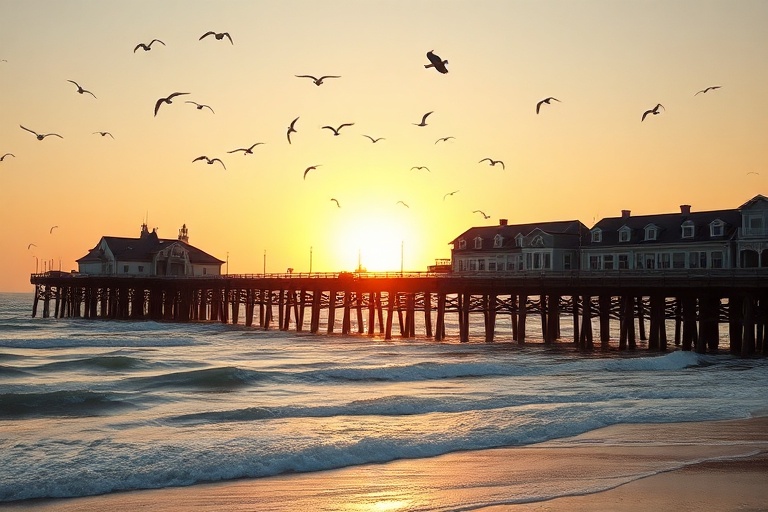
Long Branch, New Jersey, has long been a destination for beachgoers and day-trippers, but in recent years, Pier Village has emerged as the crown jewel of the Jersey Shore’s redevelopment efforts. This 3.5-acre mixed-use complex blends retail, dining, residential living, and entertainment into a cohesive waterfront experience. More than just a shopping center, Pier Village has become a social and economic anchor for the region, drawing visitors from across the tri-state area.
The transformation of Pier Village reflects broader trends in urban redevelopment, where waterfront properties are repurposed to serve as community hubs. Unlike traditional shopping malls, Pier Village was designed with pedestrian-friendly pathways, public art installations, and open spaces that encourage lingering and exploration. Its success offers lessons for other coastal towns looking to revitalize their downtowns while preserving their maritime heritage.
Architecture and Design: A Blend of Modernity and Maritime Charm
Pier Village’s architecture strikes a balance between contemporary aesthetics and nautical influences. The buildings feature clean lines, large glass windows, and weathered wood accents that evoke the region’s seafaring past. The design team, led by firms like The S/L/A/M Collaborative, prioritized sustainability, incorporating energy-efficient systems and materials that can withstand the harsh coastal environment.
One of the most striking elements is the boardwalk-style promenade that runs through the center of the complex. This open-air corridor is lined with benches, street lamps, and seasonal decorations, creating a welcoming atmosphere. The promenade connects to the beach, allowing visitors to stroll from their condos or hotel rooms directly to the sand. This seamless integration of indoor and outdoor spaces has become a hallmark of Pier Village’s appeal.
The residential component of Pier Village includes luxury condominiums and rental apartments, with units ranging from studios to three-bedroom layouts. Many units offer private balconies or terraces, providing unobstructed views of the Atlantic Ocean. The architecture here is intentionally understated, allowing the natural beauty of the shore to take center stage.
Economic and Social Impact: Beyond the Boardwalk
Since its opening in 2003, Pier Village has generated significant economic benefits for Long Branch. According to a 2022 report by the Long Branch Economic Development Office, the complex contributes over $150 million annually to the local economy. This revenue stems from retail sales, tourism, and property taxes paid by residents and business owners. The ripple effects are evident in nearby businesses, from boutique hotels to independent cafes, which have seen increased foot traffic.
Beyond its financial impact, Pier Village has fostered a sense of community. The complex hosts year-round events, including summer concerts, holiday markets, and fitness classes. These gatherings attract both locals and tourists, reinforcing Long Branch’s reputation as a year-round destination rather than just a seasonal hotspot. The inclusion of public art, such as the iconic “Wave” sculpture by artist J. Seward Johnson, further enhances the area’s cultural cachet.
For local residents, Pier Village has become a place to live, work, and socialize. The residential units have attracted young professionals and retirees alike, drawn by the walkable environment and proximity to the beach. Meanwhile, the retail and dining options cater to a wide range of tastes, from high-end boutiques to casual seafood shacks. This diversity ensures that Pier Village appeals to a broad audience, from families to couples to solo travelers.
Key Contributors to Pier Village’s Success
- Strategic Location: Situated on a former industrial site, Pier Village’s waterfront location was key to its appeal. The site’s history as part of the long-defunct Long Branch Pier added a layer of nostalgia that resonated with visitors.
- Public-Private Partnership: The project was a collaboration between developers, the city of Long Branch, and state agencies. This partnership ensured that the project aligned with both economic and urban planning goals.
- Mixed-Use Development: By combining retail, residential, and recreational spaces, Pier Village created a self-sustaining ecosystem where visitors could spend entire days—or even weeks—without leaving the complex.
- Seasonal Adaptability: The design accounted for New Jersey’s seasonal tourism patterns, with flexible spaces that can be adapted for winter events, summer festivals, and everything in between.
Challenges and Criticisms: Balancing Growth and Authenticity
Despite its successes, Pier Village has not been without controversy. Some long-time residents argue that the redevelopment has led to gentrification, pushing up property values and displacing lower-income families. The influx of high-end retail and dining options has also raised concerns about the area losing its working-class roots. These critiques highlight the broader tensions in waterfront redevelopment, where progress often comes at the cost of displacement.
Another challenge is managing the crowds. During peak summer months, Pier Village can become overwhelmingly busy, leading to traffic congestion and parking shortages. The complex has responded by expanding public transit options and encouraging visitors to use rideshare services, but these solutions are not without their own drawbacks. The seasonal nature of tourism also means that business owners must carefully manage their revenue streams to survive the off-season.
Environmental concerns have also been raised, particularly regarding the impact of increased foot traffic on the local ecosystem. The construction of Pier Village required significant landfill and dredging, which some environmental groups argue disrupted marine habitats. While the developers implemented mitigation measures, such as artificial reefs and shoreline stabilization projects, the long-term effects remain a topic of debate.
The Future of Pier Village and Waterfront Redevelopment
Pier Village’s model has inspired similar projects along the Jersey Shore and beyond. Towns like Asbury Park and Red Bank have looked to Pier Village as a blueprint for revitalizing their own waterfronts. However, each location presents unique challenges, from zoning laws to environmental regulations. The success of Pier Village suggests that mixed-use, pedestrian-friendly developments can thrive in coastal communities—but only if they are carefully tailored to local needs.
Looking ahead, Pier Village is poised to expand further. Plans for additional residential units and a second phase of retail development are in the works, with an emphasis on sustainability and community engagement. The complex is also exploring partnerships with local schools and nonprofits to offer educational programs and job training initiatives, further embedding itself in the fabric of Long Branch.
For visitors, Pier Village remains a must-visit destination on the Jersey Shore. Whether you’re there to shop, dine, relax on the beach, or simply enjoy the ocean breeze, the complex offers an experience that feels both timeless and modern. As other coastal towns seek to replicate its success, Pier Village stands as a testament to the power of thoughtful urban design—and the enduring allure of the shore.
For those interested in exploring more about coastal redevelopment and its broader implications, check out our Travel and Analysis sections for in-depth coverage of similar projects around the world.