Salman Khan: Bollywood’s Timeless Superstar and Cultural Icon
“`html
Salman Khan: The Unyielding Reign of Bollywood’s Tiger
For over three decades, Salman Khan has stood as an indomitable force in Indian cinema, transcending the boundaries of actor, producer, and cultural icon. His career, marked by both meteoric rises and turbulent controversies, offers a fascinating study in resilience and reinvention. With a net worth estimated at over $300 million and a fan following that spans generations, Khan’s influence extends far beyond the silver screen.
The Early Years: From Humble Beginnings to Stardom
Born Abdul Rashid Salim Salman Khan on December 27, 1965, in Indore, Madhya Pradesh, Khan grew up in a modest family. His father, Salim Khan, was a renowned screenwriter for Bollywood, which planted the seeds of his cinematic ambitions early on. After a brief stint as a model, Khan made his acting debut in 1988 with Biwi Ho To Aisi, though it was his second film, Maine Pyar Kiya (1989), that catapulted him to stardom. Directed by his father’s protégé, Sooraj Barjatya, the romantic drama became a massive hit and established Khan as a heartthrob.
His early roles in the 1990s—such as Patthar Ke Phool (1991) and Saajan (1991)—solidified his position as a leading man. However, it was Hum Aapke Hain Koun..! (1994), another Barjatya-directed film, that cemented his status as a superstar. The film’s record-breaking box office performance and cultural impact made Khan a household name, a title he has maintained ever since.
The Formula That Defined a Generation
Khan’s career has been built on a carefully crafted formula that blends mass appeal with emotional resonance. His films often feature a mix of romance, action, and family drama, with Khan playing characters who embody both vulnerability and strength. This template has proven wildly successful, with many of his movies becoming all-time blockbusters. Some of his most iconic films include:
- Karan Arjun (1995) – A revenge thriller that became one of his most beloved films.
- Judwaa (1997) – A comedy that showcased his versatility as an actor.
- Tere Naam (2003) – A dramatic role that earned critical acclaim.
- Dabangg (2010) – A modern reboot of his action-hero persona that revitalized his career.
- Bajrangi Bhaijaan (2015) – A heartwarming drama that highlighted his ability to connect with audiences on an emotional level.
Beyond acting, Khan has leveraged his star power to build a business empire. As the founder of production companies like Salman Khan Films and Being Human Productions, he has produced numerous hits, including Chhichhore (2019) and Antim: The Final Truth (2021). His charitable initiatives, such as the Being Human Foundation, have further endeared him to the public, blending philanthropy with his brand.
The Controversies That Shaped His Legacy
Khan’s career has not been without its share of controversies. His personal life, often scrutinized by the media, has been a rollercoaster of highs and lows. From his relationships with co-stars like Aishwarya Rai and Katrina Kaif to his legal troubles, including a 2015 hit-and-run case that led to a five-year jail sentence (later suspended), Khan has faced his fair share of challenges. Yet, his ability to weather these storms has only strengthened his public image.
In recent years, Khan has also been at the center of debates surrounding nepotism in Bollywood. As part of the Khan family—often referred to as the “Khan Dynasty”—he has been both celebrated and criticized for the opportunities he has provided to relatives and close associates. Despite the criticism, his influence within the industry remains unparalleled, with younger actors often citing him as an inspiration.
The Enduring Appeal of a Bollywood Titan
What sets Salman Khan apart from his contemporaries is his uncanny ability to adapt and evolve. Unlike many stars who fade into obscurity as they age, Khan has successfully transitioned from the romantic lead to the action hero to the wise elder statesman of Bollywood. His films continue to draw massive crowds, and his presence on social media—where he boasts millions of followers—keeps him relevant in the digital age.
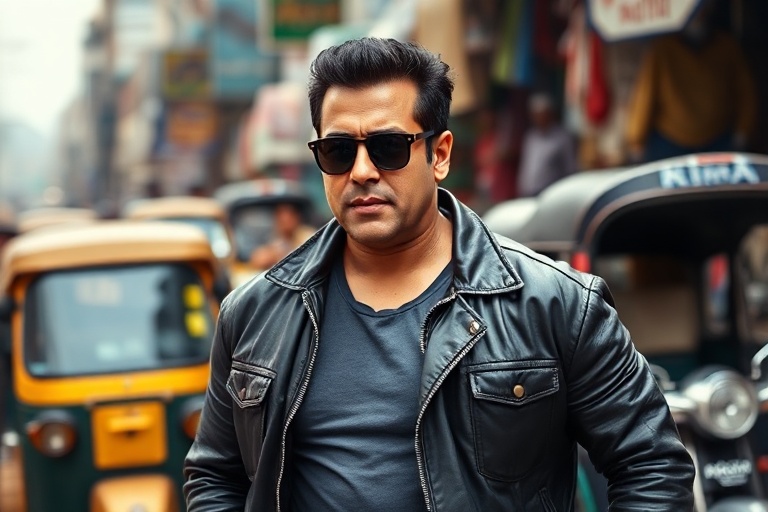
Moreover, Khan’s cultural impact extends beyond cinema. He is a fashion icon, with his signature “bhai” look—leather jackets, stubble, and a confident swagger—becoming a trend in itself. His philanthropic work, particularly his support for education and healthcare, has earned him respect across the country. In many ways, Khan embodies the aspirational figure that India loves: a self-made man who rose to fame through talent, hard work, and a bit of luck, yet remains grounded despite his superstar status.
As Bollywood continues to evolve, Salman Khan remains a constant, a reminder of the golden era of Indian cinema while also embracing the new wave of storytelling and technology. His upcoming projects, including Kisi Ka Bhai Kisi Ki Jaan (2023), continue to generate buzz, proving that even after 35 years in the industry, he is still very much at the top of his game.
In a landscape where many stars struggle to maintain relevance, Salman Khan’s story is one of endurance and adaptability. He is not just an actor; he is a phenomenon, a brand, and a cultural touchstone. As long as there is a demand for stories that blend drama, action, and heart, Salman Khan will remain a defining figure in Indian cinema.
For those looking to explore more about the intersection of Bollywood and global cinema, visit our Entertainment and Culture sections for deeper insights.