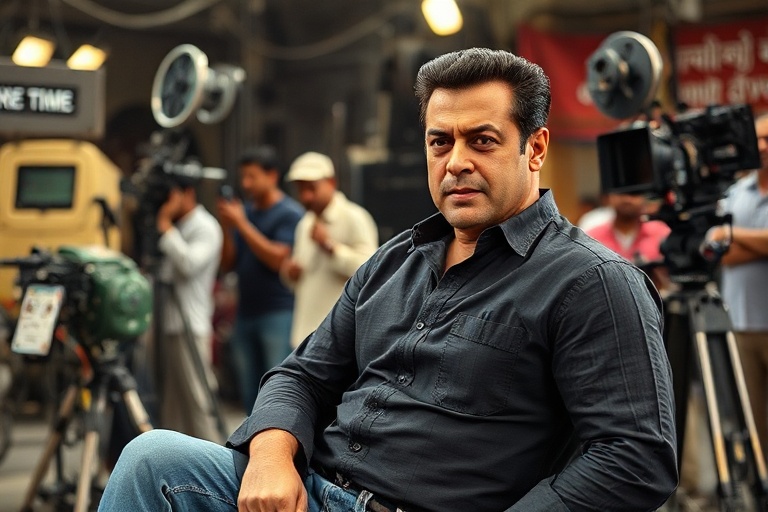
Salman Khan: How Bollywood’s Superstar Became a Global Icon
“`html
Salman Khan: The Bollywood Titan Who Transcends Cinema
Few names in global entertainment carry the weight and recognition of Salman Khan. For over three decades, the Indian superstar has dominated Bollywood, shaping the industry’s narrative while cultivating a fanbase that spans continents. His influence extends beyond films, embedding itself in philanthropy, fashion, and even social discourse. To understand Salman Khan’s enduring legacy, one must look beyond the glitz of red carpets and box-office records.
Born Abdul Rashid Salim Salman Khan on December 27, 1965, in Indore, he was destined for stardom. The eldest son of screenwriter Salim Khan, young Salman grew up in the heart of Mumbai’s film fraternity. His journey to fame was not instantaneous, however. Early struggles included small roles and a brief stint as a model before his breakthrough in Maine Pyar Kiya (1989), a romantic drama that catapulted him to overnight stardom. The film’s success established a template for his career: charismatic leading man with mass appeal.
The Formula Behind His Stardom
Salman Khan’s longevity in an industry known for its volatility is no accident. He has mastered the balance between commercial appeal and critical recognition, a feat that eludes many of his peers. His films often follow a familiar yet effective blueprint:
- Mass Appeal: Khan’s movies prioritize broad entertainment, blending romance, action, and comedy in ways that resonate with diverse audiences.
- Iconic Roles: Whether as a rebellious lover or an action hero, Khan’s characters are larger-than-life, often embodying the fantasies of his fanbase.
- Music and Dance: His films feature chart-topping soundtracks, turning songs into cultural phenomena that transcend the screen.
- Strategic Collaborations: Over the years, he has partnered with top directors and co-stars, ensuring his projects maintain high visibility.
This formula has yielded some of Bollywood’s highest-grossing films, including Bajrangi Bhaijaan (2015) and Sultan (2016). Yet, Khan’s appeal is not confined to India. His films regularly top charts in neighboring countries, and his fanbase stretches from the Middle East to Southeast Asia. This global reach speaks to a universal language of storytelling that Khan has perfected.
Beyond the Silver Screen: A Multifaceted Icon
Salman Khan’s influence radiates far beyond cinema. His persona is a carefully curated blend of stardom and philanthropy, a duality that has cemented his status as a cultural institution. In 2015, he launched Being Human, a foundation that supports healthcare and education for underprivileged children. The brand, which includes clothing lines and merchandise, has raised millions, turning charity into a lifestyle statement.
Khan’s generosity, however, is not without controversy. His 2015 conviction in a hit-and-run case cast a shadow over his philanthropic efforts, revealing the complexities of his public image. Despite the legal setback, his fans remained steadfast, demonstrating the unshakable bond between star and audience. This incident underscored a broader truth about celebrity culture: admiration often coexists with scrutiny.
His personal life, too, has been a subject of fascination. From high-profile relationships to his larger-than-life persona, Khan embodies the contradictions of modern stardom. He is both the everyman hero and the untouchable superstar, a duality that keeps his audience engaged.
The Globalization of a Bollywood Legend
Salman Khan’s impact on global cinema is undeniable. While Bollywood has long struggled for international recognition, Khan’s films have played a pivotal role in changing perceptions. Bajrangi Bhaijaan, for instance, was a critical and commercial success in China, a market notoriously resistant to non-Hollywood films. His ability to transcend linguistic and cultural barriers highlights the growing influence of Indian cinema worldwide.
Khan’s presence on social media further amplifies his global reach. With millions of followers across platforms like Twitter and Instagram, he engages directly with fans, sharing glimpses of his personal life, professional projects, and charitable work. This digital savviness ensures his relevance in an era where traditional fame is no longer enough.
Yet, his global appeal is not without challenges. The Indian film industry, and Bollywood in particular, faces criticism for its portrayal of gender roles, stereotypes, and cultural insensitivity. Khan’s films are no exception, often reflecting the industry’s shortcomings. However, his ability to evolve with changing times—such as his recent foray into more nuanced storytelling—suggests a willingness to adapt and grow.
A Legacy in the Making
As Salman Khan approaches his sixth decade in the spotlight, his legacy is still being written. He remains a dominant force in Bollywood, with projects like Tiger 3 (2023) proving that age is no barrier to his star power. His influence extends to the next generation of actors, many of whom cite him as an inspiration.
Khan’s story is one of resilience, ambition, and reinvention. He has weathered scandals, legal battles, and industry shifts, yet he continues to command the attention of millions. In an era where celebrity culture is often fleeting, his endurance is a testament to the power of authenticity—or at least the illusion of it.
Looking ahead, Khan’s role in shaping the future of Indian cinema will be closely watched. Whether he transitions into production, mentorship, or even politics (a path taken by several Bollywood stars), his influence is unlikely to wane. For now, he remains a symbol of Bollywood’s past, present, and future—a living legend who defies the odds.
Salman Khan’s journey is more than a tale of fame and fortune. It is a reflection of the cultural, social, and economic forces that shape modern stardom. In a world where celebrity is often commodified, his story reminds us of the enduring power of storytelling and the human connection it fosters.