Tesla Cybertruck: A Radical Vision for the Future of Trucks
“`html
Tesla Cybertruck: The Polarizing Future of Electric Trucks
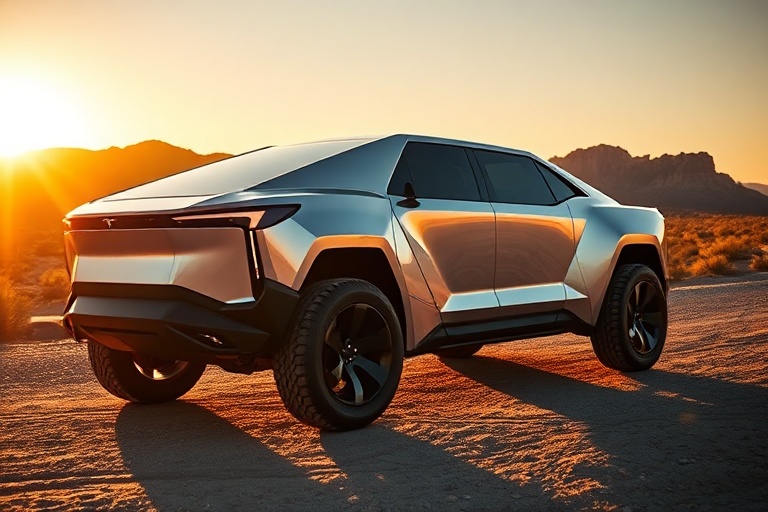
The Tesla Cybertruck arrived with the force of a stainless-steel tsunami, shattering expectations long before it ever rolled onto public roads. When Elon Musk first unveiled the angular, futuristic design in November 2019, the internet split in half—half in awe, half in ridicule. Five years later, after production delays, design tweaks, and a global rollout spanning North America and beyond, the Cybertruck has become more than a vehicle. It’s a cultural artifact, a statement of engineering ambition, and a litmus test for the future of automotive design.
But the Cybertruck isn’t just about looking different. It represents Tesla’s boldest attempt yet to redefine what a truck can be—shifting the conversation from horsepower and towing capacity to torque, software, and sustainability. As it begins to appear on highways from Los Angeles to Berlin, the question isn’t just whether it works. It’s what it means for drivers, industries, and the planet.
The Birth of a Behemoth: Design Philosophy and Public Reaction
The Cybertruck’s design was conceived in secrecy under Musk’s directive to “think like a futurist.” The result was a vehicle with sharp, geometric lines, an exoskeleton made of ultra-hard 30X cold-rolled stainless steel, and bulletproof glass that (eventually) lived up to its claims. The angular aesthetic wasn’t accidental—it was a rejection of traditional automotive curvy design, drawing inspiration from dystopian sci-fi rather than Detroit or Stuttgart.
Reaction was immediate and visceral. Social media erupted with memes comparing the truck to a Lunchbox on wheels, a futuristic prison transport, or a prop from a post-apocalyptic movie. Yet, within days, orders poured in—over 250,000 in the first week. The paradox was clear: people mocked what they also craved.
This duality reflects a deeper cultural tension. In an era where climate anxiety meets techno-optimism, the Cybertruck embodies both hope and hubris. It’s a symbol of Silicon Valley’s ambition to disrupt every industry, including one as traditional as automotive manufacturing. But it’s also a reminder that innovation often looks ugly before it becomes beautiful.
The Global Reception: From Hollywood to Hyderabad
While Tesla initially focused on the U.S. market, early adopters and influencers worldwide have begun to test the Cybertruck’s mettle. In Europe, where electric vehicles are gaining traction but pickup trucks remain niche, the truck’s radical design has sparked curiosity. Some see it as a rolling protest against fossil fuel dependency; others view it as a status symbol for early adopters of green tech.
In India, where the auto industry is rapidly shifting toward electrification, the Cybertruck’s arrival has been met with fascination. Local media outlets have debated its practicality in a country with rough roads and limited charging infrastructure. Yet, its presence in tech hubs like Bengaluru has turned it into a mobile billboard for the EV revolution.
Meanwhile, in Japan and South Korea, where compact and efficient vehicles dominate, the Cybertruck is often dismissed as impractical. Yet, its cultural cachet remains undeniable—appearing in anime parodies, K-pop music videos, and viral TikTok challenges. It’s a global Rorschach test: people project their hopes, fears, and prejudices onto its angular frame.
Performance, Power, and the Promise of Sustainability
The Cybertruck wasn’t designed to blend in. It was engineered to dominate. With acceleration that rivals supercars, a towing capacity of up to 11,000 pounds, and a claimed range of up to 340 miles per charge (depending on variant), it challenges the notion that electric vehicles sacrifice power for sustainability. Tesla’s proprietary 48V architecture and advanced battery management system allow for rapid power delivery and efficiency gains that earlier EVs couldn’t achieve.
But performance comes with trade-offs. The truck’s weight—estimated at over 6,600 pounds for the top model—raises questions about energy consumption and infrastructure strain. Charging times, though improving with Tesla’s V3 Superchargers, still lag behind fueling a gas-powered truck. And in regions with unreliable electricity grids, the Cybertruck’s promise of zero emissions feels aspirational rather than practical.
Still, Tesla’s approach to sustainability goes beyond the vehicle itself. The company claims the Cybertruck’s body can be recycled entirely, and its interior uses vegan leather and synthetic materials. While critics argue these choices are more marketing than meaningful eco-innovation, they reflect a broader shift in how automakers market sustainability—not as a compromise, but as a premium feature.
The Cybertruck in Industry and Pop Culture
The truck’s influence extends far beyond Tesla’s showrooms. It has inspired a wave of competitors, from legacy automakers like Ford and Rivian to startups betting on angular, futuristic designs. The Cybertruck’s success—or failure—will shape the next decade of automotive design, proving whether radical aesthetics can coexist with mainstream appeal.
In pop culture, the Cybertruck has transcended its role as a vehicle. It has appeared in films, TV shows, and even as a centerpiece in art installations. Its presence in the 2023 film The Creator cemented its status as a symbol of futuristic warfare, while its cameo in Fast X turned it into a meme-worthy icon of over-the-top action.
Brands outside automotive have also co-opted its image. Fashion collaborations, tech accessories, and even Cybertruck-themed merchandise have turned the vehicle into a lifestyle statement. It’s no longer just a truck—it’s a cultural currency.
Challenges and Criticisms: The Road Ahead
Despite its promise, the Cybertruck faces significant hurdles. Production delays have frustrated early adopters, and quality control issues—from panel gaps to software glitches—have drawn criticism. The truck’s unconventional design also raises practical concerns: visibility is poor, the ride is stiff, and the angular panels are prone to dents and scratches. In a world where luxury often equates to smoothness and refinement, the Cybertruck’s utilitarian toughness is both a selling point and a drawback.
Safety is another concern. While Tesla markets the truck’s glass as bulletproof, real-world testing has shown vulnerabilities. The company has since upgraded the glass, but the incident became a symbol of the company’s tendency to prioritize bold claims over meticulous execution.
Then there’s the issue of accessibility. With a starting price around $60,000 in the U.S., the Cybertruck is out of reach for most consumers. While Tesla has promised more affordable models, the initial focus on high-end variants limits its mass-market potential. In emerging markets, where electric vehicles are needed most, the Cybertruck’s price tag and charging requirements remain prohibitive.
What’s Next for the Cybertruck and the EV Revolution?
The Cybertruck is more than a vehicle—it’s a statement. It challenges the auto industry to rethink design, performance, and sustainability. It forces consumers to confront their expectations of what a truck should look like and how it should function. And it pushes the boundaries of what’s possible in electric mobility.
As Tesla continues to refine the Cybertruck and expand its global footprint, its legacy will be measured not just in sales, but in influence. Will it pave the way for a new era of electric trucks? Or will it remain a niche curiosity, a testament to ambition over pragmatism?
One thing is certain: the Cybertruck has already succeeded in one crucial way. It forced the world to pay attention—not just to Tesla, but to the future of transportation itself. And in doing so, it has reminded us that progress often begins with something that looks impossible.
For those interested in exploring how electric vehicles are reshaping industries, visit our Technology section for deeper analysis. To see how other innovative vehicles are competing in this space, check out our coverage of electric SUVs and crossovers in our Automotive category.