White Sox and Mariners: A Cross-Continent Baseball Rivalry Takes Shape
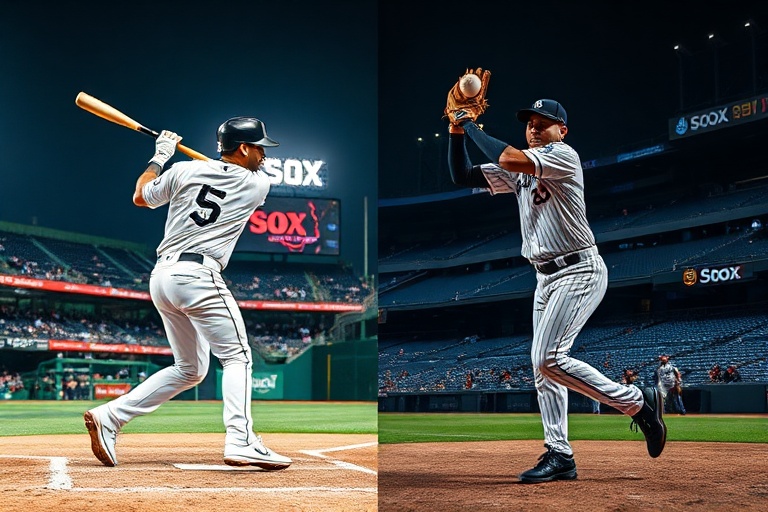
The Chicago White Sox and Seattle Mariners have carved out distinct identities in Major League Baseball, yet their paths occasionally cross in ways that resonate far beyond U.S. borders. While one team embodies the gritty industrial legacy of the Midwest, the other represents the innovative, tech-driven spirit of the Pacific Northwest. Their matchups, though not as historic as Yankees-Red Sox, offer a compelling narrative of contrast—one that reflects broader cultural and economic shifts in America.
Chicago’s White Sox, founded in 1901, carry the weight of baseball’s working-class roots. The team’s name itself is a nod to the city’s industrial heritage, where stockyards once defined its economy. The Mariners, meanwhile, arrived in 1977 as an expansion team, born in a city rapidly transforming into a hub for global trade and technology. These foundational differences shape how fans engage with their teams, both in the stands and beyond.
The Global Appeal of MLB’s International Flavor
Baseball’s global footprint has expanded dramatically in recent decades, with players from Japan, the Dominican Republic, and Venezuela shaping the league’s landscape. The White Sox and Mariners reflect this diversity in their rosters. Chicago has long been a gateway for Latin American talent, with stars like José Abreu and Luis Robert anchoring their lineup. Seattle, meanwhile, has become a magnet for Japanese players, thanks in part to the Mariners’ historic ties with Nippon Professional Baseball.
This international influence extends beyond the field. The Mariners’ partnership with the Seattle-based Japanese cultural festival, Sakura-Con, highlights how baseball intersects with global pop culture. Similarly, the White Sox’s annual Latin American player development camps underscore their commitment to nurturing talent from baseball-crazy nations. These connections make games between the two teams more than just a contest—they become a celebration of baseball’s global community.
Economic and Cultural Divides on Display
The contrast between Chicago and Seattle is stark, not just in terms of geography but in how each city approaches sports, business, and community. Chicago is a city of blue-collar resilience, where baseball is woven into the fabric of neighborhoods like Bridgeport and Pilsen. The White Sox’s fanbase is deeply loyal, often passing down allegiances through generations. The Mariners, on the other hand, represent a city that thrives on innovation and forward-thinking. Seattle’s tech boom has attracted a younger, more diverse demographic, some of whom view baseball as a nostalgic pastime rather than a cultural cornerstone.
These differences play out in the stands. White Sox games at Guaranteed Rate Field often feature a sea of working-class families, while Mariners games at T-Mobile Park draw a mix of tech professionals and young adults. Yet, in both cities, baseball serves as a unifying force—a rare constant in an era of rapid change.
Key Matchups and Memorable Moments
While the White Sox and Mariners don’t share a division, their interleague matchups have produced memorable moments. One of the most notable was in 2022, when Seattle’s Julio Rodríguez and Chicago’s Dylan Cease faced off in a pitching duel that lasted into extra innings. The game ended in a 1-1 tie due to rain, but the duel itself became a talking point among fans for its intensity.
Another highlight came in 2019, when the Mariners swept a three-game series in Seattle, showcasing their offensive firepower with players like Mitch Haniger and Jean Segura leading the charge. For White Sox fans, these matchups are a reminder that baseball’s unpredictability can bring excitement, even in non-rivalry games.
The following list highlights some of the most significant moments in White Sox vs. Mariners history:
- 2001: Seattle’s Ichiro Suzuki makes his MLB debut, going 2-for-4 against Chicago. His performance foreshadowed his eventual Rookie of the Year and MVP dominance.
- 2010: White Sox pitcher Mark Buehrle throws a no-hitter against Seattle, one of six no-hitters in his illustrious career.
- 2018: The Mariners rally from a 5-0 deficit to win 8-5, fueled by a three-run homer from Nelson Cruz.
- 2021: Chicago’s Yasmani Grandal hits a walk-off home run in the 10th inning, securing a 6-5 victory in a tightly contested game.
The Future of a Cross-Country Clash
As MLB continues to expand its global reach, the White Sox and Mariners could find themselves playing a more significant role in international baseball. The Mariners’ ongoing commitment to Japanese players, such as recent signee Senshuu Koyama, suggests that their future games against Chicago may carry even more weight. Meanwhile, the White Sox’s investment in Latin American academies ensures that their roster will remain a melting pot of talent.
For fans, these matchups offer a chance to see baseball through a global lens. Whether it’s the precision of a Japanese pitcher, the power of a Dominican slugger, or the hustle of a Venezuelan infielder, the White Sox and Mariners embody the sport’s international soul. As the league evolves, so too will the stories behind these games—stories of culture, economics, and the enduring appeal of baseball.
In an era where sports are increasingly defined by narratives of globalization and identity, the White Sox vs. Mariners rivalry—even if it’s not a traditional one—serves as a microcosm of baseball’s broader transformation. It’s a reminder that the game is more than just a sport; it’s a reflection of the world we live in.