Cockroach Janata Party: How India’s Satirical Movement Exposes Political Failures
“`html
Cockroach Janata Party: The Unlikely Symbol of Political Satire in India
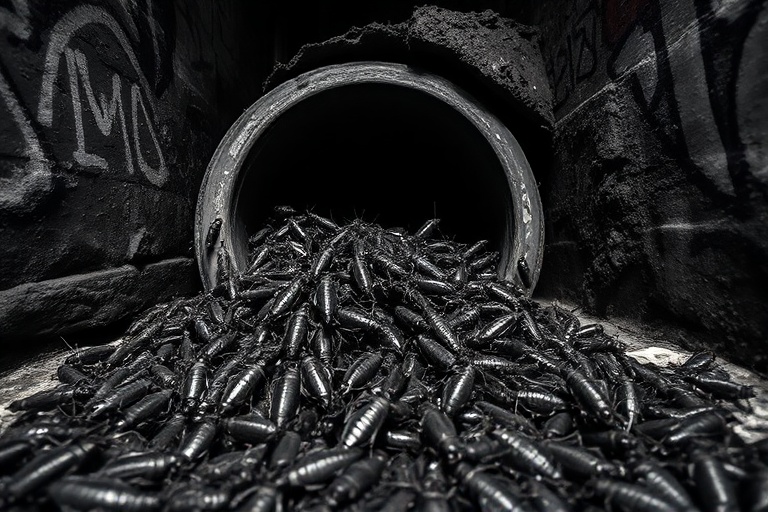
The Cockroach Janata Party has emerged as a bizarre yet brilliant form of political protest in India. At first glance, it appears to be a joke—a party founded on the back of an insect. Yet, beneath its absurd exterior lies a sharp commentary on the state of Indian democracy, political disillusionment, and the power of satire in mobilizing public sentiment.
The movement gained traction online, particularly among younger generations, who have grown frustrated with traditional political parties. Its name, a play on the Janata Party—a historic political force in India—replaces the human element with a cockroach, symbolizing resilience, adaptability, and perhaps a touch of revulsion toward the political establishment.
But what exactly is the Cockroach Janata Party, and why has it struck a chord with so many? To understand its significance, we must examine its origins, its symbolism, and the broader cultural context in which it exists.
The Origins of a Satirical Movement
The Cockroach Janata Party was born in the digital age, where memes and humor have become powerful tools for political expression. It first appeared on social media platforms like Twitter and Reddit, where users began joking about forming a political party led by cockroaches. The absurdity of the idea quickly caught on, with memes spreading virally across the internet.
What started as a joke soon evolved into something more structured. Enthusiasts began drafting a mock manifesto, outlining policies that a cockroach-led government might implement. These included “survival of the fittest” governance, “no shoes allowed in Parliament” (a nod to the insect’s preference for crawling), and “unlimited food storage” (a reference to cockroaches’ resilience in famine conditions).
The movement’s leaders, who remain anonymous, have embraced the absurdity while subtly critiquing real-world politics. They argue that if traditional parties have failed the people, perhaps an unlikely leader—like a cockroach—might do a better job. The humor serves as a coping mechanism for many who feel disenfranchised by the political system.
Why a Cockroach? The Symbolism Behind the Satire
The choice of a cockroach as the face of this movement is far from random. Cockroaches are often associated with resilience—they survive nuclear disasters, thrive in filth, and adapt to nearly any environment. In a country where political parties rise and fall with alarming frequency, these traits resonate with a public that feels neglected by its leaders.
Moreover, cockroaches are reviled by many, much like how politicians are viewed by the electorate. The movement’s detractors argue that it trivializes politics, but its supporters see it as a way to expose the absurdity of real-world governance. By placing a cockroach in the driver’s seat, the movement forces people to confront the failures of their elected officials.
There’s also a democratic element to the satire. Cockroaches, after all, are not beholden to any ideology or special interest. They operate purely on instinct, much like how many voters feel they must navigate politics without true representation. The movement’s mock policies—like prioritizing survival over ideology—highlight the disconnect between politicians and the people they claim to serve.
Key Features of the Cockroach Janata Party
- Anonymity: The party’s leaders operate under pseudonyms, avoiding personal scrutiny while allowing the movement to grow organically.
- Digital-First Strategy: The party thrives on memes, viral challenges, and online engagement, bypassing traditional media gatekeepers.
- Mock Policies: The manifesto includes absurd yet thought-provoking policies that critique real-world governance.
- Inclusivity: Anyone can join the movement, regardless of political affiliation, as long as they embrace the humor and the underlying critique.
The Broader Implications: Satire as a Form of Political Dissent
The Cockroach Janata Party is more than just a joke—it’s a reflection of a deeper discontent with India’s political landscape. In an era where trust in institutions is at an all-time low, satire has become a safe outlet for frustration. Movements like this challenge the status quo by exposing its ridiculousness, forcing people to question the systems they’ve been conditioned to accept.
Historically, satire has played a crucial role in political movements. From the cartoons of R.K. Laxman to the satirical news of The Onion, humor has long been a tool for critiquing power. The Cockroach Janata Party fits into this tradition, but with a modern twist. It leverages the internet’s viral nature to spread its message, making it accessible to younger, digitally native audiences.
Yet, the movement also raises questions about the limits of satire. Can humor truly drive change, or does it risk trivializing serious issues? Some argue that while the Cockroach Janata Party is entertaining, it lacks the substance to effect real-world impact. Others believe that its very absurdity makes it more effective—by making people laugh, it disarms their cynicism and opens them up to deeper critiques of the system.
What’s Next for the Cockroach Janata Party?
As of now, the Cockroach Janata Party remains a digital phenomenon, with no real-world political aspirations. Its leaders have made it clear that the movement is about humor, not governance. However, its growing popularity suggests that there’s an appetite for alternative forms of political expression.
Could the Cockroach Janata Party inspire real-world movements? It’s possible. Already, similar satirical parties have emerged in other countries, using humor to challenge political norms. In India, where political apathy is rampant, the movement serves as a reminder that dissent doesn’t always have to be serious to be meaningful.
The future of the Cockroach Janata Party is uncertain, but its impact is already visible. It has sparked conversations about democracy, resilience, and the role of humor in politics. Whether it fades into obscurity or evolves into something more remains to be seen. One thing is clear: in a world where politics often feels like a circus, the Cockroach Janata Party is a refreshing reminder that sometimes, the best way to fight absurdity is with absurdity.
Conclusion
The Cockroach Janata Party may have started as a joke, but it has grown into a cultural touchstone for a generation disillusioned with politics. By using humor as a weapon, it exposes the flaws of the system while offering a cathartic release for those who feel ignored. Whether it lasts or fades away, its legacy will be a testament to the power of satire in challenging authority.
For now, the party continues to thrive online, a digital rebellion against the status quo. And if nothing else, it proves that sometimes, the most effective leaders aren’t humans at all.
For more on political movements and satire in India, explore our Politics and Culture sections.