French Open 2026: What to Expect from Tennis’ Most Iconic Clay Event
“`html
The French Open 2026: A Global Tennis Spectacle on the Horizon
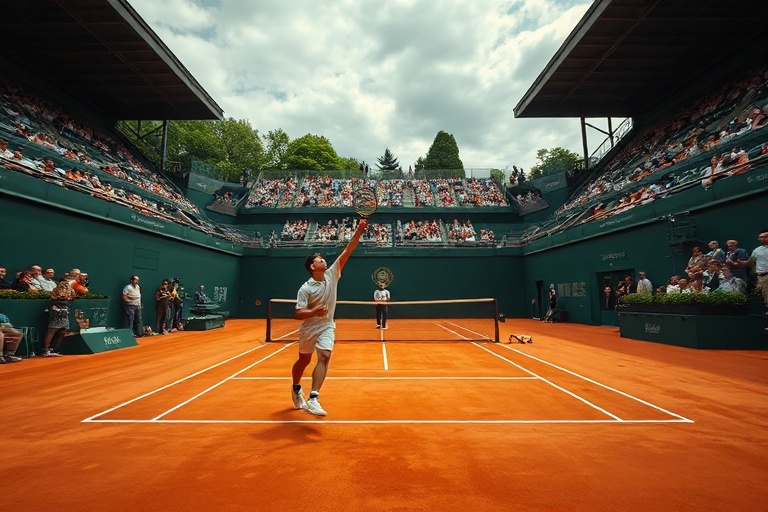
The French Open 2026 is already generating buzz among tennis enthusiasts and casual fans alike. Scheduled to take place from late May to early June, the event will once again transform the clay courts of Roland-Garros into the epicenter of the tennis world. This prestigious tournament, known for its rich history and challenging surface, continues to captivate audiences with its blend of athletic prowess and cultural significance.
Tennis has long been a sport that transcends borders, and the French Open embodies this global appeal. Players from every corner of the planet converge on Paris, bringing with them diverse styles, stories, and ambitions. The event is not just a competition; it is a celebration of tennis in its purest form, where tradition meets innovation on the slowest major surface in the game.
The Evolution of Roland-Garros: From Humble Beginnings to Global Prominence
Roland-Garros, named after the French aviator Roland Garros, has been the host of the French Open since 1925. The tournament’s origins trace back to 1891 when it was first held as a national championship. Over the decades, it has grown from a modest event to one of the four Grand Slam tournaments, alongside Wimbledon, the US Open, and the Australian Open. Its clay surface demands patience, endurance, and tactical brilliance, setting it apart from the faster hard courts of the other majors.
The tournament’s expansion in 2020, with the construction of the new Court Philippe-Chatrier roof and the addition of three temporary courts, marked a significant milestone. These upgrades ensure that the French Open can weather unpredictable Parisian weather, allowing matches to proceed without interruption. For 2026, further enhancements are expected, including potential upgrades to the media and player facilities, reinforcing Roland-Garros’ status as a state-of-the-art venue.
Culturally, the French Open holds a unique place in the sporting calendar. Unlike Wimbledon’s grass courts or the hard courts of the US Open, clay presents a different challenge. It slows the ball down, rewards precision, and often produces longer rallies. This surface has historically favored players with exceptional endurance and defensive skills, such as Rafael Nadal, who has dominated the tournament with a record 14 titles. The clay also adds a layer of drama, where a single slip or misstep can derail even the most talented player’s campaign.
The Global Stage: How the French Open Connects Tennis Fans Worldwide
The French Open is more than just a tournament; it is a global event that unites fans from every continent. In 2026, broadcasters from over 200 countries will transmit the action, reaching millions of viewers. The tournament’s international appeal is evident in the diversity of its participants. In recent years, players from Serbia, Canada, Greece, and Japan have risen to prominence, reflecting the sport’s growing global reach.
One of the most compelling aspects of the French Open is its ability to spotlight emerging talent. The qualifying rounds often produce underdog stories that capture the imagination of fans. For instance, in 2024, a qualifier from Argentina stunned the field with a run to the quarterfinals, proving that the clay courts are level playing fields where perseverance can triumph over pedigree. The 2026 edition promises to continue this tradition, with young stars like Carlos Alcaraz, Jannik Sinner, and Coco Gauff expected to contend for the title.
The tournament also serves as a cultural bridge, bringing together fans from different backgrounds. Paris, with its cosmopolitan vibe, becomes a melting pot of languages, cuisines, and traditions during the two weeks of the event. The fan zones, sponsor activations, and cultural programs surrounding the tournament add layers to the experience, making it as much about community as it is about competition.
Additionally, the French Open has increasingly embraced sustainability initiatives. In 2025, Roland-Garros achieved a 50% reduction in single-use plastics and introduced a comprehensive recycling program. For 2026, organizers are expected to unveil further eco-friendly measures, including carbon-neutral transportation options for fans and players. These efforts reflect a broader trend in sports, where environmental responsibility is becoming as important as athletic performance.
What to Expect in 2026: Predictions, Storylines, and Surprises
As the countdown to the French Open 2026 begins, several storylines are already capturing the attention of fans and analysts. The men’s draw is particularly intriguing, with a potential changing of the guard. Novak Djokovic, despite his advancing age, remains a formidable force, but the younger generation is nipping at his heels. Players like Alcaraz, Sinner, and Daniil Medvedev have already claimed major titles and could push for a breakthrough on clay.
The women’s field is equally compelling. Iga Świątek, the defending champion, will return as the favorite, but rising stars like Aryna Sabalenka and Elena Rybakina are eager to challenge her dominance. The depth of the women’s game has never been greater, with multiple players capable of lifting the trophy. Meanwhile, veterans such as Serena Williams and Venus Williams, though no longer at their peak, continue to inspire with their longevity and resilience.
Other narratives to watch include the potential return of injury-plagued stars like Roger Federer, who has hinted at a possible comeback. While his participation remains uncertain, his presence would undoubtedly electrify the tournament. Additionally, the doubles and mixed doubles competitions often produce unexpected champions, adding another layer of unpredictability to the event.
For fans planning to attend, the French Open offers an unparalleled experience. The atmosphere at Roland-Garros is electric, with the terraces of the Chatrier Court buzzing with anticipation. The French Open is also a chance to explore Paris, from the historic landmarks to the vibrant neighborhoods. Whether you’re a die-hard tennis fan or a first-time visitor, the tournament promises memories that last a lifetime.
The Bigger Picture: Tennis’ Most Iconic Clay Event
The French Open is more than a stop on the ATP and WTA tours; it is a cultural institution. Its clay courts have witnessed some of the most iconic moments in tennis history, from Bjorn Borg’s dominance in the 1970s to Justine Henin’s one-handed backhand magic in the 2000s. The tournament’s legacy is built on these moments, which resonate with fans long after the final point is played.
Looking ahead to 2026, the French Open will continue to evolve while staying true to its roots. The tournament’s ability to balance tradition with innovation ensures its relevance in an ever-changing sports landscape. Whether you’re tuning in from a living room in Tokyo, a café in Buenos Aires, or the stands at Roland-Garros, the French Open offers something for everyone.
For those looking to dive deeper into the world of tennis, Dave’s Locker’s Sports section features expert analysis, player profiles, and historical retrospectives. The French Open is a celebration of the sport’s past, present, and future, and 2026 is set to be another unforgettable chapter in its storied history.
—