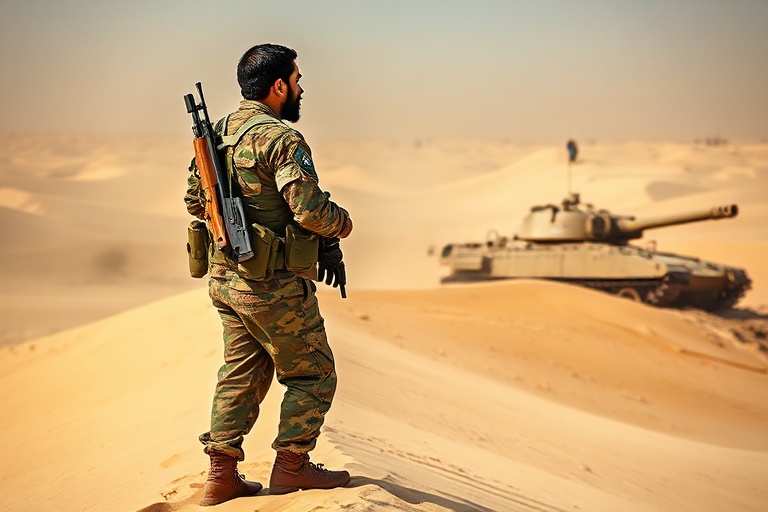
Iran War Crisis: Causes, Risks and What Comes Next
“`html
Iran War Tensions: What’s at Stake and Why It Matters
The specter of conflict in the Middle East has once again taken center stage, this time with Iran at the epicenter. Tensions have escalated sharply in recent months, fueled by a complex web of regional rivalries, nuclear ambitions, and proxy conflicts. The stakes are high—not just for Iran and its neighbors, but for global powers invested in stability and energy security.
This isn’t the first time the world has watched the region with bated breath. However, the current crisis carries unique risks. Iran’s expanding military capabilities, combined with its network of allied militias from Lebanon to Yemen, create a volatile mix. Meanwhile, Western powers remain divided on how to respond, with some advocating diplomacy and others leaning toward deterrence through strength.
Historical Context: A Legacy of Conflict
The roots of today’s tensions stretch back decades. The 1979 Islamic Revolution transformed Iran into an anti-Western theocracy, setting the stage for decades of confrontation. The Iran-Iraq War (1980–1988) further entrenched mutual hostility, leaving scars that still shape regional politics.
More recently, the 2015 nuclear deal—formally known as the Joint Comprehensive Plan of Action (JCPOA)—offered a brief respite. It temporarily curbed Iran’s nuclear program in exchange for sanctions relief. But when the United States withdrew from the agreement in 2018 under former President Donald Trump, Iran resumed uranium enrichment at higher levels, shrinking its breakout time to a potential nuclear weapon.
This breakdown left Iran and its adversaries in a dangerous stalemate. Proxy conflicts intensified across Syria, Iraq, and Yemen, while targeted assassinations—such as the 2020 killing of Iranian General Qasem Soleimani by a U.S. drone strike—raised the risk of direct confrontation.
- 1979 Islamic Revolution: Overthrew the U.S.-backed monarchy, establishing an Islamic Republic.
- 1980–1988 Iran-Iraq War: Devastating conflict that killed over a million people and deepened sectarian divides.
- 2015 JCPOA: Nuclear agreement that temporarily limited Iran’s nuclear activities.
- 2018 U.S. withdrawal: Trump administration exited the deal, reimposed sanctions, and escalated pressure on Iran.
Current Flashpoints: What’s Driving the Crisis
Several recent events have pushed tensions to a boiling point. In April 2024, Iran launched a direct missile and drone attack on Israel in retaliation for a suspected Israeli strike on its consulate in Damascus. While Israel and its allies intercepted most of the projectiles, the attack marked the first time Iran had directly targeted Israeli territory from its own soil.
This escalation followed a pattern of tit-for-tat strikes. Israel has carried out numerous covert operations inside Iran, including assassinations of nuclear scientists and sabotage of nuclear facilities. Meanwhile, Iran-backed groups like Hezbollah in Lebanon and the Houthis in Yemen have targeted Israel and international shipping routes, further destabilizing the region.
The situation is further complicated by Iran’s growing military partnership with Russia. Since the invasion of Ukraine, Iran has supplied drones and potentially ballistic missiles to Moscow, deepening its isolation from the West and strengthening its alliance with a major power facing global sanctions.
Another critical element is Iran’s nuclear program. International inspectors have repeatedly warned that Iran now possesses enough highly enriched uranium to build multiple nuclear weapons if it chooses to do so. While Iran insists its program remains peaceful, the rapid acceleration of its capabilities has alarmed Western intelligence agencies.
Regional Alliances and Proxy Wars
The conflict is no longer just about Iran and the West. It’s a multi-layered proxy war involving regional powers with competing interests.
- Saudi Arabia and the UAE: These Gulf states view Iran as an existential threat due to its support for groups like the Houthis in Yemen and militias in Iraq. They have strengthened ties with Israel and the U.S. in response.
- Israel: Prime Minister Benjamin Netanyahu has framed Iran as an “existential enemy” and vowed to prevent it from acquiring nuclear weapons, even if it means unilateral military action.
- Russia: Moscow sees Iran as a key partner in its efforts to challenge U.S. influence in the Middle East and has provided military and diplomatic support.
- Turkey: Ankara walks a tightrope, balancing its NATO membership with economic and strategic interests in Iran, including trade and energy deals.
The Human Cost: Civilians in the Crossfire
Amid the geopolitical maneuvering, civilians bear the brunt of the crisis. In Iran, economic sanctions have crippled living standards, with inflation soaring and unemployment remaining stubbornly high. Protests over economic hardship and political repression have been met with harsh crackdowns, drawing international condemnation.
In neighboring countries, the proxy wars have displaced millions. In Yemen, the conflict between the Saudi-led coalition and Iran-backed Houthis has created one of the world’s worst humanitarian disasters, with famine and disease rampant. In Syria, Iran’s support for the Assad regime has prolonged a civil war that has killed hundreds of thousands and displaced millions more.
Even in Israel and Lebanon, civilians live under constant threat. The 2023–2024 escalation between Israel and Hezbollah has forced hundreds of thousands to flee their homes, while rocket attacks and airstrikes have disrupted daily life. The psychological toll on communities living under the specter of sudden violence cannot be overstated.
What Happens Next? Potential Outcomes and Risks
The path forward is fraught with uncertainty. Diplomacy remains a possibility, but trust is in short supply. The Biden administration has signaled a willingness to re-engage with Iran, but only under strict conditions. Meanwhile, Israel’s hardline government has vowed to take unilateral action to neutralize Iran’s nuclear program, raising fears of a regional war.
Analysts outline several potential scenarios:
- Diplomatic Solution: A renewed nuclear deal that includes stricter inspections and regional security guarantees. However, this would require compromises from all sides—something that has proven elusive in the past.
- Limited Military Strikes: Israel or the U.S. could launch targeted strikes on Iran’s nuclear facilities or military infrastructure. While this might delay Iran’s program, it could also trigger a broader conflict.
- Full-Scale War: A direct confrontation between Iran and Israel—or even between Iran and the U.S.—could engulf the region, disrupt global oil supplies, and destabilize economies worldwide.
- Proxy Conflict Escalation: Low-intensity warfare through militias and covert operations could continue indefinitely, with no clear winner but mounting human suffering.
Regardless of the outcome, the humanitarian and economic consequences of war would be devastating. Oil prices could skyrocket, global supply chains could falter, and millions of refugees could flood into neighboring countries. The ripple effects would be felt as far as Europe and Asia.
Can Diplomacy Still Work?
Despite the grim outlook, diplomacy remains the only viable path to a sustainable solution. The JCPOA, flawed as it was, demonstrated that even bitter rivals can reach agreements under the right conditions. The challenge now is rebuilding that framework—one that addresses Iran’s security concerns while ensuring it cannot develop nuclear weapons.
Key steps could include:
- Reviving the JCPOA with stricter verification measures and sunset clauses.
- Incorporating regional security guarantees, possibly mediated by Gulf states and Turkey.
- Lifting sanctions gradually in exchange for verifiable Iranian compliance.
However, the window for diplomacy is closing. With each passing day, Iran’s nuclear program advances, and its regional influence grows. The longer the standoff persists, the harder it becomes to avoid a catastrophic miscalculation.
Conclusion: A Moment of Reckoning
The crisis in Iran is more than a regional conflict—it’s a global test of whether diplomacy can still avert disaster in an era of rising nationalism and declining trust. The choices made in the coming months will shape the Middle East for decades and determine whether the world lurches toward war or finds a path back from the brink.
For now, the world watches as diplomats scramble for solutions and military planners prepare for worst-case scenarios. But the true cost of this standoff will ultimately be measured not in headlines or geopolitical maneuvering, but in the lives of ordinary people caught in the crossfire.
One thing is clear: the time for half-measures and empty threats is over. Whether through negotiation or confrontation, the crisis in Iran demands resolution—and soon.