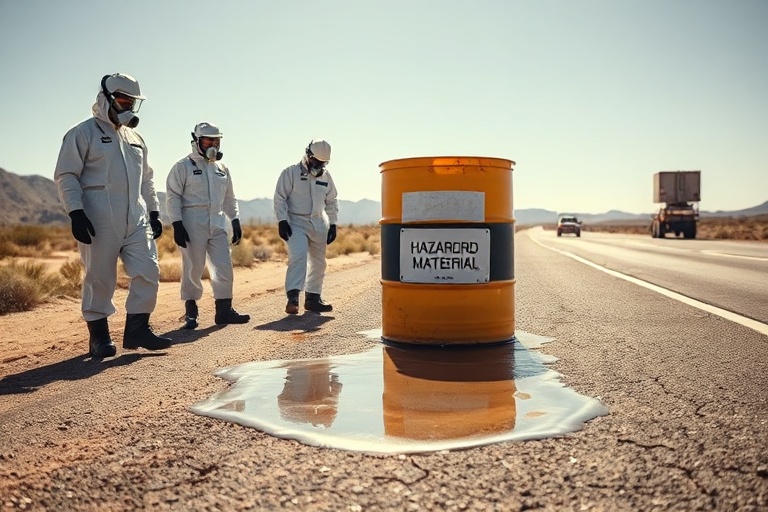
The handling of hazardous materials in New Mexico has become an increasingly visible issue, driven by both industrial activity and transportation routes that traverse the state. With a landscape that includes major highways, rail lines, and industrial facilities, the risks associated with hazmat incidents are significant. Recent events have underscored the importance of preparedness, response coordination, and public awareness. This article examines the current state of hazmat operations in New Mexico, focusing on regulatory frameworks, recent incidents, and the evolving strategies used to mitigate risks.
Regulatory Landscape and Oversight in New Mexico
New Mexico’s approach to hazardous materials management is shaped by a combination of federal, state, and local regulations. The New Mexico Environment Department (NMED) plays a central role in enforcing environmental and safety standards, working in tandem with agencies like the Environmental Protection Agency (EPA) and the Pipeline and Hazardous Materials Safety Administration (PHMSA). These agencies oversee everything from storage and transportation to emergency response planning.
The state’s regulations align closely with federal guidelines but include additional provisions tailored to New Mexico’s unique industrial and geographical profile. For instance, facilities handling large quantities of hazardous waste in the Permian Basin region must adhere to stricter monitoring protocols due to the area’s high concentration of oil and gas operations. Additionally, New Mexico’s proximity to major transportation corridors, such as I-40 and I-25, requires stringent controls on the movement of hazardous materials to prevent accidental releases.
Local emergency responders also receive specialized training through programs like the Hazardous Materials Emergency Response Program (HMERP), which is funded by the NMED. This initiative provides first responders with the tools and knowledge needed to manage hazmat incidents effectively. Training covers a range of scenarios, from chemical spills to radiological emergencies, ensuring that communities are better protected.
Recent Hazmat Incidents and Their Impact
New Mexico has experienced several high-profile hazmat incidents in recent years, each highlighting vulnerabilities in the state’s infrastructure and response systems. One notable event occurred in 2022 near Hobbs, where a train derailment resulted in the release of anhydrous ammonia, a toxic gas commonly used in agriculture. The incident forced evacuations and required a coordinated response from local, state, and federal agencies. Investigations later revealed that the derailment was linked to track maintenance issues, prompting calls for increased investment in rail safety infrastructure.
Another significant incident took place in Albuquerque in 2023, where a truck carrying industrial chemicals overturned on I-40, spilling hydrochloric acid. The spill led to temporary closures of the highway and required hazmat teams to neutralize the chemical before it could enter the local water system. While no major injuries were reported, the incident raised concerns about the adequacy of spill containment measures along major transportation routes.
These events are not isolated. According to data from the PHMSA, New Mexico ranks among the top states in the U.S. for hazmat transportation incidents per capita. The majority of these incidents involve petroleum products, chemicals used in oil and gas extraction, and agricultural chemicals. The state’s reliance on these industries, while economically beneficial, also increases the potential for hazmat-related emergencies.
Key Takeaways from Recent Incidents
- Infrastructure Vulnerabilities: Many incidents are linked to aging infrastructure, such as rail tracks and highways, which are not always equipped to handle the volume or type of hazmat shipments.
- Response Coordination: While state and local agencies have improved their coordination, gaps remain in communication between private industry and public responders.
- Public Preparedness: Incidents like the Albuquerque spill have spurred calls for better public education on evacuation routes and shelter-in-place procedures.
- Regulatory Enforcement: There is an ongoing debate about whether current regulations are sufficient to address the scale of hazmat transportation in the state.
Emergency Response and Preparedness Strategies
In response to recent incidents, New Mexico has taken steps to enhance its emergency response capabilities. The state has expanded its hazmat response teams, particularly in rural areas where resources are often limited. Additionally, the NMED has increased its oversight of high-risk facilities, conducting unannounced inspections and requiring more frequent reporting on hazardous waste storage.
One innovative approach gaining traction is the use of real-time monitoring systems for hazmat shipments. These systems leverage GPS tracking and chemical sensors to provide live updates on the location and status of hazardous materials in transit. Companies like BNSF Railway and several trucking firms operating in New Mexico have adopted these technologies to improve safety and compliance.
Public awareness campaigns have also been a focus. The NMED has partnered with local schools and community organizations to distribute educational materials on hazmat risks and safety procedures. These efforts aim to ensure that residents know how to respond in the event of an incident, whether it’s a chemical spill or a radiological emergency.
Future Challenges and Policy Considerations
Despite these advancements, New Mexico faces ongoing challenges in managing hazmat risks. One of the most pressing issues is the state’s aging pipeline infrastructure. Many of the pipelines transporting hazardous materials, including oil, gas, and chemicals, were installed decades ago and are increasingly prone to leaks and failures. The 2020 pipeline rupture near Gallup, which spilled thousands of gallons of crude oil, serves as a stark reminder of the risks posed by outdated infrastructure.
Another challenge is the growing volume of hazmat shipments associated with the state’s booming energy sector. The Permian Basin, one of the most productive oil fields in the world, relies heavily on the transportation of hazardous materials, including drilling fluids, natural gas liquids, and radioactive waste. While these shipments are essential to the state’s economy, they also increase the likelihood of incidents.
Policymakers are now considering a range of solutions to address these challenges. Proposals include:
- Increased funding for infrastructure upgrades, particularly for rail and pipeline systems.
- Stricter penalties for companies that fail to comply with hazmat transportation regulations.
- Expanded use of real-time monitoring and tracking technologies for hazmat shipments.
- Enhanced coordination between state agencies, tribal governments, and neighboring states to improve regional response capabilities.
These measures could help mitigate risks, but their implementation will require significant investment and political will. The debate over how to balance economic growth with public safety is likely to remain a contentious issue in New Mexico for years to come.
Conclusion
New Mexico’s relationship with hazardous materials is complex, shaped by its industrial landscape, transportation networks, and regulatory environment. While recent incidents have exposed vulnerabilities in the state’s hazmat management systems, they have also spurred efforts to improve safety and preparedness. From enhanced training for first responders to the adoption of cutting-edge monitoring technologies, New Mexico is taking steps to address its hazmat challenges.
However, the path forward is not without obstacles. Aging infrastructure, increasing hazmat shipments, and the need for stronger regulatory enforcement all pose significant challenges. As the state continues to grapple with these issues, the lessons learned from recent incidents will be critical in shaping a safer future. For residents and policymakers alike, the message is clear: proactive measures and continuous improvement are essential to managing the risks associated with hazardous materials in New Mexico.