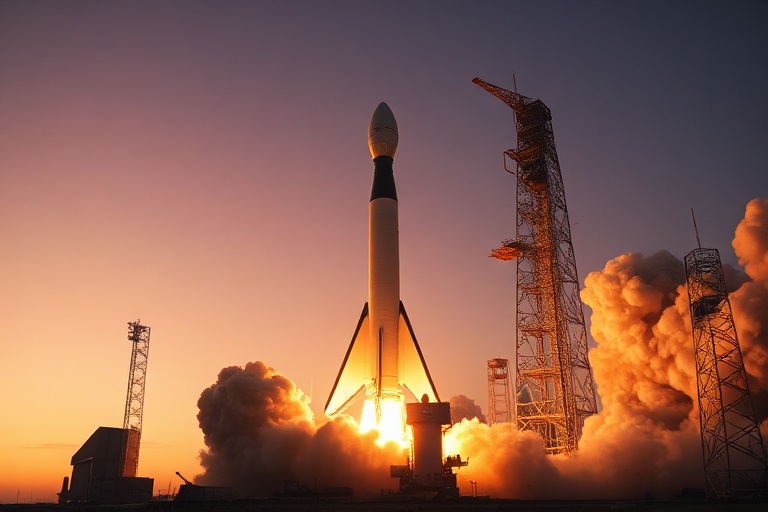
SpaceX Starship Launch: A New Era in Global Space Exploration
“`html
Starship Launch: A New Chapter in Space Exploration
On April 20, 2023, SpaceX’s Starship rocket lifted off from Boca Chica, Texas, marking a pivotal moment in the history of spaceflight. The uncrewed test flight, though ending in an explosion, represented a bold step toward humanity’s future among the stars. Unlike traditional government-led missions, Starship is a private venture driven by innovation, cost efficiency, and ambition.
The launch drew global attention not just from engineers and scientists but from communities around the world. From Tokyo to Toronto, people watched live streams and shared reactions across social media platforms. This event underscored how space exploration is no longer confined to national agencies like NASA or Roscosmos. Instead, private companies have become key players, shaping the trajectory of human progress beyond Earth.
The Vision Behind Starship
Elon Musk, SpaceX’s founder, has long envisioned Starship as a fully reusable, super-heavy lift vehicle capable of carrying humans to Mars. The architecture of Starship—comprising a massive first-stage booster and a spacecraft—is designed to revolutionize space travel by drastically reducing costs. Traditional rockets are discarded after a single use, but Starship’s design allows both its booster and upper stage to land and fly again.
This reusability is more than a technical achievement; it’s a cultural shift. For decades, space missions were seen as exclusive, high-budget endeavors. Starship challenges that perception by aiming to make space travel as routine as air travel eventually became. The implications stretch far beyond science fiction. If successful, Starship could democratize access to orbit, enabling not just scientific research but also commercial ventures like space tourism and asteroid mining.
A Global Moment in Science and Media
The Starship launch was broadcast live by major news outlets and streamed globally, reflecting the event’s cultural significance. In India, where space exploration has grown rapidly under ISRO’s leadership, the test flight sparked discussions about public versus private sector roles in space. Meanwhile, in Europe, where the European Space Agency (ESA) collaborates with both public and private entities, commentators noted how Starship’s progress might influence future EU space policy.
Social media amplified the event’s reach. On Twitter, hashtags like #Starship and #MarsOrBust trended worldwide. Memes, live reaction threads, and expert analyses flooded timelines, blending scientific curiosity with internet culture. In China, where space ambitions are expanding under CNSA’s ambitious plans, state media covered the launch with cautious optimism, highlighting the competitive nature of the new space race.
This global engagement reveals a broader trend: space exploration is increasingly a shared human endeavor. While competition exists—especially between the U.S. and China—collaboration persists in scientific research, data sharing, and even commercial partnerships. Starship’s launch was not just a technical milestone; it was a cultural one, uniting people across continents in awe and anticipation.
Challenges and Criticisms on the Path Forward
Despite the excitement, the April 2023 test flight ended in failure. The rocket experienced a “rapid unscheduled disassembly”—a polite term for an explosion—shortly after liftoff. Such setbacks are expected in experimental programs, but they also prompt scrutiny. Critics questioned the viability of Starship’s timeline, especially given repeated delays and technical hurdles.
Environmental concerns also emerged. The Boca Chica launch site, located near sensitive coastal ecosystems, faced regulatory scrutiny over noise, debris, and potential ecological impact. Local communities raised issues about safety and disruption, underscoring the tension between innovation and responsibility. SpaceX responded by implementing stricter environmental protocols and increased communication with regulators and residents.
Regulatory challenges are not unique to the U.S. In Japan, where commercial spaceflight is growing, the government is revising laws to accommodate private launches. Similarly, in the UAE, which has rapidly expanded its space sector, officials are studying regulatory frameworks to balance innovation with safety. These global conversations highlight a shared challenge: how to foster space innovation while ensuring accountability.
What’s Next for Starship and Humanity?
The road ahead for Starship is long and complex. Upcoming tests will focus on controlled landings, orbital refueling, and crewed missions. Each step brings new risks and opportunities. Success could redefine space travel, making interplanetary colonization feasible. Failure could delay progress but also yield valuable lessons.
Beyond engineering, Starship symbolizes a cultural shift. It represents a belief that humanity’s future lies not just on Earth but among the stars. This idea resonates deeply in communities that have long looked to the cosmos for inspiration—whether through ancient myths, science fiction, or modern astronomy.
As private companies like SpaceX, Blue Origin, and others push boundaries, governments are adapting. NASA’s Artemis program, for example, now includes commercial partners in its lunar missions. This collaboration could accelerate humanity’s return to the Moon and eventual journey to Mars. The global space community is watching closely, ready to learn, adapt, and contribute.
The Starship launch was more than a rocket test. It was a statement—a declaration that the future of space is not just a government project but a shared human endeavor. From engineers in Texas to students in Mumbai, from policymakers in Brussels to dreamers in Cape Town, the journey to the stars is just beginning.
The Role of Public Engagement
One of the most striking aspects of the Starship launch was its public visibility. Unlike the Cold War-era space race, which was largely a government-to-government affair, today’s space exploration thrives on transparency and public engagement. SpaceX’s live streams, social media presence, and even Elon Musk’s personal updates invite global participation.
This openness fosters a sense of collective ownership. People don’t just watch space missions; they feel invested in them. Schools integrate space topics into curricula. Artists create music, films, and art inspired by spaceflight. Gamers design space-themed video games that simulate rocket launches. The cultural ripple effect is undeniable.
Even failures become teachable moments. The explosion of Starship in 2023 was widely discussed in classrooms and online forums. Students analyzed telemetry data, engineers debated design flaws, and artists created satirical memes. This engagement ensures that space exploration remains relevant, inspiring the next generation of scientists, engineers, and dreamers.
Conclusion: A Shared Journey Among the Stars
The Starship launch was a milestone, but it is only one step in a much longer journey. Humanity’s future in space will be shaped not just by engineers and scientists but by policymakers, artists, educators, and everyday people. As private companies and governments collaborate, the boundaries between nations blur in the vast expanse of space.
What started as a dream—of walking on the Moon, living on Mars, exploring distant worlds—is now becoming a plan. And with each test flight, each success, and each setback, humanity moves closer to turning that dream into reality. The stars are no longer out of reach. They are our destination.