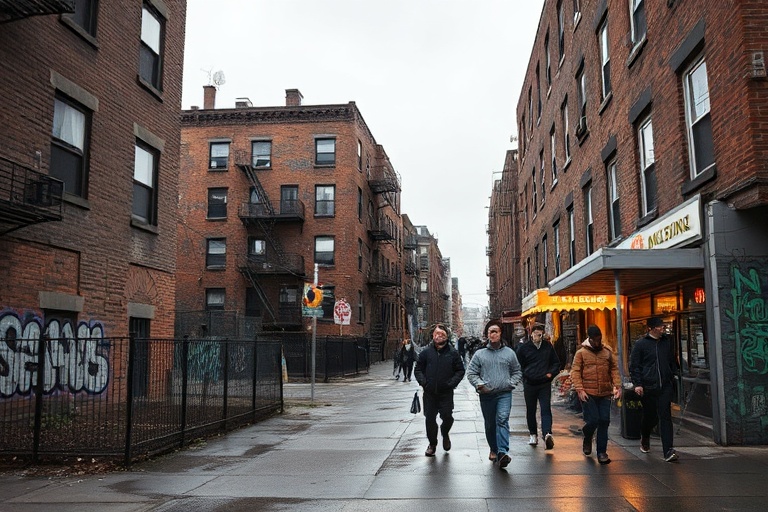
The Boroughs: NYC’s Diverse Urban Heart Beyond Manhattan
“`html
The Boroughs: New York City’s Diverse Urban Tapestry
New York City’s identity is often distilled into its five boroughs—each a world unto itself, yet collectively forming the greatest urban mosaic on Earth. Manhattan may command the postcards and headlines, but the true heartbeat of NYC pulses strongest in the outer boroughs: Brooklyn, Queens, the Bronx, and Staten Island. These areas offer distinct cultural flavors, economic engines, and urban experiences that shape the city’s daily rhythm.
What makes the boroughs fascinating is their refusal to conform to a single narrative. While Manhattan’s skyline and financial towers dominate perceptions, the outer boroughs have long been incubators of creativity, resilience, and identity. From the Afro-Caribbean beats of Crown Heights to the industrial grit of Hunts Point, each borough tells a story of migration, innovation, and community that defines modern New York.
The Evolution of the Boroughs: From Rural Outposts to Urban Centers
Before the consolidation of 1898, the five boroughs existed as separate municipalities—towns, villages, and rural landscapes connected by ferry and early rail lines. Staten Island was known for its oyster beds and quiet farmland. The Bronx was a patchwork of estates and undeveloped hills. Brooklyn, already a thriving city of over 300,000 people, bristled at being subsumed by New York.
Consolidation was controversial. Critics warned of losing local identity. Yet over time, the merger forged a unified city capable of global influence. Each borough evolved in response to geography, industry, and waves of immigration. The Bronx developed around rail hubs and became a nucleus for Latinx culture. Queens became a global village, its airports and diversity transforming it into the most ethnically diverse urban area on the planet. Brooklyn’s waterfront factories gave way to artisanal breweries and tech startups. Staten Island, though geographically isolated, became a haven for families seeking space and lower costs.
Today, the boroughs are no longer satellite districts. They are economic and cultural leaders in their own right. The Bronx hosts the world’s largest cooperatively owned food distribution center. Queens is home to two major airports and over 190 languages. Brooklyn’s creative class has reshaped real estate and culture nationwide. Staten Island, often overlooked, remains a crucial residential buffer and a bastion of Staten Island pride.
A Snapshot of Each Borough’s Unique Character
The distinctions between boroughs are more than geographic—they reflect centuries of layered history and self-determination.
- Brooklyn: Once the third-largest city in the U.S., Brooklyn today is a magnet for artists, entrepreneurs, and young families. Neighborhoods like Williamsburg and DUMBO have become global symbols of urban revival, while areas like East New York and Brownsville continue to fight for equitable investment. The borough’s identity is fluid yet fiercely local, rooted in its working-class past and creative future.
- Queens: With over 2.4 million residents, Queens is the most populous borough and the most diverse. It is the only urban area in the world where the majority of residents are foreign-born. Flushing hosts one of the largest Chinatowns outside Asia. Astoria pulses with Greek culture. Long Island City has become a tech hub rivaling Silicon Valley. Queens proves that diversity is not just a buzzword—it’s the foundation of daily life.
- The Bronx: The birthplace of hip-hop, salsa, and countless culinary traditions, the Bronx is a cultural powerhouse. Though long associated with economic struggle, communities like Mott Haven and Fordham are seeing a renaissance in arts and affordable housing. The borough’s green spaces, from Van Cortlandt Park to the Bronx River, offer rare urban respite. The Bronx is not just surviving—it’s thriving on its own terms.
- Staten Island: Often called the “forgotten borough,” Staten Island offers a slower pace and stronger sense of community. It’s the only borough not connected to the subway system by rail, a fact that shapes its identity. Yet its natural beauty—from the Staten Island Greenbelt to the beaches of South Shore—makes it a sanctuary within the city. Its political independence and family-oriented lifestyle set it apart.
Economic Engines and Urban Challenges Across the Boroughs
Economically, the boroughs are no longer dependent on Manhattan. The Bronx’s Hunts Point Cooperative Market generates $2 billion annually in food distribution. Brooklyn’s tech sector employs over 30,000 people. Queens’ aviation and tourism industries support hundreds of thousands of jobs. Staten Island’s healthcare and education sectors are among the fastest-growing in the city.
Yet disparities persist. Median household income in Staten Island ($87,000) far exceeds that of the Bronx ($45,000). Over 27% of Bronx children live in poverty, compared to 10% in Queens. While Brooklyn’s real estate boom has driven investment, it has also displaced long-term residents. The boroughs’ economic growth is uneven, reflecting systemic inequities in housing, education, and infrastructure.
Transportation remains a defining challenge. Subway access in Staten Island is limited to express buses. The Bronx has some of the slowest commute times in the city. Queens’ sprawling geography makes transit planning complex. Though the Second Avenue Subway extension and upcoming Interborough Express aim to bridge gaps, many residents still rely on cars, buses, and informal networks to get around.
Innovative Solutions Rising from the Boroughs
Despite these challenges, the boroughs are incubators of innovation. Community land trusts in Brooklyn are preserving affordable housing. Urban farms in the Bronx are combating food deserts. Co-housing projects in Queens are redefining multigenerational living. Staten Island’s composting initiatives are turning waste into resources.
Local leaders and grassroots organizations are driving change. The Brooklyn Greenway Initiative is transforming industrial waterfronts into public parks. The Bronx River Alliance has restored miles of riverfront habitat. Queens Memory Project is preserving immigrant histories through digital archives. These efforts show that progress doesn’t always come from the top down—sometimes it rises from the streets.
The Boroughs in Pop Culture: From Hip-Hop to Hollywood
The boroughs have long been a muse for artists, writers, and filmmakers. The Bronx gave birth to hip-hop in the 1970s, with DJ Kool Herc’s block parties in the West Bronx laying the foundation for a global movement. Queens became the setting for shows like The Marvelous Mrs. Maisel, capturing its golden-age glamour and Jewish immigrant roots. Brooklyn’s indie music scene birthed bands like The Strokes and LCD Soundsystem, while its streets have been immortalized in films like Do the Right Thing and Do Brooklyn.
Staten Island, though less represented, has its own cultural footprint. The Wu-Tang Clan put Shaolin on the map. The Staten Island Yankees brought minor-league baseball to the borough. Local chefs and food writers are elevating Staten Island’s Italian and seafood traditions.
Pop culture has helped shift perceptions. Where once the boroughs were seen as “other,” now they are celebrated for their authenticity. Shows like Insecure and Atlanta highlight Black and Latino experiences beyond Manhattan. Food shows like Salt Fat Acid Heat explore Queens’ global cuisine. The boroughs are no longer backdrops—they are protagonists.
Looking Ahead: The Future of the Boroughs
The future of the boroughs will be shaped by climate change, technology, and policy. Rising sea levels threaten waterfront neighborhoods in Brooklyn and Queens. Heat islands in the Bronx exacerbate public health crises. The influx of remote workers post-pandemic has driven demand for space and affordability, pushing prices higher in unexpected areas.
Yet with challenge comes opportunity. The boroughs are leading the way in climate resilience. The Bronx’s Hunts Point Resiliency Plan aims to protect the food hub from flooding. Queens’ urban canopy initiative seeks to cool neighborhoods with thousands of new trees. Brooklyn’s microgrid projects are reducing energy dependence. These efforts suggest a borough-driven model for sustainable urban living.
As New York City continues to grow, the boroughs offer a vital lesson: diversity is strength, and local identity is power. Whether through food, art, or activism, the boroughs are not just part of the city—they are redefining what the city can be.
For those who call the outer boroughs home, their pride is unshakable. As one longtime Brooklyn resident put it: “Manhattan has the lights. We have the soul.”
And it’s that soul—raw, resilient, and ever-evolving—that makes the boroughs the true essence of New York City.
For more on New York’s cultural evolution, explore our Culture section. To understand how urban spaces shape identity, visit our Analysis archive.