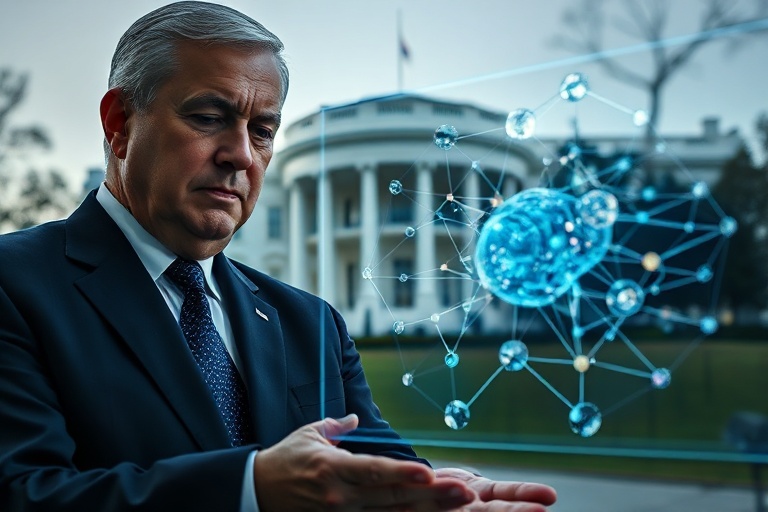
The White House has taken a significant step toward regulating artificial intelligence models with its recent announcement of new oversight measures. These guidelines aim to address concerns about safety, transparency, and ethical use while fostering innovation in the rapidly evolving AI landscape. The initiative reflects growing recognition that AI models—particularly those with broad societal impact—require structured oversight without stifling progress.
This move comes as part of a broader federal strategy to ensure AI technologies align with public interest. The White House’s approach combines voluntary commitments with potential regulatory frameworks, signaling a pragmatic balance between flexibility and accountability. Below, we explore the key components of this oversight plan and its implications for stakeholders.
Key Components of the White House AI Model Oversight Framework
The White House’s oversight framework is built on several core principles designed to guide AI development and deployment. These components reflect input from industry leaders, policymakers, and civil society groups to create a comprehensive yet adaptable system.
- Risk-Based Classification: AI models are categorized based on their potential impact, with stricter requirements for higher-risk applications such as healthcare diagnostics or autonomous vehicles.
- Transparency Requirements: Developers must disclose key details about their models, including training data sources, intended use cases, and limitations, to ensure accountability.
- Third-Party Audits: Independent evaluations of high-risk AI systems will be mandated to verify compliance with safety and ethical standards.
- Public Reporting: Companies must publish regular updates on model performance, incidents, and mitigation efforts to maintain public trust.
The framework also emphasizes collaboration with international partners to harmonize standards, particularly as AI technologies transcend national borders. By adopting a risk-based approach, the White House aims to avoid overly prescriptive regulations that could hinder innovation while still addressing critical concerns.
Industry and Civil Society React to the Oversight Plan
Reactions to the White House’s AI oversight proposal have been mixed, with stakeholders weighing the benefits of regulation against potential burdens. Tech companies, while supportive of the overall goals, have expressed concerns about compliance costs and operational complexities.
For example, smaller AI startups worry that stringent requirements could disproportionately affect their ability to compete with larger firms. Meanwhile, civil rights organizations have praised the focus on transparency but caution that enforcement mechanisms must be robust enough to prevent loopholes.
A recent Technology industry report highlighted that 62% of AI developers support oversight but emphasize the need for clear guidelines to avoid ambiguity. The debate underscores the challenge of crafting policies that are both enforceable and adaptable to rapid technological change.
The Role of Government in AI Governance
The White House’s initiative reflects a broader shift in how governments approach AI governance. Unlike traditional regulatory models, which often lag behind technological advancements, this framework seeks to be proactive and iterative. The government’s role is positioned as a facilitator rather than a gatekeeper, encouraging innovation while mitigating risks.
This approach aligns with the Politics section’s focus on policy trends shaping the future of technology. By engaging with industry leaders and academic experts, the White House aims to create a regulatory environment that evolves alongside AI capabilities. However, questions remain about the long-term sustainability of voluntary commitments versus mandatory regulations.
Some policymakers argue that self-regulation alone may not suffice, particularly for high-stakes applications like facial recognition or predictive policing. Others point to the success of existing voluntary frameworks, such as the AI Principles developed by the OECD, as evidence that industry-led initiatives can be effective when paired with government oversight.
Global Implications and Future Challenges
The White House’s AI oversight plan does not exist in a vacuum. As AI technologies become increasingly globalized, international coordination will be critical to ensuring consistent standards and preventing regulatory arbitrage. The European Union’s AI Act, for instance, takes a more prescriptive approach, while China’s regulations focus on state control over AI development.
This divergence raises concerns about fragmentation in the global AI market. Companies operating across multiple jurisdictions may face conflicting requirements, complicating compliance efforts. The White House’s framework attempts to strike a balance by emphasizing flexibility and collaboration, but its success will depend on how well it aligns with—or influences—international norms.
Looking ahead, several challenges will test the efficacy of the oversight plan. These include:
- Ensuring that enforcement mechanisms keep pace with technological advancements.
- Addressing the ethical implications of AI models, such as bias and discrimination.
- Balancing innovation incentives with public safety concerns.
- Maintaining transparency without compromising proprietary information.
The White House’s oversight framework represents a pivotal moment in AI governance. While it is too early to assess its long-term impact, the initiative signals a commitment to responsible AI development. By fostering dialogue between policymakers, industry leaders, and civil society, the plan aims to create a sustainable path forward for AI innovation.
Conclusion
The White House’s AI model oversight plan is a bold step toward addressing the complexities of artificial intelligence. By combining risk-based classification, transparency requirements, and third-party audits, the framework seeks to strike a balance between innovation and accountability. However, its success will hinge on effective implementation, international collaboration, and the ability to adapt to an ever-changing technological landscape.
As AI continues to transform industries and societies, oversight mechanisms will need to evolve in tandem. The White House’s initiative provides a foundation, but the real test lies in how well it addresses the challenges ahead. For now, stakeholders across the AI ecosystem must engage in ongoing dialogue to ensure that oversight fosters trust without stifling progress.