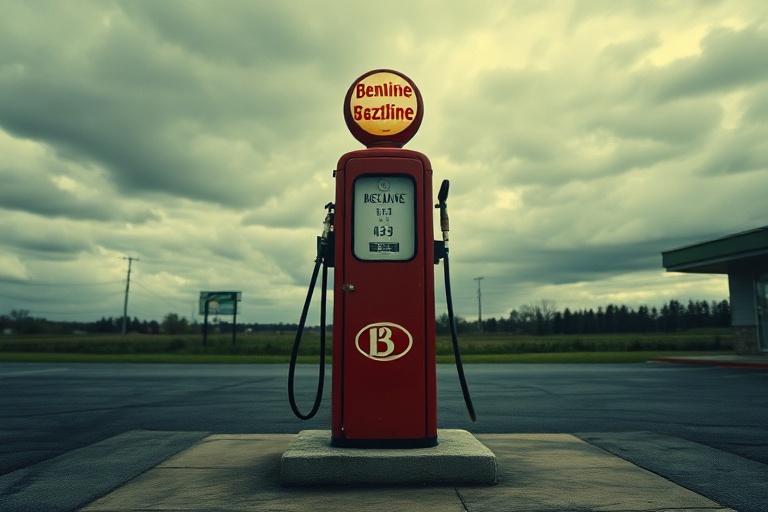
Benzine: The Chemical Fueling Industry and Sparking Environmental Debates
“`html
Benzine: The Chemical Thread Woven Through Industry and Daily Life
Benzine, a colorless and highly flammable liquid, is one of the most fundamental organic compounds in modern industry. Though often overshadowed by its more famous derivative—benzene—benzine plays a critical role in everything from fuel production to pharmaceutical synthesis. Its versatility has cemented its place in global supply chains, yet its environmental and health impacts continue to spark debate among scientists, policymakers, and communities worldwide.
Unlike benzene, which is a specific aromatic hydrocarbon (C₆H₆), benzine refers to a mixture of hydrocarbons, primarily alkanes, obtained through the refining of petroleum. This distinction is crucial because benzine’s composition varies depending on its source and processing method. The liquid’s low viscosity and high energy content make it ideal for use in gasoline, solvents, and chemical feedstocks. Yet, as demand grows across industries, so too do concerns about its ecological footprint and long-term consequences.
The Global Supply Chain of Benzine: From Refinery to Consumer
The journey of benzine begins in oil refineries, where crude oil undergoes fractional distillation. The lighter fractions, including naphtha, are further processed to produce benzine. Refineries in the Middle East, North America, and Asia dominate global production, with Saudi Arabia, the United States, and China leading output. The chemical then travels through an intricate network of pipelines, tankers, and storage facilities before reaching manufacturers.
Europe and North America remain the largest consumers of benzine, primarily for use in gasoline blending. In 2023, the global benzine market was valued at approximately $120 billion, driven by the automotive sector and the production of plastics, synthetic rubbers, and detergents. The European Union, in particular, has strict regulations on benzine content in fuels to reduce emissions and comply with environmental standards. Meanwhile, emerging economies like India and Brazil are increasing their benzine production to meet rising industrial demands.
Transportation logistics present a significant challenge. Benzine’s volatility requires specialized handling to prevent leaks or spills, which can lead to soil and water contamination. Shipping routes often traverse densely populated areas, raising safety concerns. In 2021, a benzine spill in the port of Rotterdam highlighted the risks of maritime transport, prompting stricter monitoring and emergency response protocols across Europe.
Key Regions in Benzine Production and Consumption
- Middle East: Home to some of the world’s largest oil refineries, with Saudi Arabia and the UAE producing benzine primarily for export.
- United States: A major consumer and producer, with Gulf Coast refineries supplying benzine for domestic and international markets.
- China: Rapid industrialization has driven demand, making it the second-largest consumer after the U.S.
- Europe: Stricter regulations have led to reduced benzine use in fuels, but it remains essential for chemical manufacturing.
Environmental and Health Implications: The Hidden Cost of Benzine
While benzine fuels economic growth, its environmental and health impacts are increasingly scrutinized. Volatile organic compounds (VOCs) released during benzine production and use contribute to ground-level ozone formation, a key component of smog. In urban areas, exposure to benzine vapors has been linked to respiratory issues, particularly in communities near refineries or industrial zones.
Long-term exposure to benzine, even at low levels, poses serious health risks. The International Agency for Research on Cancer (IARC) classifies benzine as a Group 1 carcinogen, meaning there is sufficient evidence linking it to cancer in humans. Studies have shown that prolonged exposure can cause leukemia and other blood disorders. Workers in refineries, chemical plants, and gasoline stations are particularly vulnerable due to regular contact with the compound.
Regulatory bodies worldwide have responded with stringent guidelines. The U.S. Environmental Protection Agency (EPA) sets limits on benzine emissions from refineries and requires monitoring at fueling stations. In the EU, the REACH regulation imposes strict controls on benzine use in consumer products. However, enforcement remains inconsistent, especially in countries with weaker environmental protections. The disparity between regulatory standards in developed and developing nations creates a patchwork of safety measures that often leave vulnerable populations unprotected.
Innovation and Alternatives: Can Industry Move Beyond Benzine?
The push for sustainability has driven research into alternatives to benzine. Bio-based solvents, derived from renewable sources like corn or sugarcane, are gaining traction in industries such as paints, adhesives, and cleaning products. These alternatives reduce reliance on fossil fuels and lower carbon emissions. However, their adoption is slow due to higher production costs and limited scalability.
In the automotive sector, electric vehicles (EVs) are reducing demand for benzine-based fuels. Governments in Europe and North America are phasing out internal combustion engines, with some countries targeting a full ban by 2035. This transition could significantly decrease benzine consumption, though the shift will take decades to complete. Meanwhile, synthetic fuels—produced using renewable energy—are being explored as a bridge solution for industries that cannot easily electrify.
Chemical companies are also investing in green chemistry to develop benzine substitutes. For example, companies like BASF and Dow are piloting processes to produce bio-based aromatics, which could replace traditional benzine in plastics and resins. These innovations hold promise but require substantial investment and collaboration across industries to become mainstream.
Emerging Technologies in Benzine Alternatives
- Bio-based solvents: Derived from agricultural waste, these offer a renewable option for industries like pharmaceuticals and cosmetics.
- Synthetic fuels: Produced using captured CO₂ and renewable energy, these could reduce benzine dependency in aviation and shipping.
- Electrochemical processes: Research is underway to convert captured carbon into benzine-like compounds using renewable electricity.
- Enzyme-based catalysts: These could enable more efficient and cleaner production of hydrocarbons without relying on petroleum.
The Cultural and Economic Ripple Effects of Benzine
Benzine’s influence extends beyond industry and science—it shapes economies and cultures in subtle yet profound ways. In oil-rich nations like Saudi Arabia and the UAE, benzine production is a cornerstone of national wealth, funding infrastructure, education, and social programs. The industry employs millions, from engineers to truck drivers, and supports ancillary businesses like logistics and retail.
Culturally, benzine is often associated with progress and modernity. In the 20th century, the rise of gasoline-powered vehicles symbolized freedom and mobility, a theme celebrated in films, music, and literature. Even today, the automotive industry’s transition away from benzine fuels is met with both optimism and resistance. Enthusiasts of classic cars, for instance, argue that synthetic fuels could preserve the legacy of internal combustion engines while reducing their environmental impact.
However, benzine’s cultural footprint is not uniformly positive. In communities near refineries, the chemical is a source of both livelihood and hardship. Families may rely on refinery jobs for income, yet face health risks from pollution. This duality is evident in places like Port Arthur, Texas, where residents grapple with the economic benefits of the petrochemical industry against the backdrop of environmental degradation. Activists in such areas often lead movements for cleaner air and stricter regulations, highlighting the human cost of benzine production.
Globally, benzine also plays a role in geopolitics. Conflicts over oil reserves and trade routes frequently center on access to benzine and its derivatives. Sanctions, such as those imposed on Russia following its invasion of Ukraine, have disrupted benzine supply chains, causing price spikes and shortages in Europe. These geopolitical tensions underscore benzine’s status as a strategic resource, intertwined with national security and economic stability.
Conclusion: Balancing Progress and Responsibility
Benzine is a paradox—a chemical that powers economies while posing existential threats to health and the environment. Its story is one of human ingenuity and industrial ambition, but also of unintended consequences. As the world seeks to transition to a sustainable future, the role of benzine will continue to evolve. Innovation offers hope, but systemic change requires collaboration among governments, industries, and communities.
For now, benzine remains indispensable in many sectors, from automotive to pharmaceuticals. Yet the momentum toward alternatives is undeniable. Whether through bio-based solvents, synthetic fuels, or electrification, the goal is clear: reduce dependency on benzine without stifling progress. The challenge lies in achieving this balance—safeguarding livelihoods while protecting the planet for future generations.
As consumers and citizens, our choices matter. Supporting policies that prioritize safety and sustainability can drive change. So too can embracing innovation, even when it challenges long-held traditions. Benzine’s legacy is still being written, and the next chapter may well redefine its place in our world.
Technology continues to intersect with sustainability in unexpected ways, as industries seek to balance efficiency with environmental responsibility.
For more insights into how chemicals shape our world, explore our Science section.