Bournemouth Beach: A Coastal Gem with Global Appeal
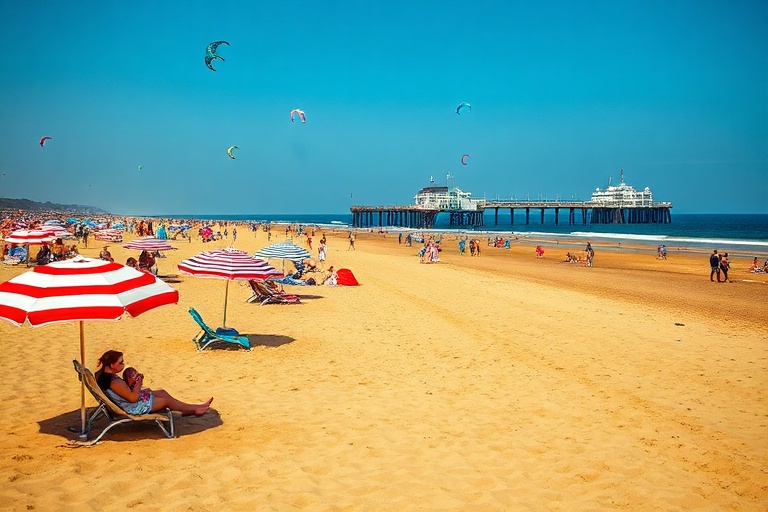
Nestled on England’s south coast, Bournemouth Beach stretches for seven miles of golden sand and turquoise waters, drawing millions of visitors each year. Its reputation as a premier British seaside destination blends Victorian heritage with modern vibrancy, making it a microcosm of coastal evolution across Europe and beyond. Unlike many traditional resort towns, Bournemouth has continually adapted, balancing preservation with innovation to remain relevant in an era of shifting travel trends.
The beach’s origins trace back to the mid-19th century, when Lewis Tregonwell established a seaside retreat for affluent visitors seeking health benefits from the sea air. Over time, the town transformed from a quiet agricultural area into a bustling resort, fueled by the railway boom of the 1870s. This period marked a broader European trend, where rail networks democratized coastal travel, turning exclusive retreats into accessible destinations for the middle class. Bournemouth’s story mirrors that of other iconic beaches, such as Nice’s Promenade des Anglais or Barcelona’s Barceloneta, where infrastructure and ambition reshaped coastal identity.
A Landscape Shaped by Nature and Human Intervention
Bournemouth Beach owes its distinctive shape to both natural processes and human engineering. The shoreline’s gentle curve and wide expanse result from the interplay of tides, sediment drift, and the protective groynes installed in the 20th century. These structures, while controversial among environmentalists, have been crucial in combating erosion—a challenge faced by coastal communities worldwide, from the Netherlands’ Zeeland province to California’s Malibu. The beach’s sand, replenished periodically through dredging, highlights the delicate balance between preservation and adaptation in the face of climate change.
The beach is divided into distinct zones, each catering to different tastes and activities. From the lively pier at Bournemouth Pier—home to arcades, bars, and the Russell-Cotes Art Gallery—to the quieter stretches near Alum Chine, the diversity reflects broader trends in coastal tourism. Globally, similar patterns emerge: Barcelona’s beaches cater to both partygoers and families, while Sydney’s Bondi offers a mix of surf culture and relaxation. This segmentation ensures that Bournemouth appeals to a wide audience, reinforcing its status as a year-round destination rather than a seasonal one.
The Cultural Pulse of Bournemouth Beach
Bournemouth’s cultural significance extends beyond its physical boundaries. The beach has long been a backdrop for art, literature, and film, capturing the imagination of creatives from J.M. Barrie, who wrote part of Peter Pan while staying in the town, to modern filmmakers using the coastline for atmospheric shots. The annual Bournemouth Air Festival, which draws over 100,000 spectators, transforms the beach into a stage for aerobatic displays and live music, blending local tradition with global influences. Events like these underscore how coastal towns increasingly serve as cultural hubs, much like Miami’s South Beach or Rio de Janeiro’s Copacabana.
The beach’s social fabric is equally dynamic. During the summer, it becomes a melting pot of nationalities, with visitors from across Europe, Asia, and the Americas drawn by its reputation for safety, cleanliness, and amenities. This diversity reflects broader demographic shifts in coastal tourism, where destinations once dominated by domestic visitors now attract international crowds. The presence of languages like Mandarin, German, and Portuguese on the beachfront mirrors the globalization of leisure travel, a trend that shows no signs of slowing. Even in winter, the beach maintains a steady stream of walkers, dog owners, and surfers, proving its resilience against seasonal fluctuations.
Economic Impact and the Future of Coastal Tourism
The economic footprint of Bournemouth Beach is substantial, contributing significantly to the local economy through hospitality, retail, and events. According to a 2022 report by the Dorset Local Enterprise Partnership, the tourism sector generated over £1 billion annually, with coastal activities accounting for a large share. This economic engine is not unique to Bournemouth; coastal tourism drives GDP in regions as varied as the Algarve in Portugal and the Gold Coast in Australia. However, the industry faces growing pressures, from rising sea levels to overtourism, which threaten to erode both natural and economic assets.
To address these challenges, Bournemouth has embraced sustainable tourism initiatives. The introduction of electric beach buggies, the expansion of bike-sharing schemes, and stricter waste management policies align with global efforts to reduce the environmental impact of coastal tourism. The town’s participation in the Travel Foundation’s sustainable destination program is part of a broader movement, where destinations like Bournemouth are redefining success not just by visitor numbers, but by their ecological and social contributions. This shift mirrors initiatives in places like the Balearic Islands, where overtourism has spurred innovative policies to protect local communities and environments.
The future of Bournemouth Beach will likely hinge on its ability to innovate while preserving its character. Proposals for a new artificial reef to enhance surfing, along with plans to expand the town’s cultural offerings, suggest a forward-looking approach. Yet, the tension between development and tradition remains. As coastal towns worldwide grapple with similar dilemmas, Bournemouth’s journey offers valuable lessons in balancing growth with authenticity.
Why Bournemouth Stands Out
What sets Bournemouth Beach apart is its ability to evolve without losing its soul. It’s a place where Victorian piers coexist with modern eco-initiatives, where families mingle with digital nomads, and where the rhythm of the waves blends with the hum of a global audience. In an era where many destinations struggle to stand out, Bournemouth’s blend of history, diversity, and adaptability makes it a compelling case study in coastal tourism.
For travelers seeking more than just sun and sand, Bournemouth offers a microcosm of the forces shaping coastal communities today. Whether it’s the thrill of the air festival, the tranquility of a winter walk, or the simple joy of a seaside ice cream, the beach remains a timeless yet ever-changing stage. As the world’s coastlines face unprecedented challenges, Bournemouth’s story is a reminder that the best destinations are those that listen to their environment—and their visitors.
For those inspired to explore further, Bournemouth’s Entertainment scene offers year-round activities, while its proximity to the Jurassic Coast makes it a gateway to some of the UK’s most stunning natural landscapes.