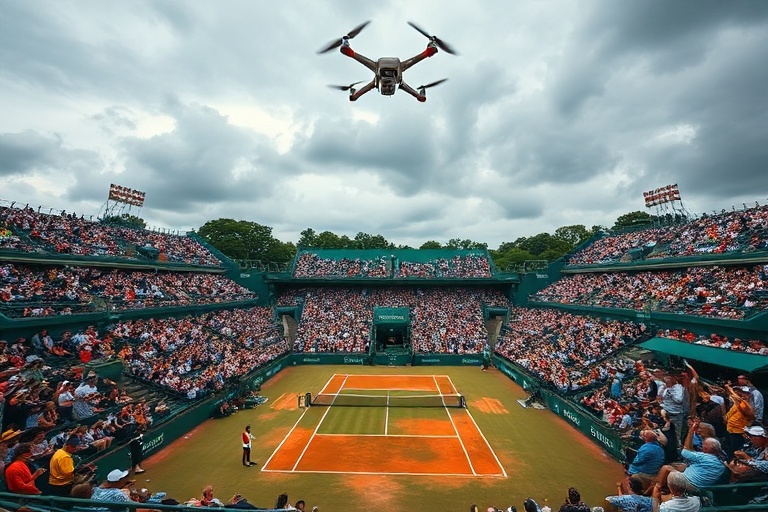
Roland Garros 2026: The Future of Tennis’ Most Iconic Clay Court Championship
“`html
Roland Garros 2026: What to Expect from the Next Chapter of Tennis’ Most Iconic Clay Court Championship
The anticipation for Roland Garros 2026 is already building, even as the dust settles on this year’s tournament. As the only Grand Slam played on clay, the French Open has long stood apart from its counterparts at Wimbledon, the US Open, and the Australian Open. Its unique surface demands a different kind of endurance, strategy, and mental fortitude from players. As the tennis world looks ahead to the 2026 edition, several key narratives are beginning to take shape.
The championship, held annually at the Stade Roland-Garros in Paris, is more than just a sporting event. It is a cultural institution that reflects the evolving dynamics of global tennis, the shifting demographics of the sport’s elite, and the increasing intersection of athleticism and technology. With two years until the next edition, speculation about potential champions, rising stars, and potential rule changes is intensifying. This is a moment to examine what makes Roland Garros distinct—and why its future matters to fans worldwide.
The Court That Tests the Best
Clay courts are unforgiving. They slow the ball down, reward patience, and force players to engage in long, attritional rallies. Unlike the grass of Wimbledon or the hard courts of the US Open, clay demands a mastery of sliding, shot selection, and stamina. For these reasons, Roland Garros has become the proving ground for tennis’ most resilient athletes. The 2026 tournament will likely continue this tradition, but with an added layer of unpredictability.
Over the past decade, the surface has seen subtle adjustments to improve playability and reduce injury risks. The French Tennis Federation (FFT) has experimented with different clay compositions and court speeds. These changes aim to balance tradition with modernization. By 2026, further refinements could be in place, potentially altering the way the game is played—and who excels at it.
One of the most intriguing storylines is the emergence of a new generation of clay-court specialists. While Rafael Nadal’s dominance defined an era, the post-Nadal landscape remains wide open. Players like Carlos Alcaraz, Jannik Sinner, and Coco Gauff have shown flashes of brilliance on the red dirt, but none have established themselves as clear favorites. The 2026 tournament could be the stage where a new clay-court legend emerges—or where an established star cements their legacy.
The Rise of the Next Generation
The tennis world is in a period of transition. The retirement or decline of several legends has created space for younger players to step into the spotlight. At Roland Garros 2026, this shift could be on full display. The ATP and WTA tours are more globally diverse than ever, with rising talents from countries like Spain, Italy, Canada, and the United States making their mark.
Consider the following players who could shape the narrative in 2026:
- Carlos Alcaraz (Spain) – Still only in his early 20s, Alcaraz has already claimed multiple Grand Slam titles. His aggressive baseline game and athleticism make him a natural fit for clay. A second French Open title would solidify his place among the greats.
- Coco Gauff (USA) – Gauff’s powerful game and mental resilience have made her a consistent contender. After her breakthrough in 2023, she is poised to challenge for more major trophies in the coming years.
- Holger Rune (Denmark) – Known for his fighting spirit and clay-court prowess, Rune has the potential to become a perennial contender at Roland Garros.
- Iga Świątek (Poland) – Already a two-time champion, Świątek’s tactical intelligence and relentless consistency make her the favorite in any clay-court tournament.
These athletes represent a new wave of tennis stars who blend power, precision, and endurance. Their performances at Roland Garros will not only determine who lifts the trophy but also how the sport evolves in the post-Nadal and post-Serena era.
Tennis in a Global Context
Roland Garros has always been more than a tournament—it is a cultural event that draws over half a million spectators to Paris each year. The 2026 edition will likely reflect the growing internationalization of tennis, both on and off the court.
France remains the spiritual home of the tournament, but its global appeal continues to expand. The ATP and WTA tours have seen increased participation from players across Europe, Asia, and the Americas. This diversity is reshaping the competitive landscape, making the draw at Roland Garros more unpredictable than ever.
Off the court, the tournament’s influence extends into fashion, media, and even technology. The French Open has long been a showcase for style, with players like Maria Sharapova and Serena Williams becoming fashion icons in their own right. In 2026, expect to see a blend of classic elegance and modern streetwear influences on the red clay.
Technology is also playing an increasingly prominent role. Hawk-Eye Live, which has been used at all Grand Slam events since 2021, continues to refine its accuracy, reducing human error in line calls. Additionally, player tracking and performance analytics are becoming standard tools for coaches and athletes. By 2026, these innovations could further influence how the game is played and officiated.
The Business of Roland Garros
The economic impact of the French Open is substantial. In 2023, the tournament generated over €300 million in revenue, with sponsorships, broadcasting rights, and ticket sales contributing to its financial success. The 2026 edition will likely see continued growth, driven by global demand for live sports and the increasing value of tennis as a media product.
Sponsorship deals are becoming more lucrative, particularly as tennis attracts younger audiences through digital platforms. Brands like Lacoste, Rolex, and Infosys have long-standing partnerships with Roland Garros, but new collaborations could emerge as the tournament seeks to modernize its image. The 2026 championship may also see expanded digital engagement, with virtual reality experiences and interactive fan zones becoming more common.
Moreover, the tournament’s role in promoting tennis in France and beyond cannot be overstated. The FFT invests heavily in youth development programs, ensuring that the next generation of French players has the resources to succeed. If a French player—male or female—breaks through in 2026, it could inspire a new wave of interest in the sport across the country.
Looking Ahead: What’s Next for Roland Garros
As the tennis world waits for Roland Garros 2026, several questions loom large. Will the clay surface undergo further changes? Could new rules be introduced to speed up play or enhance fairness? How will the rise of younger players reshape the competitive landscape?
One thing is certain: Roland Garros will remain a cornerstone of the tennis calendar. Its unique blend of tradition, challenge, and spectacle ensures that it stands apart from other Grand Slam events. The 2026 tournament will not only crown a new champion but also reflect the broader shifts in the sport—from the rise of global talent to the integration of cutting-edge technology.
The red clay of Paris has witnessed legends rise and fall. It has tested the limits of human endurance and creativity. As we look ahead to 2026, the question is not whether Roland Garros will continue to captivate audiences, but how it will redefine what it means to be a champion on the sport’s most demanding stage.
For fans of tennis, the wait has already begun. The countdown to Roland Garros 2026 is underway, and the stage is set for the next chapter in the tournament’s storied history.