<!DOCTYPE html>
<html lang="en">
<head>
    <meta charset="UTF-8">
    <meta name="viewport" content="width=device-width, initial-scale=1.0">
    <title>Desi Bling: How South Asian Luxury Fashion Conquered Global Style</title>
</head>
<body>
    <article>
        <h1>Desi Bling: How South Asian Luxury Fashion Conquered Global Style</h1>

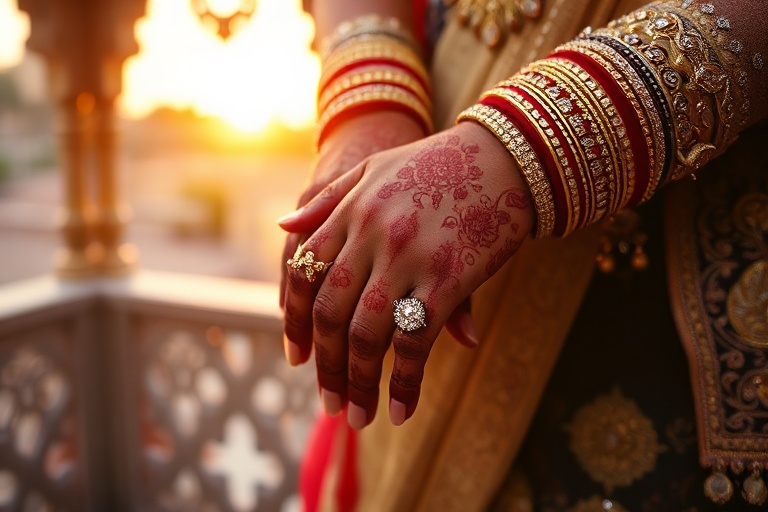
        <p>South Asian fashion has long been celebrated for its vibrant colors and intricate craftsmanship, but in recent years, a new trend has taken center stage—<strong>desi bling</strong>. This isn’t just about traditional embroidery or gold jewelry anymore; it’s about bold statements, opulent details, and a fusion of heritage with modern luxury. From Bollywood-inspired red-carpet looks to streetwear that borrows from royal aesthetics, desi bling has transcended cultural boundaries to become a global fashion phenomenon.</p>

        <p>The rise of desi bling reflects broader shifts in the fashion industry, where inclusivity and representation are no longer optional but essential. Designers like Sabyasachi Mukherjee, Manish Malhotra, and Anita Dongre have redefined luxury by blending traditional South Asian techniques with contemporary silhouettes. Their work has not only adorned celebrities but has also trickled down into mainstream fashion, proving that heritage can be both timeless and trendsetting.</p>

        <h2>The Evolution of Desi Bling: From Tradition to Trend</h2>

        <p>Desi bling didn’t emerge overnight. Its roots trace back centuries to the opulent courts of Mughal emperors, where gold zari, precious stones, and elaborate embroidery were symbols of wealth and power. Fast-forward to the 20th century, and Bollywood played a pivotal role in popularizing these aesthetics. Films like Mughal-e-Azam and Jodhaa Akbar showcased regal attire that captivated audiences, while modern Bollywood stars have continued to push boundaries with their red-carpet choices.</p>

        <p>Today, desi bling is characterized by several key elements:</p>

        <ul>
            <li><strong>Embellishments:</strong> Think heavy zari work, sequins, beads, and mirror embroidery—techniques that demand hours of meticulous labor.</li>
            <li><strong>Luxury Fabrics:</strong> Silk, velvet, brocade, and chiffon are staples, often paired with gold or silver threads to create a regal effect.</li>
            <li><strong>Bold Colors:</strong> While red and gold remain iconic, designers are experimenting with jewel tones like emerald green and royal blue, as well as pastels for a softer take.</li>
            <li><strong>Fusion Silhouettes:</strong> Lehenga cholis are now paired with crop tops, sarees are draped as gowns, and sherwanis are styled like Western suits.</li>
        </ul>

        <p>This evolution isn’t just about aesthetics; it’s a cultural statement. For the South Asian diaspora, desi bling is a way to reconnect with heritage while asserting their place in global fashion. For non-South Asians, it offers a fresh perspective on luxury—one that values craftsmanship and storytelling over fast fashion.</p>

        <h2>Celebrities and the Desi Bling Effect</h2>

        <p>No discussion of desi bling would be complete without acknowledging its most visible ambassadors: celebrities. From Priyanka Chopra Jonas’ custom Sabyasachi gowns at the Met Gala to Deepika Padukone’s viral Anamika Khanna saree at Cannes, South Asian stars have become walking billboards for this trend. Their choices aren’t just about looking good; they’re about making a statement.</p>

        <p>Consider the impact of the 2023 Oscar ceremony, where both Michelle Yeoh and Ke Huy Quan wore desi designers. Yeoh’s gold Sabyasachi lehenga was a tribute to her Malaysian-Indian roots, while Quan’s black Anita Dongre gown celebrated his Vietnamese heritage. These moments sparked conversations about representation in Hollywood and the growing influence of South Asian fashion on the global stage.</p>

        <p>But it’s not just Hollywood that’s taking notice. Western designers are increasingly collaborating with South Asian labels. For example, designer Rahul Mishra partnered with the Italian luxury brand Bottega Veneta for a capsule collection that blended Italian craftsmanship with Indian embroidery. Such collaborations highlight the universal appeal of desi bling and its potential to bridge cultural divides.</p>

        <h2>The Business of Desi Bling: A Growing Industry</h2>

        <p>The commercial success of desi bling is undeniable. The global ethnic wear market is projected to reach $18 billion by 2027, with South Asian fashion playing a significant role in this growth. Brands like Sabyasachi, Manish Malhotra, and Anita Dongre have expanded beyond India, opening flagship stores in Dubai, London, and New York. Even fast-fashion retailers like Zara and H&M have launched desi-inspired collections, albeit with varying degrees of authenticity.</p>

        <p>This commercialization raises important questions about cultural appropriation versus appreciation. While some argue that the global embrace of desi bling is a positive step toward inclusivity, others caution against dilution of traditional techniques. For instance, when fast-fashion brands replicate intricate embroidery at a fraction of the cost, it can undermine the livelihoods of artisans who spend months perfecting their craft.</p>

        <p>To combat this, many luxury desi brands are emphasizing ethical production and sustainability. Sabyasachi, for example, sources his fabrics from handloom weavers and employs traditional artisans, ensuring that each piece is not only beautiful but also socially responsible. This approach not only preserves cultural heritage but also sets a new standard for the fashion industry.</p>

        <h2>Why Desi Bling Matters Beyond Fashion</h2>

        <p>The rise of desi bling is more than a passing trend; it’s a cultural movement with far-reaching implications. For South Asians, it’s a source of pride and identity. For the fashion industry, it’s a reminder that luxury isn’t one-size-fits-all. And for the world, it’s an invitation to appreciate the beauty of diverse traditions.</p>

        <p>Consider the broader impact on the diaspora. For many second- and third-generation immigrants, desi bling offers a way to reconnect with a heritage they might not have grown up with. Wearing a lehenga or a sherwani isn’t just about fashion; it’s about reclaiming a cultural narrative. This is particularly evident in communities where traditional clothing was once stigmatized as outdated or overly traditional.</p>

        <p>Moreover, desi bling is challenging Western-centric beauty standards. In a world where Eurocentric features and styles dominate runways and magazines, the global embrace of desi aesthetics is a refreshing change. It validates the idea that beauty comes in many forms and that luxury can be redefined to include cultural richness.</p>

        <p>This shift also has economic implications. The global South Asian market is young, affluent, and increasingly influential. According to a 2022 report by McKinsey, the diaspora’s purchasing power is expected to grow by 10% annually. Brands that tap into this market—whether through desi bling or other cultural offerings—stand to gain significantly. However, they must do so authentically, respecting the traditions that inspire their designs.</p>

        <h2>Looking Ahead: The Future of Desi Bling</h2>

        <p>As desi bling continues to evolve, its future looks bright. We can expect to see more collaborations between South Asian and Western designers, as well as a greater emphasis on sustainability and ethical production. Digital platforms like Instagram and TikTok will play a crucial role in amplifying this trend, giving designers and influencers a global stage to showcase their work.</p>

        <p>For consumers, the key will be to approach desi bling with an open mind and a respect for its roots. Whether you’re wearing a lehenga to a wedding or incorporating desi-inspired accessories into your everyday wardrobe, the goal should be to celebrate the craftsmanship and culture behind the pieces.</p>

        <p>Ultimately, desi bling is a testament to the power of fashion as a bridge between cultures. It challenges us to look beyond our own experiences and appreciate the richness of diverse traditions. In doing so, it doesn’t just adorn bodies—it transforms minds.</p>

        <p>For those interested in exploring more about South Asian fashion and its global impact, <a href="https://www.daveslocker.net/category/fashion">Dave’s Locker’s Fashion section</a> offers a curated selection of articles and resources. Additionally, <a href="https://www.daveslocker.net/category/culture">Dave’s Locker’s Culture section</a> delves deeper into the intersection of tradition and modernity in global fashion.</p>
    </article>