Emergency Landings Explained: Global Safety, Technology & Culture
“`html
Emergency Landings: What They Reveal About Aviation Safety Globally
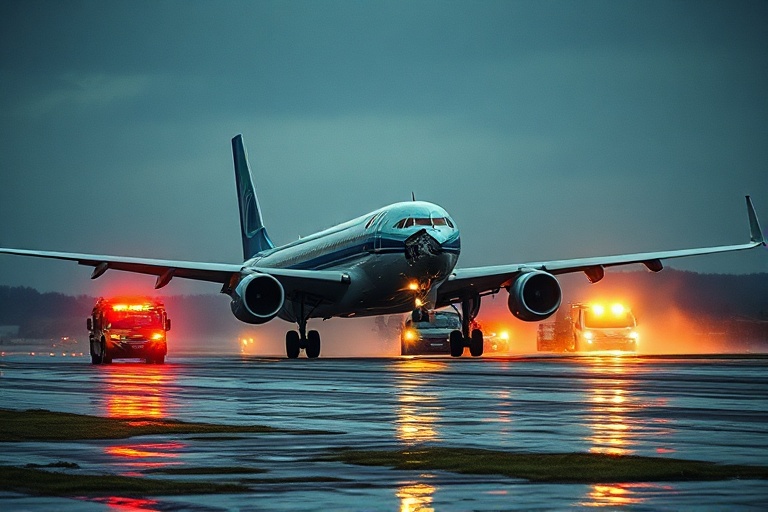
The sight of an airplane making an emergency landing is rare yet always unsettling. These events, while statistically uncommon, offer critical insights into aviation safety, pilot training, and global air traffic regulations. From sudden engine failures to medical diversions, each emergency landing tells a story of split-second decision-making under pressure. Understanding these incidents provides a clearer picture of how the aviation industry balances safety with operational efficiency.
Emergency landings are not limited to dramatic Hollywood scenarios. Most occur without fanfare, often resolved through careful coordination between pilots, air traffic control, and ground crews. Yet their occurrence raises important questions about preparedness, technology, and the human element in modern aviation. How do different countries respond to such situations? What cultural factors influence how airlines and pilots handle emergencies? The answers reveal much about the state of global aviation today.
The Anatomy of an Emergency Landing
An emergency landing is defined by the International Civil Aviation Organization (ICAO) as a landing made under conditions that do not allow for a normal approach and landing. These can result from mechanical failure, medical emergencies, severe weather, or even passenger disturbances. While the term encompasses a broad range of scenarios, the response protocols are surprisingly standardized across most international airlines.
The process typically begins with the flight crew declaring an emergency to air traffic control. This triggers a series of predefined procedures, including priority landing clearance, medical or fire crew preparation, and passenger briefing. The exact nature of the emergency dictates the response. For example, a hydraulic failure may require a gear-up landing, while a cabin depressurization demands an immediate descent to a lower altitude.
Cultural attitudes toward aviation safety play a significant role in how emergencies are managed. In countries with high aviation safety records like Japan and Germany, passengers often report feeling reassured by the calm professionalism of the crew. Meanwhile, in regions where air travel is less frequent, emergencies can provoke greater anxiety among travelers. This contrast highlights how trust in aviation is not just a matter of technology but also of cultural expectation.
Common Types of Emergency Landings
Not all emergency landings are created equal. Some are precautionary, while others are urgent responses to life-threatening situations. The following list outlines the most frequently occurring types:
- Precautionary landings: Made when a minor issue arises that could worsen over time, such as fluctuating oil pressure or a minor fuel leak. Pilots may choose to land early to inspect or repair the aircraft.
- Forced landings: Occur when an aircraft cannot reach a suitable airport due to mechanical failure, fire, or other critical issues. These require immediate action and often involve landing in non-airport locations.
- Medical diversions: Triggered by onboard medical emergencies, such as heart attacks or severe allergic reactions. Airlines prioritize these landings to ensure passenger survival.
- Weather-related diversions: Pilots may divert due to severe storms, crosswinds, or reduced visibility. These are often planned in advance using real-time meteorological data.
- Bomb threats or security alerts: Rare but high-profile events that require immediate landing and intervention by authorities.
The diversity of these scenarios underscores the complexity of modern aviation. Each type demands a tailored response, blending technical expertise with human judgment. The ability to adapt to unforeseen circumstances remains one of the most valued skills in commercial aviation.
Global Perspectives: How Different Countries Handle Emergencies
Aviation safety is not a monolith. While ICAO sets international standards, individual countries interpret and enforce these rules differently. This variation can influence the outcome of emergency landings in subtle but meaningful ways.
In the United States, the Federal Aviation Administration (FAA) mandates rigorous training for pilots and crew, including regular simulations of emergency scenarios. The country’s extensive network of airports ensures that diversions are rarely more than 200 miles away. However, the high volume of flights—over 45,000 daily—means that emergencies are statistically more likely to occur.
Contrast this with Russia, where vast distances and harsh weather conditions pose unique challenges. Emergency landings in Siberia, for example, may require landing on ice-covered runways or coordinating with limited ground support. Russian airlines invest heavily in pilot training for extreme conditions, but the logistical hurdles remain significant. Meanwhile, in Europe, where airspace is densely packed, air traffic control plays a pivotal role in guiding aircraft to the nearest safe landing site.
Cultural attitudes also shape responses. In China, where aviation is rapidly expanding, passengers often exhibit high trust in airline safety protocols. However, the rapid growth of the industry has led to concerns about overworked pilots and maintenance staff. In contrast, Scandinavian airlines emphasize transparency, with crews frequently updating passengers during an emergency to reduce anxiety.
These differences highlight a key truth: aviation safety is not solely a technical issue but a cultural one. The way a society perceives risk, values human life, and trusts institutions all influence how emergencies are managed.
Technology’s Role in Preventing and Managing Emergencies
Advancements in aviation technology have dramatically reduced the frequency of emergency landings over the past few decades. Modern aircraft are equipped with sophisticated systems that monitor engine performance, hydraulic pressure, and even pilot fatigue. These tools provide early warnings, allowing crews to address issues before they escalate.
One of the most significant innovations is the Engine-Indicating and Crew-Alerting System (EICAS), which provides real-time data on aircraft systems. Pilots can use this information to make informed decisions during an emergency. Similarly, fly-by-wire technology, which replaces traditional manual flight controls with electronic systems, enhances precision and reduces human error.
Yet technology alone cannot eliminate the need for skilled pilots. In 2019, a Boeing 737 MAX aircraft experienced two fatal crashes due to a flawed flight control system. The incidents led to a global grounding of the MAX fleet and exposed vulnerabilities in automated safety systems. The lesson was clear: while technology can assist, human oversight remains irreplaceable.
Emerging technologies like artificial intelligence and machine learning are beginning to play a role in predicting and preventing emergencies. Airlines such as Delta and Qantas are experimenting with AI-driven maintenance systems that analyze flight data to identify potential issues before they occur. These systems can flag anomalies in engine performance or structural integrity, allowing for proactive repairs.
However, the integration of AI into aviation safety raises ethical questions. Who is responsible when an AI system fails to predict an emergency? How do pilots reconcile their instincts with machine-generated recommendations? These debates are likely to intensify as technology becomes more deeply embedded in aviation.
The Human Factor: Training, Psychology, and Passenger Behavior
Behind every emergency landing is a team of professionals trained to handle the unimaginable. Pilot training programs, such as those offered by the Air Line Pilots Association (ALPA), emphasize scenario-based learning. Trainees practice responding to engine failures, cabin fires, and medical emergencies in high-fidelity simulators. The goal is not just to memorize procedures but to develop the instinctive decision-making skills required in a crisis.
Psychological resilience is another critical component. Pilots and crew undergo stress management training to ensure they remain composed under pressure. Studies have shown that even experienced pilots can experience cognitive overload during an emergency, leading to tunnel vision or delayed reactions. To combat this, airlines incorporate mindfulness and situational awareness exercises into their training regimens.
Passenger behavior during an emergency landing can also influence the outcome. In 2018, a Southwest Airlines flight experienced an engine failure that resulted in a passenger fatality and debris striking the fuselage. The incident was exacerbated by the fact that passengers were not immediately aware of the severity of the situation. Clear and concise communication from the crew is essential to prevent panic and ensure orderly evacuation if necessary.
The cultural context of passenger behavior cannot be ignored. In some cultures, such as in Japan, passengers tend to follow crew instructions without question, facilitating smooth evacuations. In Western countries, where individualism is more pronounced, passengers may be more likely to question or second-guess instructions, potentially complicating emergency procedures.
Ultimately, the human factor in emergency landings is a blend of technical skill, psychological fortitude, and cultural awareness. It is the intangible element that separates a routine flight from a high-stakes emergency.
Conclusion: The Future of Emergency Landings in Aviation
Emergency landings, though infrequent, serve as a reminder of the fragility and resilience of modern aviation. They expose the vulnerabilities in our systems while also highlighting the extraordinary competence of those who keep us safe in the skies. As technology advances and global air travel continues to grow, the industry must remain vigilant in addressing both technical and human factors.
The future of emergency landings may be shaped by innovations like autonomous aircraft and AI-driven diagnostics, but the core principles of safety and preparedness will remain unchanged. Airlines, regulators, and pilots must continue to collaborate, learning from each incident to improve standards worldwide. For passengers, understanding the complexities of emergency landings can foster a deeper appreciation for the professionals who ensure their safety every day.
In the end, an emergency landing is not just an event—it is a testament to the enduring partnership between human ingenuity and the relentless pursuit of safety in the skies.