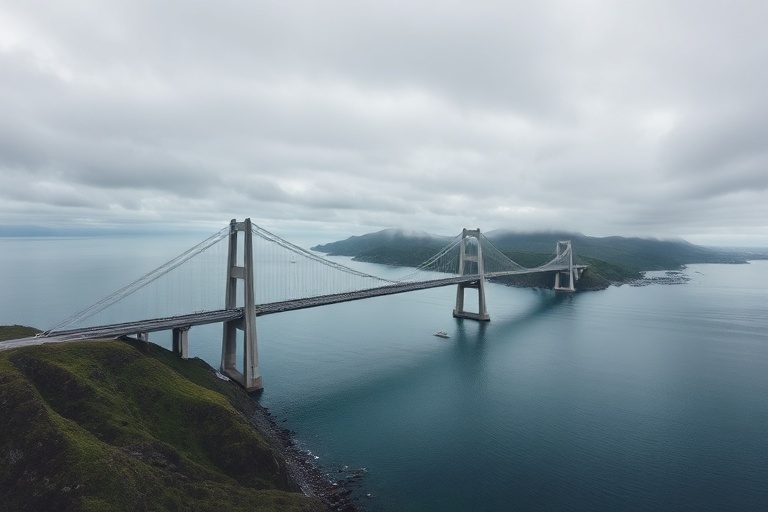
Kessock Bridge: Scotland’s Iconic Crossing Connecting Highlands
“`html
Kessock Bridge: Scotland’s Iconic Crossing Connecting Past and Present
Published on
The Kessock Bridge: A Vital Link in Scotland’s Infrastructure
The Kessock Bridge stands as one of Scotland’s most significant civil engineering achievements, serving as a critical connection between the city of Inverness and the Black Isle. Completed in 1982, this cable-stayed bridge spans the Moray Firth, replacing an earlier ferry service that had become increasingly inadequate for the region’s growing traffic demands. At 1,056 meters in length, the Kessock Bridge is not only a functional structure but also an architectural landmark that reflects the ingenuity of its designers.
Its construction addressed a long-standing challenge faced by residents and businesses on the Black Isle. Before the bridge, commuters and travelers relied on ferries that operated on a schedule dictated by weather conditions. The bridge’s completion marked a turning point for the region, reducing travel times and improving economic connectivity. Today, it handles over 20,000 vehicles daily, underscoring its importance to the local and national economy.
Beyond its practical uses, the Kessock Bridge has become a symbol of progress and modernity in the Scottish Highlands. Its sleek, white-painted towers and distinctive cable-stayed design contrast sharply with the natural beauty of the surrounding landscape, creating a visual juxtaposition that has inspired photographers and artists alike.
Engineering Marvel: Design and Construction Challenges
The Kessock Bridge’s construction was no small feat. The project faced numerous technical hurdles, from the deep waters of the Moray Firth to the region’s unpredictable weather patterns. Engineers had to contend with strong tidal currents and the risk of scouring, which could undermine the bridge’s foundations. To address these issues, they employed advanced techniques, including the use of massive concrete caissons to anchor the bridge’s piers securely to the seabed.
The bridge’s cable-stayed design was chosen for its efficiency and aesthetic appeal. Unlike suspension bridges, which require extensive anchorages, the Kessock Bridge’s cables are directly attached to its towers, distributing the load more evenly. This design also allowed for a lighter, more streamlined structure that minimized its visual impact on the surrounding environment. The towers themselves rise 58 meters above the water, providing a striking focal point for the bridge.
Construction began in 1976 and took six years to complete, involving hundreds of workers and cutting-edge machinery. The project was not without controversy; local residents initially expressed concerns about the bridge’s potential environmental impact, particularly on marine life in the Moray Firth. However, mitigations measures, such as monitoring water quality and fish migration patterns, were implemented to address these concerns. Today, the bridge is widely regarded as a model of sustainable infrastructure development.
Key Features of the Kessock Bridge
- Length: 1,056 meters (3,465 feet)
- Main Span: 240 meters (787 feet)
- Towers: 58 meters (190 feet) tall
- Construction Period: 1976–1982
- Daily Traffic: Over 20,000 vehicles
- Design: Cable-stayed with concrete towers
Economic and Social Impact on the Highlands
The Kessock Bridge has had a profound impact on the Highlands, both economically and socially. Prior to its construction, the Black Isle was effectively cut off from Inverness during adverse weather conditions, limiting access to essential services such as healthcare and education. The bridge’s completion eliminated this isolation, enabling residents to commute more easily and fostering stronger economic ties between the two regions.
For businesses, the bridge has been a game-changer. The Black Isle, known for its agricultural and tourism industries, has seen increased investment and growth since the bridge opened. Farmers can now transport goods more efficiently, while tourists benefit from easier access to attractions such as the historic town of Cromarty and the scenic North Coast 500 route. The bridge has also facilitated the development of new residential areas, as commuters choose to live on the quieter Black Isle while working in Inverness.
However, the bridge’s success has also brought challenges. Increased traffic has led to congestion, particularly during peak hours, prompting calls for improved infrastructure and public transportation options. Local authorities have responded with initiatives such as bus priority lanes and carpooling schemes, but debates continue about how best to manage the bridge’s growing role in the region’s mobility.
Cultural Significance and Future Prospects
Beyond its functional and economic roles, the Kessock Bridge has woven itself into the cultural fabric of the Highlands. It has become a symbol of the region’s resilience and forward-thinking approach to development. Locals often refer to it affectionately as “the bridge to the Black Isle,” reflecting its importance in their daily lives. The bridge has also featured in local art, literature, and music, cementing its place in the region’s identity.
Looking ahead, the Kessock Bridge faces new challenges and opportunities. Climate change poses a long-term threat, as rising sea levels and increased storm activity could impact its structural integrity. Engineers and planners are already considering adaptations, such as reinforcing the bridge’s foundations and implementing advanced monitoring systems to detect potential issues early. Additionally, there are discussions about expanding public transportation options to reduce reliance on private vehicles.
The bridge’s legacy is also tied to broader trends in infrastructure development. As governments worldwide seek to balance economic growth with environmental sustainability, the Kessock Bridge serves as a case study in how large-scale projects can be executed responsibly. Its story offers valuable lessons about the importance of community engagement, environmental stewardship, and long-term planning.
For visitors to the Highlands, the Kessock Bridge is more than just a means of crossing the Moray Firth—it is an experience. The views from the bridge, particularly at sunrise or sunset, are breathtaking, offering glimpses of the rugged coastline, rolling hills, and distant mountains. It is a reminder of how human ingenuity can harmonize with nature, creating something both practical and beautiful.