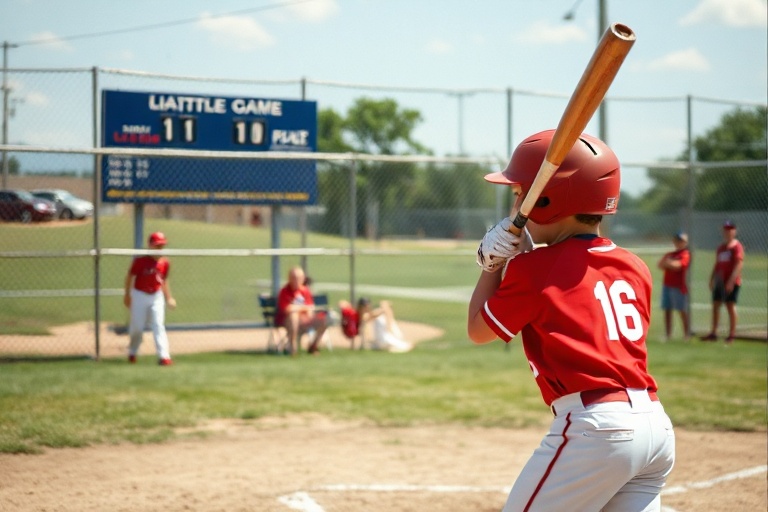
What Is Little League and Why It Matters
Little League Baseball and Softball began in 1939 when Carl Stotz organized a three-team league in Williamsport, Pennsylvania. What started as a neighborhood activity for boys has grown into a global youth sports movement involving millions of children across more than 80 countries. The organization’s mission transcends competition—it emphasizes teamwork, fair play, and community values.
The Little League World Series, held annually in Pennsylvania, has become a cultural touchstone. Each August, teams from the United States, Canada, Asia-Pacific, Europe, and Latin America converge to compete on a world stage. This event is broadcast internationally, turning young athletes into household names in their home countries. While the spotlight often shines on the championship game, the true legacy of Little League lies in the local fields where millions of children first learn to hold a bat, run the bases, and shake hands after a game.
The Global Reach of Little League
Little League’s expansion reflects broader trends in youth sports globalization. In Japan, where baseball is a national pastime, Little League participation has surged since the 1970s. Japanese teams have dominated the international tournament, winning multiple Little League World Series titles. The country’s emphasis on rigorous training from a young age has led to a pipeline of skilled players who often transition into professional leagues.
In Europe, Little League has taken root in countries like the Netherlands, Italy, and Germany, where baseball and softball were once niche sports. Local clubs have leveraged Little League’s structure to grow participation, often blending American-style play with regional adaptations. In the Netherlands, for example, Little League programs have helped produce players who compete professionally in Major League Baseball.
Across Latin America, Little League serves as a bridge between grassroots play and international competition. In Venezuela, where baseball is deeply embedded in the culture, Little League teams are often the first step toward scouting pathways. The league’s inclusive model has also opened opportunities for girls in countries where female athletes historically faced limited access to organized sports.
How Culture Shapes Little League Around the World
In South Korea, Little League baseball is closely tied to national identity. The country’s success in international tournaments—including multiple Little League World Series championships—has elevated the sport’s profile. Korean media coverage of youth baseball is extensive, and young players are celebrated as future stars. This cultural investment has created a robust youth sports infrastructure, with parents and schools prioritizing baseball training from an early age.
In contrast, countries like Australia and the United Kingdom treat Little League as a way to introduce baseball to communities where cricket or football dominate. In Australia, Little League programs often share facilities with cricket clubs, fostering cross-sport collaboration. The Australian Baseball League’s partnership with Little League has helped grow the sport beyond its traditional strongholds in New South Wales and Queensland.
In Africa, Little League baseball is still emerging, but its growth reflects broader efforts to diversify youth sports. In South Africa, for instance, Little League programs have partnered with local schools to introduce baseball in historically underserved communities. These initiatives not only teach athletic skills but also promote social inclusion and gender equity.
Key Cultural Differences in Little League Play
While the rules of Little League are consistent worldwide, local adaptations reflect cultural values and available resources. In the United States, where youth sports are often commercialized, travel leagues and private coaching are common. This can lead to early specialization and intense competition among young players.
In many European and Asian countries, Little League operates on a more community-based model. Teams are often tied to local schools or recreational centers, and participation is driven by school programs rather than private clubs. This approach emphasizes inclusivity and long-term development over elite performance.
In Latin America, the relationship between Little League and professional baseball is particularly strong. Many current and former Major League Baseball players credit Little League as a formative experience. The league’s emphasis on fundamentals aligns with the region’s tradition of developing technically sound players.
Beyond the Diamond: Life Lessons from Little League
For many children, Little League is their first introduction to organized sports—and often, their first experience with structured competition. The league’s emphasis on sportsmanship, teamwork, and perseverance provides lessons that extend far beyond the baseball field. Players learn to manage wins and losses with grace, a skill that serves them in academics and future careers.
Research has shown that youth sports participation is linked to improved physical health, cognitive development, and social skills. Little League, in particular, offers a unique blend of athletic and interpersonal growth. Players develop leadership skills by captaining teams, negotiating plays, and supporting teammates. These experiences foster resilience and confidence, qualities that are invaluable in adulthood.
The Role of Coaches and Volunteers
Little League relies heavily on volunteer coaches and parents, many of whom dedicate countless hours to the program. These individuals often serve as mentors, teaching not only the mechanics of the game but also life skills like time management and accountability. In underserved communities, volunteer coaches may also act as role models, inspiring children to pursue education and positive lifestyles.
However, the reliance on volunteers can also pose challenges. In wealthier regions, access to experienced coaches and facilities can create disparities in program quality. Little League International has responded by offering coaching clinics and resource guides to standardize training and ensure all children have a positive experience.
The Future of Little League in a Changing World
As youth sports evolve, Little League faces both opportunities and challenges. The rise of private training academies and elite travel teams has led some parents to question the value of community-based leagues. To remain relevant, Little League has expanded its offerings to include adaptive baseball programs for children with disabilities and initiatives to increase female participation.
Technological advancements are also reshaping Little League. Video analysis tools and online training resources allow players to refine their skills outside of practice. Social media has amplified the visibility of youth athletes, giving them platforms to showcase their talents and connect with fans worldwide.
Yet, despite these changes, the core of Little League remains unchanged. It continues to be a place where children learn the joy of play, the importance of fair competition, and the bonds of community. Whether in Williamsport, Tokyo, or Cape Town, Little League fields are where futures are shaped—one pitch, one swing, and one handshake at a time.
As the league looks ahead, its greatest strength may lie in its adaptability. By embracing diversity, technology, and inclusive programming, Little League can continue to inspire generations of young athletes, regardless of where they live or what resources they have.
For parents, players, and communities, Little League remains more than just a sport. It is a tradition, a teacher, and a testament to the power of play.
Explore more youth sports stories in our Sports section.
Learn about the history of baseball in our Analysis archives.