Nepal vs USA: Two Nations, Two Worlds – Key Differences Explained
“`html
Nepal vs USA: Comparing Two Worlds in One Article
The contrast between Nepal and the United States stretches far beyond their geographic separation. These two nations represent opposing ends of the spectrum in terms of geography, culture, economy, and global influence. While Nepal remains one of the world’s least developed countries, the US stands as the world’s largest economy. Yet beneath these surface differences lies a complex web of historical, social, and political factors that shape their identities.
This comparison isn’t merely academic. Understanding the disparities between these nations helps illuminate global inequalities, cultural preservation challenges, and the varying impacts of modernization. From the Himalayan peaks of Nepal to the sprawling metropolises of America, each country offers lessons about human adaptation, economic development, and cultural identity in the 21st century.
The Geographic Divide: Mountains vs Superpower Landscapes
Nepal’s topography is defined by the Himalayas, with eight of the world’s ten highest peaks, including Mount Everest. The country’s diverse elevations create dramatic climatic variations, from tropical jungles to arctic conditions. This geographic reality shapes everything from agriculture to tourism, with trekking routes drawing thousands annually.
The United States presents a starkly different landscape. From the Atlantic to Pacific coasts, America encompasses deserts, forests, plains, and tundra. The Rocky Mountains and Appalachians divide the continent, while the Great Plains stretch endlessly. This variety supports massive agricultural output, diverse ecosystems, and sprawling urban centers.
The implications of these geographic differences are profound. Nepal’s mountainous terrain creates natural trade barriers, while America’s vast, relatively flat interior facilitated westward expansion and continental connectivity. These geographic realities influence everything from infrastructure development to cultural cohesion in both nations.
Economic Powerhouses: A Study in Contrasts
The economic disparity between Nepal and the United States is staggering. Nepal’s GDP per capita stands at approximately $1,300, while the US exceeds $76,000. This gap reflects fundamental differences in industrial development, technological advancement, and global economic integration.
Nepal’s economy relies heavily on agriculture (23% of GDP), remittances (28% of GDP), and tourism. The country faces challenges including limited infrastructure, political instability, and vulnerability to natural disasters. Meanwhile, the US boasts the world’s most advanced economy, driven by technology, finance, manufacturing, and services.
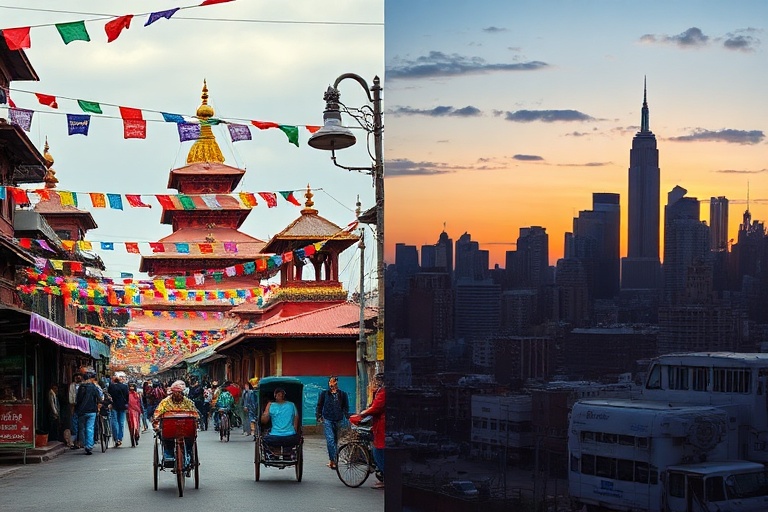
These economic differences manifest in daily life. In Nepal, most citizens live in rural areas with limited access to modern amenities. In the US, urbanization has created vast metropolitan areas where technology and consumer culture dominate. The contrast highlights how economic development reshapes societies, creating entirely different lived experiences.
Key Economic Differences
- GDP Composition: Nepal’s economy is primarily agricultural with growing remittance inflows, while the US economy is dominated by services (80% of GDP) and technology sectors.
- Industrial Base: Nepal lacks heavy industry, relying on cottage industries and small-scale production. The US maintains the world’s largest industrial sector, including advanced manufacturing and R&D facilities.
- Global Trade: Nepal exports primarily agricultural products and textiles, while the US is the world’s largest importer and exporter of high-value goods and services.
- Technology Access: Internet penetration in Nepal is around 35%, compared to over 90% in the US. Smartphone usage and digital infrastructure are similarly disparate.
Cultural Identity: Tradition vs Modernity
Nepal’s cultural identity remains deeply rooted in tradition. Hinduism and Buddhism shape daily life, with festivals like Dashain and Tihar celebrated with national fervor. The caste system, though officially abolished, still influences social structures in many areas. Family bonds and community ties remain central to Nepalese society.
American culture, by contrast, emphasizes individualism and cultural diversity. While Christianity remains the dominant religion, the US is a melting pot of cultures, religions, and ethnicities. American traditions often revolve around consumer culture, sports fandom, and national holidays like Independence Day and Thanksgiving.
These cultural differences extend to education and social norms. Nepalese education emphasizes rote learning and respect for authority figures. American education encourages critical thinking and questioning of established ideas. Social interactions in Nepal often prioritize community harmony, while American culture frequently celebrates personal achievement and self-expression.
Global Influence: Soft Power and International Relations
The United States wields unparalleled global influence through its economic, military, and cultural power. American media, technology companies, and educational institutions shape global trends. The US dollar serves as the world’s reserve currency, and American military presence spans every continent except Antarctica.
Nepal’s global influence is more subtle but no less important. The country’s spiritual traditions, particularly Buddhism, have gained international followers. Nepal serves as a critical buffer state between China and India, playing a unique role in regional diplomacy. The country’s natural beauty and adventure tourism draw visitors from around the world, creating people-to-people connections.
These contrasting forms of global influence reflect different national strategies. The US projects power through military strength and economic dominance. Nepal leverages its unique cultural heritage and geographic position to maintain relevance on the world stage. Both approaches demonstrate how nations with vastly different resources can achieve international significance.
Nepal-US Relations: A Complex Partnership
The relationship between Nepal and the US has evolved significantly since diplomatic ties were established in 1947. Today, the partnership focuses on development assistance, security cooperation, and cultural exchange.
- Development Assistance: The US is one of Nepal’s largest bilateral donors, providing over $1.5 billion in development aid since 2000. Programs focus on health, education, and governance.
- Security Cooperation: Military ties include counterterrorism training and disaster response coordination. The US Pacific Command maintains close working relationships with Nepalese security forces.
- Cultural Exchange: Educational programs like Fulbright scholarships bring Nepali students to American universities. The Peace Corps has operated in Nepal since 1962, focusing on education and community development.
- Trade Relations: US-Nepal trade remains modest but growing. Major exports from Nepal include carpets, textiles, and agricultural products, while the US exports machinery and high-tech goods.
What These Contrasts Teach Us
The comparison between Nepal and the United States offers more than just academic interest. It provides a framework for understanding how geography, history, and policy decisions shape national trajectories. The challenges faced by Nepal—poverty, infrastructure limitations, political instability—are mirrored in many developing nations. The solutions implemented by the US—technological innovation, economic diversification, strong institutions—represent one path to prosperity.
Yet this comparison also reveals the limitations of such binary thinking. Development isn’t linear, and the American model isn’t universally applicable. Nepal’s cultural preservation and environmental stewardship offer lessons in sustainable living. The US provides examples of innovation and global problem-solving that developing nations can adapt.
Most importantly, this comparison reminds us of our shared humanity. Beyond GDP figures and military budgets lie the same hopes, fears, and dreams that connect people across continents. Whether in the Himalayan villages of Nepal or the urban centers of America, parents want the best for their children. Communities seek stability and opportunity. Nations strive to leave a positive legacy for future generations.
In an increasingly interconnected world, understanding these fundamental differences becomes crucial. It allows for more effective international cooperation, better-informed policy decisions, and greater empathy between cultures. The Nepal-US comparison isn’t just about two countries—it’s about the spectrum of human experience itself.
As we consider the paths forward for both nations, one truth becomes clear: progress isn’t measured solely in economic terms. True development encompasses cultural preservation, environmental sustainability, and human dignity. Whether in the mountains of Nepal or the cities of America, these values remain universal.
For readers interested in exploring these themes further, consider visiting Dave’s Locker Travel section for insights into global cultures and destinations, or the Analysis section for deeper explorations of international relations and development topics.