Spain World Cup Squad 2022: Young Stars and Veterans in Qatar
“`html
Spain’s World Cup Squad: Balancing Experience and Youth for Qatar 2022
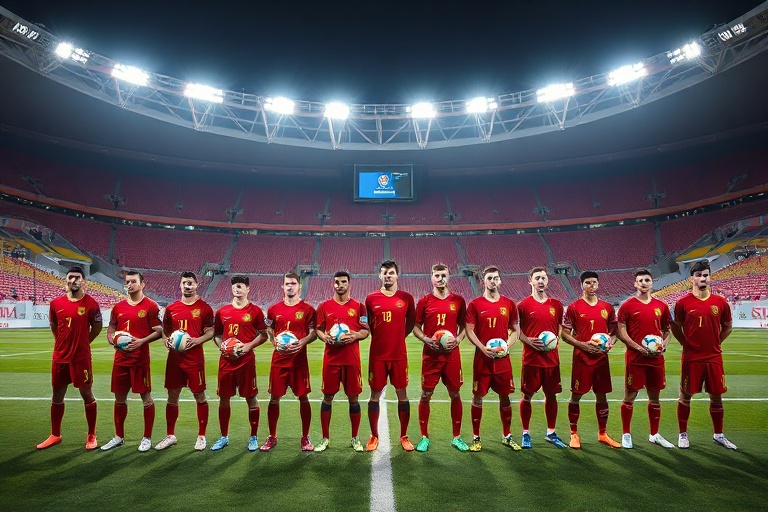
The Spanish national team entered the 2022 FIFA World Cup in Qatar with a squad that reflected both the legacy of their golden generation and the promise of a new era. Managed by Luis Enrique, Spain brought a blend of experienced campaigners and emerging talents, aiming to reclaim their status among football’s elite. This was a team in transition, carrying the weight of high expectations while building toward the future.
The Core of Experience: Veterans Leading the Charge
Spain’s squad included several players who had already contributed to major international tournaments. Among them was Sergio Busquets, the deep-lying midfield maestro, whose intelligence and positional awareness anchored the team. At 34, Busquets was the most experienced player in the squad, providing a calming influence in midfield. His partnership with younger talents like Pedri and Gavi was expected to bridge the gap between Spain’s past dominance and its evolving style of play.
The defensive spine also featured seasoned professionals. Jordi Alba, the left-back with over 90 caps, brought pace and creativity, while Aymeric Laporte provided defensive solidity at center-back. These players were tasked with guiding a younger generation through the pressures of a World Cup, ensuring tactical discipline while allowing creativity to flourish.
The Rise of Youth: Spain’s Next Generation
One of the most compelling aspects of Spain’s squad was its youth. Players like Gavi, Pedri, and Ferran Torres represented the future of Spanish football. Gavi, just 18 years old at the time, was already a regular for Barcelona and had broken into the senior national team. His energy, dribbling, and pressing ability made him a key figure in midfield. Pedri, the 2021 Kopa Trophy winner, was another young star who had already established himself as one of Europe’s most exciting prospects.
The attacking lineup featured several young forwards who had made significant impacts in La Liga. Ferran Torres, Ansu Fati, and Nico Williams offered pace, creativity, and a direct approach. These players were not just squad members; they were expected to be central to Spain’s ambitions in Qatar. Their inclusion signaled a shift toward a more dynamic, attack-minded style of play under Luis Enrique.
Here’s a breakdown of Spain’s key young players heading into the tournament:
- Gavi (18) – Midfielder known for his pressing and ball-carrying ability.
- Pedri (19) – Creative midfielder with exceptional vision and technical skill.
- Ferran Torres (22) – Versatile forward capable of playing across the attack.
- Ansu Fati (19) – Pace and dribbling, a constant threat on the counterattack.
Tactical Evolution: Luis Enrique’s Approach
Luis Enrique’s tenure as Spain’s manager had been marked by a willingness to experiment with formations and styles. Unlike the possession-heavy, tiki-taka approach of past Spanish teams, his system in Qatar prioritized verticality, pressing, and direct play. This was evident in the squad’s selection, where players like Ferran Torres and Nico Williams were tasked with stretching defenses and exploiting space.
The team’s midfield trio of Busquets, Rodri, and Pedri or Gavi allowed for a mix of control and creativity. Rodri, the Manchester City midfielder, provided defensive cover while dictating the tempo. His ability to shield the defense and transition quickly into attack was crucial for Spain’s counterattacking style. Meanwhile, Pedri and Gavi offered an alternative to the traditional Spanish playmaker, blending technical skill with high-energy pressing.
Spain’s backline also reflected this tactical flexibility. Laporte and Le Normand were chosen for their composure on the ball, while players like César Azpilicueta and Eric García provided leadership and experience. The full-back positions were occupied by players like Marcos Llorente and Dani Carvajal, who could push forward and support attacks while still maintaining defensive shape.
Challenges and Expectations
Despite the talent in the squad, Spain faced significant challenges in Qatar. The group stage included formidable opponents like Germany, Japan, and Costa Rica. Germany, in particular, had revitalized their squad under Hansi Flick, while Japan had shown they could compete with European sides. Spain’s ability to adapt to different styles of play would be tested early in the tournament.
Injuries also played a role in shaping the squad. Players like Gerard Morata and Koke missed out due to fitness concerns, forcing Luis Enrique to rely on alternatives like Álvaro Morata and Carlos Soler. The lack of depth in certain positions, particularly in attack, was a concern heading into the tournament.
Yet, Spain’s potential was undeniable. With a blend of experience and youth, they had the tools to progress deep into the tournament. The question was whether they could overcome tactical rigidity and capitalize on moments of individual brilliance. If they did, they could redefine themselves for a new generation.
Looking Ahead: The Future of Spanish Football
The 2022 World Cup was more than a tournament for Spain; it was a statement. The squad represented a bridge between the golden era of Spanish football and the next chapter. Players like Gavi, Pedri, and Rodri were not just squad members; they were the future of La Roja. Their performances in Qatar would shape the expectations for Euro 2024 and beyond.
For Luis Enrique, the tournament was an opportunity to validate his approach. His willingness to trust young players and adapt tactics had already drawn both praise and criticism. In Qatar, he would need to prove that his methods could deliver success on the biggest stage.
Spain’s journey in the World Cup was a reminder that football is cyclical. The team that had once dominated world football with tiki-taka was now evolving, embracing a more modern, dynamic style. Whether they succeeded in Qatar or not, the lessons learned would be invaluable for the future.
As the squad returned home, the focus would shift to building on the experiences of Qatar 2022. The blend of talent and ambition in Spain’s World Cup squad suggested that the best was yet to come.
—