<!DOCTYPE html>
<html lang="en">
<head>
    <meta charset="UTF-8">
    <meta name="viewport" content="width=device-width, initial-scale=1.0">
    <title>Trump Poland Troop Deployment: Strategic Shift or Political Play?</title>
</head>
<body>
    <article>
        <h1>Trump’s Poland Troop Deployment: Military Strength or Diplomatic Gambit?</h1>

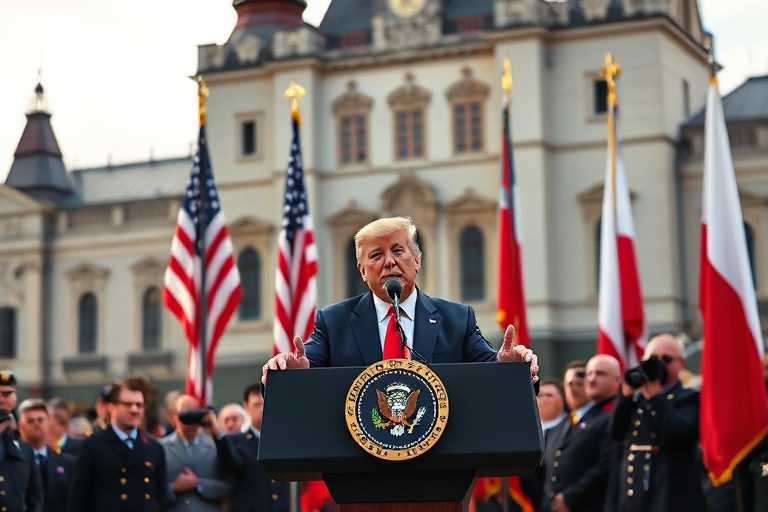
        <p>The announcement of additional U.S. troop deployments to Poland during Donald Trump’s presidency marked a significant moment in transatlantic security dynamics. While framed as a response to regional threats, the move also sparked debates about NATO commitments, geopolitical strategy, and domestic political motivations. The decision came amid rising tensions with Russia and shifting U.S. foreign policy priorities, raising questions about its long-term implications.</p>

        <h2>Background: Why Poland Became a Strategic Focus</h2>

        <p>Poland’s geographic position in Central Europe made it a critical ally for the U.S., particularly as relations with Russia deteriorated following the annexation of Crimea in 2014. The Polish government, led by then-President Andrzej Duda, actively sought stronger security guarantees from Washington, positioning itself as a key NATO partner. Trump’s administration responded by accelerating troop rotations and infrastructure investments in the country.</p>

        <p>The U.S. European Command (EUCOM) outlined several objectives for the deployment:</p>

        <ul>
            <li>Enhancing deterrence against Russian aggression</li>
            <li>Strengthening NATO’s eastern flank</li>
            <li>Demonstrating U.S. commitment to allies</li>
            <li>Modernizing military infrastructure in Poland</li>
        </ul>

        <p>By 2020, the U.S. had committed to rotating up to 5,500 troops through Poland, including the establishment of a permanent headquarters for the U.S. Army’s V Corps. This represented a substantial increase from previous levels and signaled a long-term U.S. military presence in the region.</p>

        <h2>Diplomatic and Political Dimensions</h2>

        <p>The troop deployment was not merely a military decision—it carried significant diplomatic weight. Trump’s approach to NATO, characterized by calls for increased European defense spending, created friction with traditional allies. However, Poland stood out as an exception, with its leadership embracing Trump’s transactional style of foreign policy.</p>

        <p>Critics argued that the deployment was partly motivated by domestic politics. Trump frequently praised Poland’s conservative government, aligning with his administration’s broader efforts to cultivate relationships with like-minded leaders. The move also served as a counterbalance to perceived European reluctance to confront Russia aggressively.</p>

        <p>Poland’s government reciprocated with substantial financial commitments, including funding for new U.S. military facilities. The relationship between Warsaw and Washington became a cornerstone of Trump’s Europe strategy, even as other NATO members expressed concerns about U.S. reliability.</p>

        <h2>Military and Strategic Implications</h2>

        <p>From a military standpoint, the deployment had tangible benefits. Poland’s infrastructure, including upgraded airfields and pre-positioned equipment, allowed for rapid reinforcement in a crisis. The V Corps headquarters provided a command structure capable of coordinating with NATO allies in the event of a conflict.</p>

        <p>However, the deployment also raised logistical challenges. Rotating troops through Poland required sustained funding and coordination, particularly as U.S. military resources were stretched thin by commitments in the Middle East. Some analysts questioned whether the deployment was sustainable without compromising other global priorities.</p>

        <p>The U.S. also invested in bilateral exercises with Poland, such as the annual “Dragon” series, which enhanced interoperability between the two militaries. These drills were designed to simulate scenarios involving Russian aggression, underscoring Poland’s role as a frontline state in NATO’s deterrence strategy.</p>

        <h2>Reactions and Long-Term Consequences</h2>

        <p>European allies greeted the deployment with cautious optimism. While acknowledging its strategic value, many NATO members worried that it could create divisions within the alliance. France and Germany, in particular, emphasized the importance of a unified European defense posture, raising concerns about over-reliance on the U.S.</p>

        <p>In the U.S., reactions were divided along partisan lines. Supporters of the deployment praised it as a necessary step to counter Russian expansionism, while critics argued it was an unnecessary provocation that could escalate tensions. The Biden administration later reviewed the policy, ultimately maintaining a U.S. presence in Poland but adjusting its scope.</p>

        <p>The troop deployment also had economic ripple effects. Polish defense contractors benefited from increased U.S. military spending, while local communities near bases saw job growth. However, the long-term economic impact remained uncertain, particularly as global military priorities shifted.</p>

        <p>As geopolitical tensions continue to evolve, Poland’s role as a key U.S. ally remains a subject of debate. The troop deployment demonstrated the complexities of balancing military strategy, diplomatic relations, and domestic politics—a challenge that will likely define future U.S. engagements in Europe.</p>

        <p>For further analysis on NATO’s evolving role, visit our <a href="https://www.daveslocker.net/category/news">News</a> section. To explore U.S. military strategies in Eastern Europe, check out our <a href="https://www.daveslocker.net/category/analysis">Analysis</a> category.</p>
    </article>

    <!-- Metadata Section -->