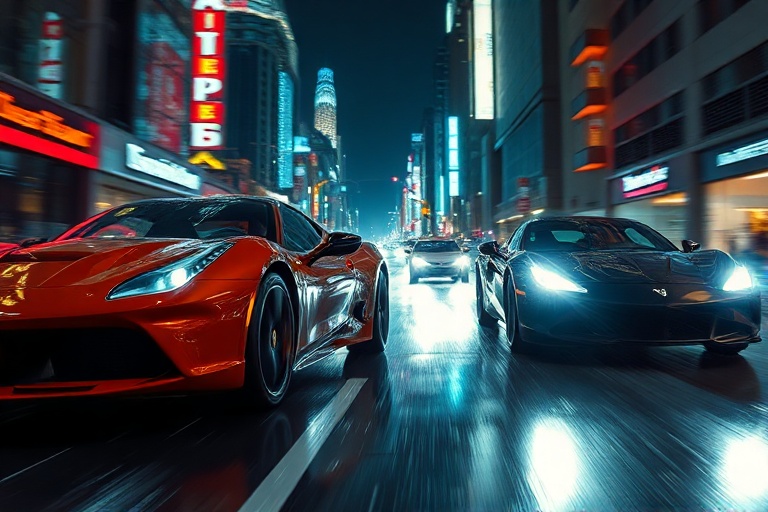
car chase
“`html
The Evolution and Cultural Impact of Car Chases
Car chases occupy a unique space in popular culture, blending adrenaline-fueled excitement with cinematic artistry. They are more than just high-speed pursuits; they are carefully choreographed sequences that test the limits of automotive performance, human endurance, and storytelling. From the gritty streets of Los Angeles to the neon-lit highways of Tokyo, car chases have evolved alongside automotive technology and cultural tastes, reflecting societal fears, desires, and fantasies.
Globally, car chases serve different narrative purposes. In American cinema, they often symbolize freedom, rebellion, or the pursuit of justice. European films, particularly in France and Italy, tend to use them to critique social hierarchies or the excesses of modernity. Meanwhile, in Asian cinema—especially in action films from Hong Kong and Japan—car chases are executed with a blend of precision and surrealism, almost like dance sequences set to the roar of engines.
The Golden Age of Car Chases in Hollywood
The mid-20th century marked the golden age of car chases in cinema, as filmmakers began experimenting with the possibilities of automotive action. The 1968 film Bullitt, starring Steve McQueen, is often credited with revolutionizing the genre. Its iconic chase through the streets of San Francisco set a new standard for realism and intensity, using actual locations and practical stunts rather than studio backdrops. This approach influenced countless films that followed, proving that car chases could be as emotionally gripping as any dialogue-driven scene.
By the 1970s and 1980s, car chases became a staple of action cinema, often serving as climactic set pieces. Films like The French Connection (1971) and To Live and Die in L.A. (1985) pushed boundaries with their unflinching portrayal of high-speed pursuits. These movies didn’t just glorify speed; they exposed the dangers and chaos of urban crime, making the chase sequences feel like a visceral critique of lawlessness.
During this era, car chases also became a vehicle for exploring cultural tensions. The chase scenes in Death Race 2000 (1975), for example, mirrored the political disillusionment of the time, blending satire with visceral thrills. The film’s dystopian vision of America as a lawless racetrack reflected anxieties about consumerism, government corruption, and the erosion of civil society.
Global Variations: From Tokyo to Bollywood
While Hollywood dominates the global conversation around car chases, other film industries have developed their own distinct styles. In Japan, the “yakuza” films of the 1970s and 1980s frequently featured elaborate car chases as metaphors for the moral decay of post-war society. Directors like Kinji Fukasaku used these sequences to explore themes of loyalty, betrayal, and the cost of ambition.
In India, Bollywood has reimagined the car chase as a vibrant, almost musical spectacle. Films like Dhoom (2004) and its sequels blend high-octane action with colorful choreography, music, and romance. These chases are less about realism and more about spectacle, reflecting Bollywood’s tradition of blending genres and emotions into a single, exhilarating experience.
European cinema, particularly in France and Italy, often uses car chases to critique social and political issues. The French film The Bourne Identity (2002) and its sequels are notable for their gritty, documentary-style chases that emphasize the disorientation and violence of modern espionage. In contrast, Italian cinema has used car chases to satirize the excesses of capitalism, as seen in films like The Monster (1994), where a wealthy industrialist’s reckless driving mirrors his moral bankruptcy.
Even in Africa and Latin America, car chases have taken on new meanings. In Nollywood films, for example, high-speed pursuits often reflect the struggles of ordinary people against corrupt systems. These sequences are less about technical precision and more about the emotional stakes of survival and resistance.
The Technical and Creative Challenges of Filming Car Chases
Creating a compelling car chase is no small feat. It requires a delicate balance of technical skill, creative vision, and logistical planning. Filmmakers must consider everything from camera angles to stunt coordination, ensuring that the sequence feels both thrilling and coherent. The use of practical effects, such as real cars and real locations, has become increasingly important as audiences grow more discerning about CGI.
One of the most iconic car chases in recent years is found in The Fast and the Furious franchise. While the films are often criticized for their over-the-top action, they have also pushed the boundaries of what’s possible in automotive cinematography. The franchise’s use of modified cars, aerial shots, and dynamic editing has set a new standard for visual storytelling in action films.
However, not all car chases rely on Hollywood budgets or cutting-edge technology. Independent filmmakers have found innovative ways to create tension and excitement on a smaller scale. For example, the 2014 film Locke features a single actor in a car for the entire movie, using dialogue and close-ups to build suspense. This approach proves that car chases aren’t just about speed; they’re about human drama and the choices that define us.
Another challenge is ensuring the safety of stunt performers and crews. Modern filmmaking techniques, such as remote-controlled cameras and drones, have made it possible to capture high-speed action without putting lives at risk. Films like Baby Driver (2017) have also experimented with music-driven editing, using sound design to enhance the rhythm and energy of the chase sequences.
The Cultural Significance of Car Chases
Car chases are more than just cinematic set pieces; they are cultural artifacts that reflect the anxieties and aspirations of their time. In the 1960s and 1970s, they symbolized rebellion against authority, as seen in films like Vanishing Point (1971), where a lone driver challenges the system. In the 1980s and 1990s, they became a metaphor for the excesses of capitalism, with films like Ferris Bueller’s Day Off (1986) using the open road as a symbol of youthful freedom and defiance.
Today, car chases continue to evolve, reflecting new cultural concerns. In an era of climate change and urban sprawl, films like Drive (2011) and Baby Driver use car chases to explore themes of isolation, identity, and the search for meaning in a fragmented world. These films often contrast the raw power of the automobile with the emotional emptiness of modern life, creating a tension that resonates with contemporary audiences.
Car chases also serve as a lens through which to examine societal attitudes toward technology. In films like Minority Report (2002), high-speed pursuits are used to critique the surveillance state and the loss of privacy. In contrast, the Mad Max franchise (1979–present) presents a post-apocalyptic world where cars are both weapons and lifelines, reflecting fears about resource scarcity and environmental collapse.
The emotional resonance of car chases extends beyond cinema. In music, car chases are a recurring motif, from Bruce Springsteen’s Thunder Road to the hip-hop anthem California Love by 2Pac and Dr. Dre. These songs often use the open road as a metaphor for escape, ambition, or the search for identity. Similarly, in video games like Grand Theft Auto and Need for Speed, car chases are central to the gameplay experience, offering players a chance to live out their fantasies of freedom and power.
Key Elements of a Memorable Car Chase
- Realism: Audiences today demand authenticity. Practical stunts and real locations enhance the sense of danger and excitement.
- Character Motivation: A car chase should serve the story, not just the spectacle. The stakes should be clear, whether it’s a life-or-death escape or a quest for justice.
- Visual Creativity: Innovative camera work, editing, and sound design can elevate a car chase from ordinary to extraordinary.
- Cultural Relevance: The best car chases reflect the anxieties and aspirations of their time, making them resonate with audiences on a deeper level.
The Future of Car Chases in Cinema and Beyond
As technology advances, so too will the art of the car chase. Electric vehicles, autonomous driving systems, and virtual reality are already beginning to reshape how filmmakers approach high-speed action. The rise of electric cars, in particular, presents new challenges and opportunities. While EVs offer instant torque and quieter operation, their lack of engine noise and different handling characteristics require filmmakers to rethink how they capture the thrill of speed.
Virtual reality and augmented reality are also changing the game. Films like Uncut Gems (2019) have experimented with immersive editing techniques that make the audience feel as though they are part of the action. As these technologies become more accessible, we can expect to see even more innovative approaches to filming car chases, from interactive experiences to fully virtual sequences.
Yet, despite these technological advancements, the essence of a great car chase remains unchanged. It’s still about the thrill of the pursuit, the clash of wills between driver and pursuer, and the raw power of the machine. Whether on the big screen, in a video game, or in a song, car chases will continue to captivate audiences and reflect the spirit of their time.
For those who crave more high-octane action, explore our Entertainment section for the latest reviews and analyses of action films. Or, if you’re interested in the technical side of automotive innovation, check out our Technology category for deep dives into the future of driving.
Conclusion
Car chases are more