yosemite
“`html
Yosemite: America’s Crown Jewel of Natural Wonders
Few landscapes command the global imagination quite like Yosemite National Park. Carved by ancient glaciers and preserved through conservation efforts spanning over a century, this 750,000-acre expanse in California’s Sierra Nevada mountains has shaped environmental policy worldwide while drawing over four million visitors each year. Its towering granite cliffs, cascading waterfalls, and ancient sequoias tell a story of geological time—and human reverence for nature.
The park’s significance extends far beyond its borders. Yosemite became a UNESCO World Heritage Site in 1984, not only for its unparalleled beauty but for its role as a living laboratory of biodiversity and ecological resilience. For travelers, photographers, artists, and scientists alike, Yosemite is both a destination and a symbol—of wilderness, of preservation, and of humanity’s evolving relationship with the natural world.
The Geological Marvels That Define Yosemite
Yosemite’s dramatic scenery stems from a unique blend of tectonic uplift and glacial sculpting. Around 10 million years ago, the Sierra Nevada began rising along the Sierra Fault, lifting granite batholiths—massive underground magma chambers—toward the sky. Over millennia, erosion and weathering exposed these rocks, forming the sheer cliffs we recognize today.
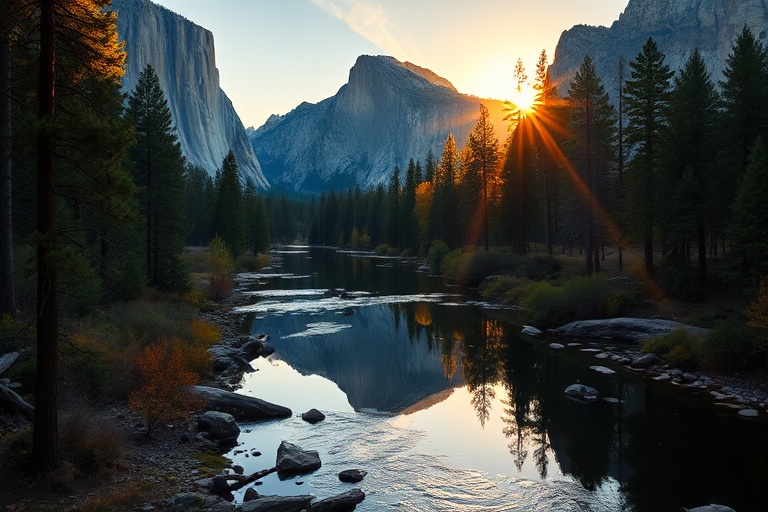
The most iconic of these formations is El Capitan, a 3,000-foot vertical granite monolith that draws rock climbers from across the globe. Half Dome, another geological giant, rises 8,842 feet above sea level and offers a striking example of exfoliation—where sheets of rock peel away due to pressure release. These natural sculptures are not static relics; they continue to evolve, albeit at a pace imperceptible to human time.
- Half Dome: Formed by glacial erosion and exfoliation, it’s one of the most photographed rock formations in the world.
- El Capitan: A world-renowned climbing destination with over 70 established routes.
- Yosemite Falls: One of the tallest waterfalls in North America, plunging 2,425 feet in three tiers.
- Bridalveil Fall: A graceful 620-foot waterfall that sways slightly in the wind, giving it its name.
- The Merced River: Carves through the valley, shaping meadows and supporting diverse ecosystems.
The park’s geological story is also one of water. During the Ice Age, massive glaciers flowed through the region, deepening valleys and leaving behind U-shaped troughs. The Merced River, which winds through Yosemite Valley, continues to carve the landscape, feeding meadows and sustaining life. This interplay of rock and water creates a dynamic environment where change is constant—even if it unfolds over centuries.
Yosemite Through Time: From Indigenous Homeland to Global Icon
Long before Yosemite became a national park, it was home to the Ahwahneechee people, who lived in the valley for thousands of years. They hunted, gathered acorns, and built seasonal villages, developing a deep spiritual and practical relationship with the land. Their oral histories speak of the valley’s creation and its sacredness—narratives that echo in the names of places like Yosemite Valley itself, derived from the Miwok word Yos.sé.mi, meaning “they are killers,” a reference to a neighboring tribe.
The arrival of Euro-American settlers in the mid-19th century disrupted this harmony. The Mariposa Battalion, a state militia, forcibly removed the Ahwahneechee in 1851, and the valley was rapidly transformed by logging, grazing, and tourism. The stage was set for conflict between preservation and exploitation.
It was John Muir, the Scottish-American naturalist and writer, who catalyzed the movement to protect Yosemite. His 1912 book My First Summer in the Sierra and tireless advocacy for conservation caught the attention of leaders like President Theodore Roosevelt. In 1906, Roosevelt signed a bill returning Yosemite Valley to federal control, and in 1916, the National Park Service was established—with Yosemite as a cornerstone.
Today, the Ahwahneechee legacy is recognized through cultural programs, interpretive exhibits, and partnerships with Indigenous communities. The park’s 2016 centennial celebration included a Native American dance performance and a commitment to sharing more of their stories. Yosemite’s history is not just geological or ecological—it is deeply human, woven through generations of stewardship and survival.
Conservation Challenges: Balancing Access and Preservation
Yosemite’s popularity presents a paradox: how to protect a fragile ecosystem while welcoming millions of visitors. Overcrowding, air pollution from nearby cities, and the impacts of climate change threaten the park’s delicate balance. In recent years, park rangers have had to implement timed entry reservations during peak seasons to reduce congestion, a first in the park’s history.
Climate change is reshaping Yosemite in visible ways. Since 1900, the park’s average temperature has risen by 3°F, leading to earlier snowmelt and reduced water flow in summer. This affects not only the dramatic waterfalls but also the survival of native species like the Yosemite toad and the Sierra Nevada bighorn sheep. Droughts have increased the frequency of wildfires, which, while natural in many ecosystems, now threaten developed areas and cultural sites.
The park has responded with innovative strategies, including prescribed burns to reduce fuel loads, restoration of meadows, and collaboration with scientists to monitor climate impacts. Visitor education plays a crucial role—rangers encourage Leave No Trace principles, and programs teach the cultural significance of the land beyond its visual appeal.
Yosemite also serves as a model for sustainable tourism. Electric shuttle systems reduce emissions in the valley, and partnerships with local Indigenous groups inform land management decisions. These efforts reflect a growing global awareness: natural wonders like Yosemite are not just places to visit—they are ecosystems to sustain.
Yosemite as a Cultural and Creative Force
Yosemite has long been a muse for artists, writers, and filmmakers. In the late 19th century, the valley inspired painters of the Hudson River School, including Albert Bierstadt, whose luminous landscapes helped popularize the idea of wilderness as a national treasure. Photographers like Ansel Adams elevated Yosemite to iconic status with his black-and-white images, particularly his 1941 photograph “Moonrise, Hernandez, New Mexico” (though taken in Yosemite), which became a symbol of both photographic mastery and environmental beauty.
Film has also played a role. Scenes from Disney’s 1950s nature documentaries and more recent films like The Secret Life of Walter Mitty (2013) have used Yosemite to evoke awe and introspection. Even the 2018 Oscar-winning short Period. End of Sentence. features a scene set in a Yosemite-like landscape, linking environmental themes to social justice.
Music has found resonance here too. The park has hosted the Yosemite Chamber Orchestra since 1971, blending classical performances with the sounds of nature. In 2022, the Grammy-nominated album Yosemite by jazz pianist Aaron Parks was recorded in the park, capturing the interplay of human creativity and natural acoustics.
Yosemite’s cultural footprint extends into education. Programs like the Yosemite Leadership Program, a partnership with the University of California, train the next generation of park stewards. Schools across the U.S. use Yosemite as a case study in ecology, geography, and environmental ethics—proving that this single landscape can inspire learning across disciplines.
A Global Perspective: What Yosemite Teaches the World
Yosemite is more than a national park; it is a global emblem of conservation. Its story mirrors challenges faced by iconic sites from Patagonia to the Serengeti: balancing tourism, local communities, and environmental health. The park’s success in restoring natural habitats and integrating Indigenous knowledge offers lessons for sustainable land management worldwide.
In China, the Jiuzhaigou Valley, another UNESCO site, has adopted Yosemite-inspired conservation strategies after years of over-tourism. In New Zealand, Te Wāhipounamu, a UNESCO World Heritage site known for its fjords and forests, has looked to Yosemite’s model of controlled access and community engagement. Even in Europe, where national parks are smaller and older, Yosemite’s blend of preservation and public access serves as a benchmark.
Yet Yosemite also reminds us of the limits of conservation. As glaciers recede and species decline, the park becomes a living record of climate change. Its melting ice and shifting ecosystems are not abstractions—they are visible, measurable, and urgent. In this way, Yosemite transcends its role as a tourist destination. It is a sentinel, a teacher, and a call to action.
Visitors often leave Yosemite with a quiet sense of awe—not just at the scenery, but at the realization that such places are rare and fragile. They are not just for our enjoyment; they are part of a larger web of life that demands respect and stewardship. In an age of environmental crisis, Yosemite stands as both a sanctuary and a challenge: a place to be preserved, yes, but also a reminder of what we stand to lose.
Planning Your Visit: A Practical Guide
For those inspired to experience Yosemite firsthand, preparation is key. The park is open year-round, but accessibility varies by season. Spring brings waterfalls at their peak, while fall offers golden hues and fewer crowds. Winter transforms the valley into a serene, snow-covered wonderland, ideal for cross-country skiing and solitude.
- Best Time to Visit: May through September for waterfalls and hiking; October and November for fall colors and fewer visitors.
- Getting There: Located 160 miles east of San Francisco, the park is accessible via Highway 120 or