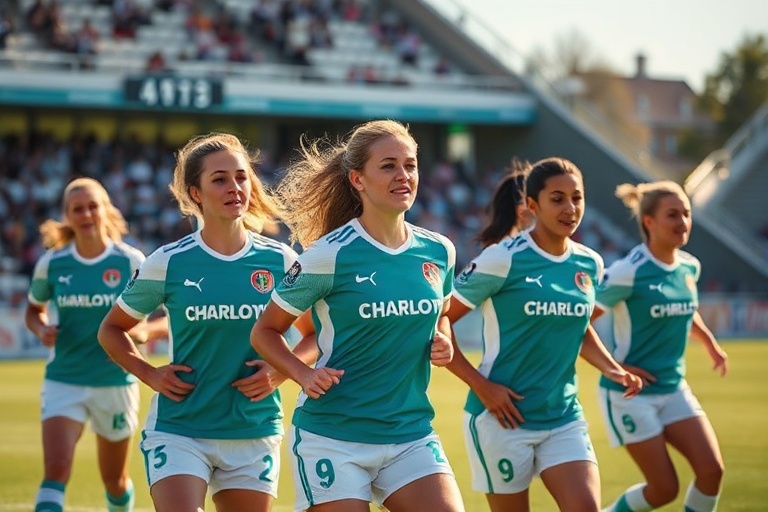
In the shadow of England’s Euro 2022 triumph and the rapid commercial growth of the Women’s Super League (WSL), Charlton Athletic Women have quietly emerged as a club that punches far above its weight. While clubs like Chelsea, Manchester City, and Arsenal dominate headlines, Charlton has built a reputation not on star power or corporate backing—but on consistency, community, and a clear development pathway. Their story is one of quiet ambition, tactical evolution, and a refusal to accept the status quo.
The Rise of a Club with a Purpose
Founded in 1991 as part of Charlton Athletic’s community outreach, the women’s team began as an amateur side with modest ambitions. For years, it operated on the fringes of English football, moving between regional leagues and relying on volunteer staff and local talent. By the mid-2010s, however, the landscape began to shift. The FA’s renewed investment in women’s football, the launch of the WSL as a fully professional league, and the growing visibility of the England team all created new opportunities—even for smaller clubs.
Charlton made a pivotal decision in 2018: to fully integrate their women’s team into the club’s professional structure. This wasn’t just a rebranding exercise. It involved upgrading training facilities, securing better kit deals, and aligning player pathways with the men’s academy. The result? Charlton Women became one of only a handful of non-WSL clubs to field a professional women’s team in England. They now compete in the Women’s Championship, the second tier of English women’s football, and regularly challenge for promotion.
What sets Charlton apart isn’t just their professional status—it’s their philosophy. Unlike many clubs chasing immediate success, Charlton has focused on sustainable growth. They’ve prioritized youth development, with several players progressing from their academy to first-team roles. This approach reflects a deeper belief: that women’s football thrives when clubs invest in people, not just results.
A Model Built on Community and Long-Term Vision
The club’s commitment to its roots remains evident. Charlton Athletic Women still play at The Oak Stand at The Valley, sharing the stadium with the men’s team during key fixtures. This proximity fosters a unique identity—one where women’s football isn’t an afterthought, but a core part of the club’s identity. It also sends a powerful message to young girls in South East London and Kent: you don’t have to leave your community to achieve your dreams.
Charlton’s recent form has been encouraging. In the 2022–23 season, they finished fourth in the Championship, just five points off the promotion places. Their style of play—structured, pressing, and built on technical ability—has drawn comparisons to some of the top WSL sides. Manager Karen Hills, a former England international and long-time Charlton stalwart, has instilled a clear identity: high pressing, quick transitions, and a refusal to sit back.
Why Charlton’s Approach Matters in a Changing Football Landscape
The rise of Charlton Women isn’t just a feel-good story—it’s a case study in how smaller clubs can thrive in a professionalized women’s game. In an era where financial disparity between top and bottom clubs is widening, Charlton offers an alternative model: one rooted in stability, community, and clear strategy.
This approach has broader implications. As the Women’s Super League faces criticism over the dominance of a few wealthy clubs, Charlton’s model proves that success isn’t solely dependent on budgets. It’s about vision, infrastructure, and the willingness to build something lasting. Their progress also highlights the importance of the Championship as more than just a feeder league—it’s a proving ground for clubs, players, and coaches who want to grow the game from the ground up.
Key Contributions to English Women’s Football
Charlton’s impact can be measured in several ways:
- Player Development: Since turning professional, Charlton has produced several players who have gone on to represent England at youth and senior levels. Their academy is now seen as one of the best outside the WSL.
- Coaching Pipeline: The club has invested in upskilling its coaching staff, with several women now holding UEFA A and B licenses—roles traditionally dominated by men in football.
- Fan Engagement: Charlton consistently draws healthy crowds for Championship matches, with average attendances often surpassing 1,000—a strong figure for a non-WSL club.
- Cultural Shift: By integrating the women’s team into the club’s main operations, Charlton has helped normalize women’s football within a traditional men’s club structure, setting an example for others.
The Road Ahead: Can Charlton Break the Championship’s Glass Ceiling?
For all their progress, Charlton’s ultimate goal remains promotion to the Women’s Super League. The Championship is a competitive league, with clubs like Liverpool and Bristol City spending heavily to secure promotion. Yet Charlton’s disciplined approach gives them a fighting chance. Their recent recruitment has focused on experienced professionals—players who understand the demands of the WSL but are willing to commit to the club’s long-term vision.
Financially, Charlton operates on a shoestring compared to their rivals. Their budget is dwarfed by clubs backed by billionaire owners or corporate sponsors. But this frugality has bred resilience. The club has leveraged partnerships with local businesses, secured grants from the FA and Sport England, and maintained a lean but effective staff structure. It’s a model that prioritizes efficiency over excess—something increasingly rare in modern football.
As the women’s game continues to evolve, Charlton’s story serves as a reminder that ambition doesn’t always need to be loud. Sometimes, it’s the quiet, methodical clubs that end up changing the game. If Charlton can secure promotion in the coming years, they won’t just be joining the WSL—they’ll be rewriting the rules of how a club can rise within it.
Conclusion: More Than a Footnote in Women’s Football
Charlton Athletic Women stand at a crossroads. They are no longer the plucky underdogs of English football, but they’re not yet the established giants either. Their journey reflects the broader challenges and opportunities facing women’s football today: the tension between growth and tradition, between ambition and pragmatism, between being part of the system and pushing its boundaries.
Yet one thing is clear: Charlton’s impact extends far beyond the pitch. They are proving that women’s football can thrive outside the glare of the Premier League spotlight. They are showing young girls that professional pathways exist beyond the WSL. And they are demonstrating that a club’s value isn’t measured solely in trophies, but in the communities it builds and the futures it shapes.
As the women’s game continues to expand, Charlton’s story will become increasingly relevant. They are not just a team. They are a blueprint.
For fans of the women’s game, that’s worth paying attention to.
To follow Charlton Athletic Women’s latest fixtures and news, visit the club’s official site or their Sports section on Dave’s Locker.