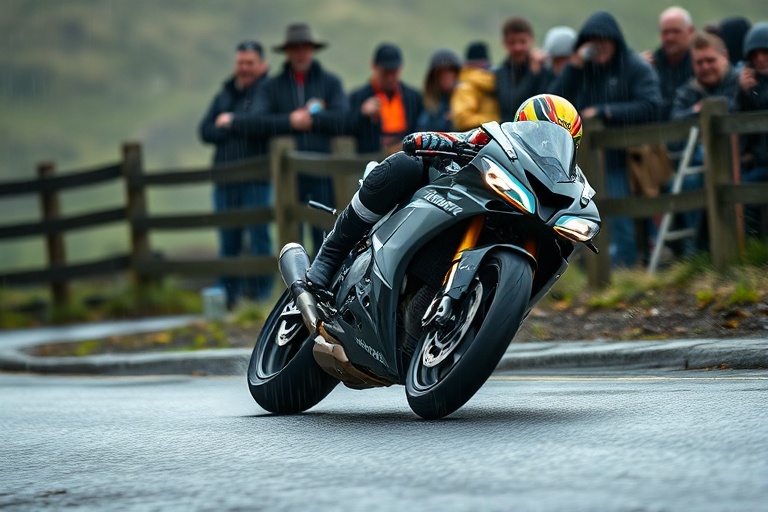
Isle of Man TT: History, Danger, and the Ultimate Motorcycle Race
“`html
The Isle of Man TT: A Century of Speed, Risk, and Legend
The Isle of Man TT is more than a motorcycle race; it is a rite of passage for riders, a test of machine and man, and a spectacle that has endured for over a century. Held annually on the Isle of Man, a self-governing British Crown dependency nestled between England and Ireland, the event transforms the island’s narrow, winding roads into a high-speed proving ground. With speeds exceeding 200 mph and a history steeped in triumph and tragedy, the TT is unlike any other motorsport event in the world.
A Brief History: From Humble Beginnings to Global Icon
The Isle of Man TT traces its origins to 1907, when the first trials were held on the island’s public roads. Organized by the Auto-Cycle Club, the event was initially a test of reliability and endurance rather than outright speed. Riders navigated the challenging Mountain Course, a 37.73-mile circuit that winds through villages, over mountain passes, and past sheer drops. By the 1920s, the TT had evolved into a full-fledged race, attracting top riders from across Europe and beyond.
The event’s early years were marked by innovation and danger. Motorcycles of the time were primitive by modern standards, with drum brakes and basic suspension systems. Yet riders pushed the limits, often at great personal cost. The TT’s reputation for danger grew alongside its fame, as crashes and fatalities became an unfortunate part of its lore. Today, the Mountain Course remains largely unchanged, a tribute to its historical significance and the enduring challenge it presents to riders.
Key Milestones in TT History
- 1907: First Isle of Man TT held as a reliability trial.
- 1920s: The event transitions into a full race, with separate classes for different engine sizes.
- 1949: The TT becomes part of the inaugural FIM Motorcycle Grand Prix World Championship.
- 1977: The Sidecar TT is introduced, expanding the event’s diversity.
- 2000s: The introduction of electronic fuel injection and advanced safety gear begins to reduce fatalities, though risks remain.
The Mountain Course: A Track Like No Other
The Mountain Course is the heart of the Isle of Man TT. Unlike purpose-built racetracks, it is a public road network that is closed to normal traffic for the event. The circuit features 264 turns, including iconic sections like the Gooseneck, the Bungalow, and the terrifyingly fast Sulby Straight. Elevation changes are dramatic, with riders climbing to 422 meters (1,385 feet) above sea level before descending back into the glens.
What makes the Mountain Course so unique is its blend of high-speed straights and tight, technical corners. Riders must balance aggression with precision, often relying on years of experience to navigate its hazards. The road surface is unforgiving—tarmac is patched and uneven in places, and grass verges offer no margin for error. Weather conditions can change in an instant, adding another layer of unpredictability to an already dangerous equation.
For spectators, the Mountain Course offers an unparalleled viewing experience. Unlike enclosed circuits, fans can stand just feet from the action, feeling the roar of engines and the rush of air as riders pass. The TT’s atmosphere is electric, with crowds camping along the course for days to secure the best spots. It is this combination of accessibility and danger that has cemented the TT’s status as a motorsport pilgrimage.
The Human Element: Riders and Their Machines
The Isle of Man TT is as much about the people who compete as it is about the machines they ride. The event attracts a mix of professional racers, privateers, and amateur riders, all united by a shared passion for speed and challenge. Among the most legendary figures in TT history is Joey Dunlop, a Northern Irish rider whose record of 26 wins remains unmatched. Dunlop’s exploits on the Mountain Course earned him a cult-like following and cemented his status as a folk hero.
Modern TT riders face a different set of challenges. Today’s motorcycles are technological marvels, equipped with advanced aerodynamics, carbon-fiber frames, and sophisticated electronics. Yet the core demands of the TT remain unchanged: bravery, precision, and an almost supernatural ability to read the road. Riders must also contend with the psychological toll of the event. The knowledge that a single mistake can be fatal looms over every lap, adding a layer of mental pressure that is rare in motorsport.
For many riders, the TT is the ultimate test of skill and nerve. It is a place where legends are made and lives are lost, where the line between triumph and tragedy is razor-thin. The event’s allure lies in this dichotomy—a celebration of human achievement tempered by the ever-present specter of danger.
Broader Implications: Why the TT Matters Beyond the Race
The Isle of Man TT is more than a sporting event; it is a cultural touchstone with far-reaching implications. For the Isle of Man itself, the TT is a lifeline. The event injects millions of pounds into the local economy each year, supporting hotels, restaurants, and businesses across the island. It also fosters a sense of pride and identity, uniting the Manx people around a shared tradition that has endured for over a century.
Beyond its economic and cultural significance, the TT has influenced motorcycle design and safety. The demands of the Mountain Course have driven innovation in braking systems, suspension, and rider protection. Modern road bikes now incorporate features first pioneered in TT racing, from advanced ABS to slipper clutches. The event has also played a role in shaping motorsport regulations, with its emphasis on rider skill and machine reliability serving as a counterpoint to the high-tech, factory-dominated world of Grand Prix racing.
Yet the TT’s legacy is not without controversy. Critics argue that the event’s emphasis on speed and danger sends the wrong message, particularly in an era where road safety is a growing concern. The Isle of Man government has taken steps to improve safety, including the introduction of air fences and stricter medical protocols. However, the fundamental nature of the TT—racing on public roads at extreme speeds—means that risk can never be entirely eliminated.
The TT also raises questions about the future of motorsport. As electric and autonomous vehicles reshape the automotive landscape, the TT faces a reckoning. Can the event adapt to a world where internal combustion engines are becoming obsolete? Some argue that the TT’s focus on tradition and spectacle makes it uniquely positioned to thrive in a changing world. Others believe that the event must evolve or risk becoming a relic of a bygone era.
The TT’s Enduring Appeal
Despite these challenges, the Isle of Man TT endures. Its blend of history, danger, and spectacle continues to captivate audiences around the world. The event’s ability to adapt while staying true to its roots is a testament to its resilience. Whether viewed as a sporting spectacle, a cultural phenomenon, or a test of human limits, the TT remains an unparalleled experience.
For riders, the TT is a dream—a chance to pit themselves against the Mountain Course and write their names into the history books. For spectators, it is a thrilling spectacle, a chance to witness speed and skill in its purest form. And for the Isle of Man, it is a tradition that must be preserved, no matter the cost.
As the TT enters its second century, one thing is certain: the roar of engines on the Mountain Course will continue to echo through the glens, a reminder of a time when speed was the ultimate measure of man and machine.
For those interested in exploring more about motorcycle culture and history, visit Dave’s Locker Motorcycles or Dave’s Locker Sports for a deeper dive into the world of racing and two-wheeled adventures.