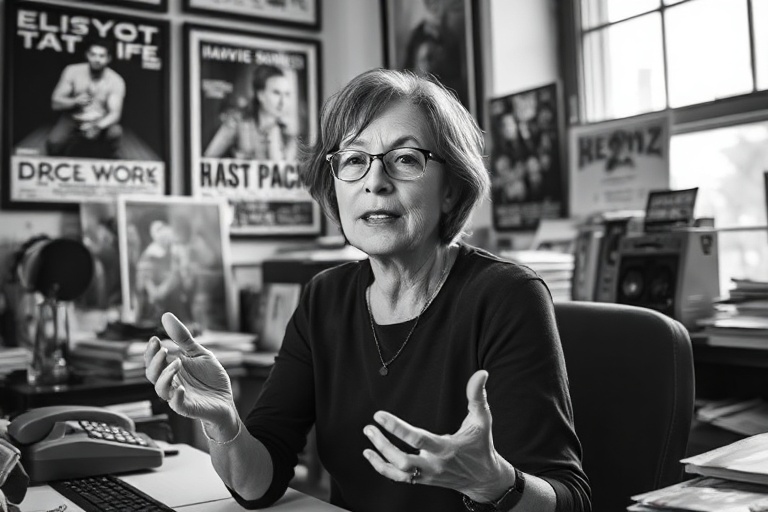
Jane Rosenthal’s name is synonymous with the transformation of independent film into a global conversation. For over three decades, she has shaped the cultural landscape not just in New York, where she is a fixture, but across continents. Her work bridges storytelling traditions, economic ecosystems, and artistic ambition, making her one of the most quietly influential figures in modern cinema.
As co-founder of the Tribeca Film Festival and Tribeca Enterprises, Rosenthal didn’t just create a platform for filmmakers—she redefined how cities invest in creativity, how audiences engage with new voices, and how global cinema circulates beyond traditional borders. Her influence extends from the streets of Manhattan to film festivals in Abu Dhabi, from workshops in Lagos to collaborations with Hollywood studios. It’s a legacy built not on spectacle, but on sustained cultural infrastructure.
The Early Vision: Tribeca as a Cultural Catalyst
Rosenthal launched the Tribeca Film Festival in 2002 with her husband, Robert De Niro, in response to the September 11 attacks. The idea wasn’t just to revive Lower Manhattan—it was to reclaim its identity as a creative hub. While many saw the neighborhood as a financial district in decline, Rosenthal envisioned a place where film could heal, connect, and reinvent.
What began as a local showcase quickly grew into a global event. Today, Tribeca receives over 15,000 submissions annually from more than 80 countries. It’s a microcosm of world cinema, where a debut film from Indonesia can premiere alongside a Hollywood drama. This inclusivity wasn’t accidental. Rosenthal insisted that the festival reflect the full spectrum of human experience—stories from marginalized communities, emerging markets, and underrepresented voices.
Tribeca’s model influenced other cities. Festivals in Busan, Dubai, and Berlin began adopting elements of its hybrid approach: industry labs, audience engagement programs, and a focus on both art and commerce. Rosenthal’s philosophy was clear: cinema thrives when it’s accessible, diverse, and economically viable. That balance has become a blueprint for modern film festivals worldwide.
Global Reach: From New York to Abu Dhabi
Rosenthal’s international footprint is as impressive as it is intentional. In 2010, she expanded Tribeca into the Middle East with the launch of the Abu Dhabi Film Festival. This wasn’t just about exporting American culture—it was about fostering a regional film ecosystem. By investing in local talent, co-producing Emirati films, and training young filmmakers, she helped position Abu Dhabi as a cultural hub connecting Africa, Asia, and Europe.
Her work in Africa is equally transformative. Through partnerships with organizations like the African Film Festival and the Durban International Film Market, Rosenthal has supported filmmakers from Nigeria, Kenya, and South Africa. She understands that cinema is a tool for economic development, not just artistic expression. In regions where infrastructure is fragile, her initiatives provide funding, distribution networks, and visibility.
This global approach reflects a core belief: storytelling is a universal language. Whether it’s a Nollywood thriller or an arthouse film from Lebanon, Rosenthal sees value in every narrative. She’s not imposing a Western model—she’s building bridges between industries, enabling cross-cultural collaboration that enriches both local and international cinema.
A Focus on Economic Empowerment Through Film
Beyond the red carpet, Rosenthal’s most enduring impact may be economic. Tribeca Enterprises doesn’t just run a festival—it operates a full ecosystem: production companies, educational programs, and investment initiatives. Through Tribeca Film Institute and Tribeca Cinemas, she’s created pathways for independent filmmakers to sustain careers without sacrificing creative integrity.
One of her signature programs is the Tribeca All Access initiative, which provides grants and mentorship to underrepresented filmmakers. Since its launch, it has supported over 500 projects, many of which have gone on to mainstream success. This isn’t charity—it’s investment in a future where diverse stories drive the industry forward.
Her work aligns with a growing recognition that film is not just art, but an engine of economic growth. Cities like Lagos and Nairobi are now investing in film infrastructure, inspired in part by Rosenthal’s model. She’s shown that cultural institutions can be economic engines, generating jobs, tourism, and international prestige.
The Cultural Diplomat: Film as a Tool for Understanding
Rosenthal operates at the intersection of art and diplomacy. Her festivals are not just showcases—they’re diplomatic platforms. In 2016, Tribeca hosted a historic screening of an Israeli-Palestinian co-production in New York, fostering dialogue at a time of political tension. Similarly, her work in China and India has opened channels for cultural exchange when official relations are strained.
She understands that film can humanize conflicts, bridge divides, and inspire collaboration. In a world where political narratives often dominate, she offers an alternative: stories that transcend borders. Whether it’s a documentary on Syrian refugees or a comedy from Tehran, she believes cinema can create empathy where policy cannot.
Her influence extends to education as well. Through Tribeca’s educational programs, she’s brought filmmaking into classrooms from Brooklyn to Beirut. Students learn not just to make films, but to think critically about representation, ethics, and global citizenship. This generation will shape the future of media—and Rosenthal is ensuring they’re equipped to do so thoughtfully.
Legacy and the Future of Independent Cinema
As the film industry evolves—streaming, AI, global co-productions—Rosenthal remains a steady voice advocating for the power of independent storytelling. She’s cautious about the rise of algorithm-driven content, warning that it could homogenize global cinema. Her vision is one where diversity isn’t a trend, but a foundation.
Looking ahead, Rosenthal’s focus is on sustainability. Tribeca is expanding its digital footprint, offering virtual labs and online screenings to reach filmmakers in remote regions. She’s also investing in new technologies like virtual reality and blockchain to ensure creators retain control over their work.
Her greatest contribution may be proving that culture is not a luxury—it’s a necessity. In an era of polarization, she offers a model of connection. In an industry obsessed with blockbusters, she champions the quiet power of a single story. And in a world that often prioritizes profit over people, she reminds us that cinema, at its best, is about humanity.
Key Takeaways from Jane Rosenthal’s Career
Here are some of the defining principles that have guided Rosenthal’s work:
- Cultural infrastructure matters: Festivals, labs, and cinemas are not just venues—they’re ecosystems that support careers and communities.
- Diversity is not optional: A global industry must reflect global stories, or risk irrelevance.
- Art and commerce can coexist: Independent film doesn’t have to choose between artistic integrity and financial sustainability.
- Diplomacy happens through storytelling: Film can open doors where politics cannot.
- Investment in the future: Supporting young and underrepresented filmmakers isn’t charity—it’s the foundation of a thriving industry.
The Broader Impact: How Rosenthal Changed the Industry
Rosenthal’s influence can be seen in the rise of film festivals in non-traditional markets. From the Red Sea Film Festival in Saudi Arabia to the Africa International Film Festival, her model of blending local talent with global exposure has become a template. She’s also played a role in reshaping how Hollywood engages with international cinema, pushing studios to invest in diverse voices rather than relying solely on remakes and franchises.
Her work has also highlighted the economic potential of film. Cities that invest in cinema—whether through tax incentives, infrastructure, or festivals—see returns in tourism, job creation, and cultural prestige. This has led to a global shift, with governments from Morocco to Vietnam prioritizing film as part of their economic development strategies.
Yet, Rosenthal’s most enduring legacy may be intangible: the idea that cinema is a force for good. In an era where content is often consumed passively, she has championed active engagement—festivals as community gatherings, films as conversation starters, and stories as bridges between cultures.
Conclusion: Why Jane Rosenthal Matters Now More Than Ever
In a media landscape dominated by algorithms and echo chambers, Jane Rosenthal offers a counterpoint: a belief in the power of human connection through storytelling. Her career demonstrates that culture is not a luxury—it’s a necessity for a functioning society. As artificial intelligence and globalization reshape the film industry, her work reminds us of the enduring value of human creativity, collaboration, and empathy.
Whether it’s through a film festival in New York, a training program in Lagos, or a screening in Abu Dhabi, Rosenthal continues to prove that cinema can be both a mirror and a window—a reflection of who we are and a glimpse of who we could become. In a world that often feels divided, her message is clear: stories have the power to unite us.
As she once said, “Great stories transcend borders. They remind us that we’re more alike than we are different.” That philosophy has guided her for over three decades—and it will define her legacy for generations to come.
Explore more about film and entertainment on Dave’s Locker.
Discover how global cultural trends are shaping industries worldwide.