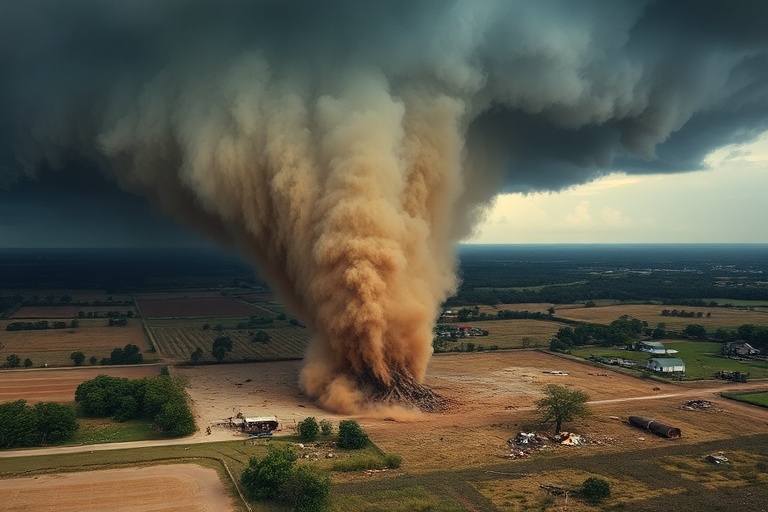
Mississippi Tornadoes: Storm Patterns, Impact, and Climate Risks
“`html
Mississippi Tornadoes: Understanding the Storm Patterns and Their Impact
Published on Dave’s Locker
The Frequency and Seasonality of Tornadoes in Mississippi
Mississippi sits in the heart of what meteorologists call “Dixie Alley,” a region notorious for tornado activity that extends beyond the traditional “Tornado Alley” in the Great Plains. The state averages between 20 to 40 tornadoes annually, with the majority occurring during the spring and fall severe weather seasons. Spring, particularly from March through May, sees the highest concentration of tornadoes due to the clash of warm, moist air from the Gulf of Mexico and cooler, dry air from the north. Fall, though less intense, still poses significant risks, especially in October and November.
Historical data from the National Oceanic and Atmospheric Administration (NOAA) reveals that Mississippi has experienced some of the deadliest tornado outbreaks in U.S. history. The 2011 Super Outbreak, for example, produced 62 tornadoes across the state, resulting in 324 fatalities and catastrophic damage. This event underscored the vulnerability of Mississippi’s communities to large, long-track tornadoes, which can travel for dozens of miles with winds exceeding 200 mph.
The state’s geography plays a critical role in its tornado frequency. The flat terrain of the Mississippi Delta and the presence of the Mississippi River create ideal conditions for the formation of supercell thunderstorms—parent storms that often spawn the most violent tornadoes. Additionally, the state’s proximity to the Gulf of Mexico ensures a steady supply of moisture, fueling the development of severe storms.
Notable Tornado Events and Their Aftermath
Several tornado events in Mississippi have left indelible marks on the state’s history, reshaping emergency response protocols and community preparedness. One such event is the 1971 Mississippi Delta tornado outbreak, which produced 17 tornadoes and resulted in 121 deaths. This disaster prompted the National Weather Service to enhance its warning systems and improve public awareness campaigns.
More recently, the 2020 Easter tornado outbreak brought widespread destruction across the state. Over 17 tornadoes touched down, including an EF-4 that devastated areas near Bassfield and Soso. The storm system caused over $100 million in damages and highlighted the need for improved infrastructure resilience in rural communities. Emergency management officials noted that many residents in affected areas had less than 10 minutes to react to warnings, emphasizing the importance of timely and accurate communication.
Another critical event occurred in 2021 when an EF-3 tornado tore through Humphreys County, killing at least one person and destroying hundreds of homes. This tornado, part of a larger outbreak that stretched into Alabama, demonstrated the increasing volatility of weather patterns in the region. Researchers have since linked these trends to broader climatic shifts, including rising sea temperatures in the Gulf of Mexico, which provide more energy for storm development.
Key Takeaways from Recent Tornado Outbreaks
- Warning Time: Many residents receive less than 15 minutes of advance notice, underscoring the need for improved detection technology and public education.
- Rural Vulnerability: Tornadoes in Mississippi often strike rural areas with older housing stock, where recovery can take years due to limited resources.
- Infrastructure Strain: Power outages and communication blackouts during major outbreaks have exposed weaknesses in the state’s emergency response systems.
- Climate Connection: Studies suggest that warming temperatures may increase the frequency of severe weather events in Dixie Alley, including tornadoes.
- Community Resilience: Grassroots efforts, such as storm shelter programs and volunteer search-and-rescue teams, have become vital in rebuilding efforts.
The Broader Implications: Climate Change and Emergency Preparedness
The increasing intensity and frequency of tornadoes in Mississippi are not isolated incidents but part of a larger pattern observed across the southeastern United States. Climate scientists point to several factors contributing to this trend, including rising global temperatures, which intensify the moisture available for storm development. The Gulf of Mexico, for instance, has warmed by nearly 2°F over the past century, providing more fuel for thunderstorms and, consequently, tornadoes.
This shift has forced meteorologists and emergency planners to rethink their strategies. Traditional warning systems, which rely heavily on radar and spotter networks, are being supplemented with machine learning models that predict tornado formation with greater accuracy. The NOAA’s Warn-on-Forecast program, for example, uses high-resolution simulations to provide more precise and timely warnings. However, challenges remain, particularly in rural areas where radar coverage is sparse and cell service is unreliable.
Insurance companies are also taking notice of the growing risks. In Mississippi, premiums for homeowners in tornado-prone areas have risen significantly, reflecting the increased likelihood of costly damage. Some insurers have even pulled out of certain counties altogether, leaving residents with fewer options for coverage. This has spurred discussions about policy changes, including state-funded reinsurance programs and incentives for storm-resistant construction.
Community resilience has become a buzzword in disaster response circles, but in Mississippi, it’s a necessity. Organizations like the Mississippi Emergency Management Agency (MEMA) have expanded their outreach programs, teaching residents how to build safe rooms and develop family emergency plans. Schools in high-risk areas now conduct regular tornado drills, and local churches and community centers often serve as designated shelters. These efforts are critical in a state where tornadoes can strike with little warning, leaving little time for last-minute preparations.
What’s Next for Mississippi? Mitigation and Recovery Efforts
As Mississippi continues to grapple with the realities of living in Tornado Alley’s extended reach, both short-term and long-term solutions are being pursued. In the immediate aftermath of major outbreaks, recovery efforts focus on debris removal, temporary housing, and financial assistance for affected families. The Federal Emergency Management Agency (FEMA) plays a central role in these efforts, but local organizations often step in to fill gaps, providing food, clothing, and emotional support.
Long-term strategies, however, require a more proactive approach. One promising initiative is the Mississippi Tornado Resilience Partnership, a collaboration between state agencies, nonprofits, and academic institutions. This partnership aims to identify high-risk areas, improve building codes, and invest in early warning systems. For example, the state has begun installing more weather stations in rural counties to enhance real-time data collection, which can improve the accuracy of tornado warnings.
Another critical area of focus is infrastructure hardening. Many homes and businesses in Mississippi were built before modern tornado-resistant standards were established. Retrofitting these structures with reinforced roofs, impact-resistant windows, and safe rooms can significantly reduce damage and save lives. While the cost of these upgrades can be prohibitive for individual homeowners, programs like the Hazard Mitigation Grant Program (HMGP) provide funding to help offset expenses.
The role of technology in tornado preparedness cannot be overstated. Advances in artificial intelligence and data analytics are revolutionizing how meteorologists predict and track tornadoes. Companies like IBM and startups in the Midwest are developing AI-driven models that analyze atmospheric conditions in real-time, offering earlier and more accurate warnings. Mississippi’s emergency planners are exploring partnerships with these innovators to integrate such technologies into their response systems.
Public awareness campaigns remain a cornerstone of Mississippi’s tornado preparedness strategy. The “Ready Mississippi” initiative, for example, provides resources on how to stay safe before, during, and after a tornado. These campaigns emphasize the importance of having a plan, knowing where to shelter, and staying informed through multiple channels, including NOAA Weather Radio and local news outlets.
Conclusion: Building a More Resilient Mississippi
Tornadoes are an inescapable reality for many in Mississippi, but they do not have to be a death sentence. The state’s history is marked by both tragedy and triumph, with communities repeatedly rising from the wreckage to rebuild stronger than before. The key to mitigating future disasters lies in a combination of improved technology, stronger infrastructure, and a culture of preparedness. While no amount of planning can eliminate the risk entirely, these efforts can significantly reduce the toll on lives and livelihoods.
For Mississippians, living with the threat of tornadoes is a way of life, but it is one that comes with resilience, community, and a deep sense of determination. As climate patterns continue to evolve, the state’s ability to adapt will be tested. Yet, with each passing year, Mississippians grow more prepared, more aware, and more united in the face of adversity. The storms may come, but so does the strength to weather them.
For more insights into severe weather preparedness and recovery efforts, visit Dave’s Locker News and Dave’s Locker Science.