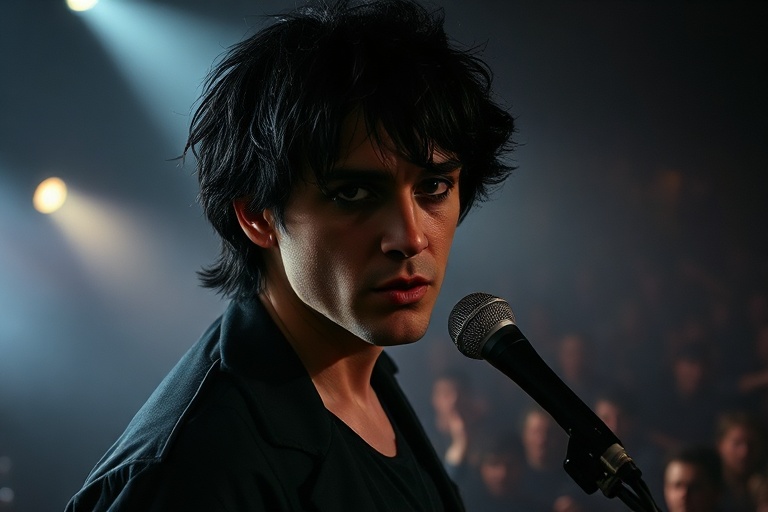
Robert Smith: The Iconic Voice Behind The Cure’s Enduring Legacy
Robert Smith is more than a musician—he is a cultural architect whose influence stretches across four decades of alternative music. As the frontman of the Cure, Smith’s distinctive voice, angular guitar work, and melancholic yet vibrant aesthetic have shaped a global movement. His music transcends genres, resonating with fans from punk’s rebellious underground to the polished stages of modern arenas. Smith’s impact is not confined to music alone; his fashion choices, lyrical themes, and even his public persona have woven him into the fabric of contemporary culture.
Born Robert James Smith on April 21, 1959, in Blackpool, England, Smith grew up in a modest household where music was a constant presence. His father, a salesman, and his mother, a secretary, encouraged his early interest in music, though they likely never imagined the heights their son would reach. By his early teens, Smith was already playing guitar and writing songs, inspired by the raw energy of punk rock and the melodic hooks of post-punk. These influences would later define the Cure’s sound—a fusion of gloom and beauty that set them apart in a crowded musical landscape.
The Cure’s Rise: From Obscurity to Global Phenomenon
The Cure emerged from the post-punk scene of the late 1970s, a movement characterized by its DIY ethos and rejection of mainstream conventions. The band’s debut album, Three Imaginary Boys (1979), was a raw and unpolished affair, but it captured the zeitgeist of the era. Smith’s lyrics, often introspective and dark, stood out for their poetic ambiguity, leaving room for listeners to project their own emotions onto the music. Hits like “Boys Don’t Cry” and “A Forest” became anthems for a generation disillusioned with the status quo.
By the mid-1980s, the Cure had evolved into a more polished and atmospheric act, with albums like Pornography (1982) and The Head on the Door (1985) solidifying their reputation as pioneers of gothic rock and new wave. Smith’s androgynous appearance, heavy eye makeup, and teased hair became iconic, challenging traditional notions of masculinity and identity. The band’s music videos, often surreal and visually striking, further cemented their place in popular culture. Songs like “Just Like Heaven” and “Lovesong” crossed over into mainstream radio, introducing the Cure’s sound to audiences far beyond the alternative scene.
Cultural Impact: Beyond Music and Into Fashion
Robert Smith’s influence extends far beyond the realm of music. His fashion sense, in particular, has left an indelible mark on global culture. In the 1980s, Smith’s signature look—black eyeliner, smeared lipstick, and a mop of unkempt hair—became a visual shorthand for gothic romance and melancholic beauty. This aesthetic was not just a personal style but a rebellion against the clean-cut aesthetics of the time. Designers and artists, from Alexander McQueen to Tim Burton, have cited Smith as an inspiration, proving that his influence permeates multiple creative industries.
Smith’s impact can also be seen in the world of literature and film. His lyrics, often steeped in existential dread and romantic idealism, have been compared to the works of Gothic poets like Edgar Allan Poe and Emily Dickinson. Films such as The Crow and Edward Scissorhands draw clear parallels to the Cure’s themes of outsiderdom and tragic beauty, further blurring the lines between music and visual art. Even in the digital age, Smith’s presence endures. Memes, TikTok trends, and viral challenges continue to celebrate his legacy, proving that his appeal transcends generational boundaries.
To understand Smith’s global appeal, it’s worth examining how the Cure’s music has been received in different cultures. In Japan, the band has a particularly devoted following, with fans embracing the Cure’s aesthetic as a form of self-expression. In Latin America, the Cure’s music has been adopted by artists across genres, from rock to electronic, who cite Smith’s ability to blend melancholy with hope as a defining characteristic. Even in Africa, where the band’s music was initially met with skepticism, the Cure’s influence has grown, with local musicians sampling their tracks and reinterpreting their sound.
Legacy and Future: The Man Who Never Stopped Evolving
Robert Smith’s career is a testament to the power of reinvention. Unlike many artists who become prisoners of their own success, Smith has continually evolved, both musically and personally. The Cure’s discography is a sprawling landscape of experimentation, from the punk aggression of their early work to the ambient and electronic textures of albums like Disintegration (1989) and Bloodflowers (2000). Smith’s willingness to take risks has ensured that the Cure remains relevant, even as musical trends come and go.
Smith’s influence is also evident in the next generation of musicians. Bands like My Chemical Romance, Interpol, and The Smiths have all cited the Cure as a major inspiration. Even pop stars like Taylor Swift and Billie Eilish have acknowledged Smith’s impact on their work, demonstrating the timelessness of his artistry. Smith’s ability to connect with audiences across generations speaks to the universality of his themes—love, loss, and the search for meaning in a chaotic world.
Despite his global fame, Smith has remained remarkably grounded. He has spoken openly about his struggles with depression and anxiety, using his platform to destigmatize mental health issues. His authenticity has endeared him to fans who see him not just as a rock star, but as a flawed and relatable human being. In interviews, Smith often comes across as introspective and self-deprecating, a rarity in an industry that often prioritizes bravado over vulnerability.
The Cure’s most recent album, Songs of a Lost World (2022), is a reflection of Smith’s enduring creativity. The record blends the band’s signature melancholy with modern production techniques, proving that even after 40 years, they can still innovate. Smith’s lyrics, as always, are deeply personal yet universally resonant. Tracks like “The Hungry Ghost” and “Burn” explore themes of longing and redemption, reinforcing the Cure’s status as chroniclers of the human condition.
Why Robert Smith Matters Now More Than Ever
In an era dominated by algorithm-driven music and fleeting trends, Robert Smith’s career offers a counterpoint—a reminder of the enduring power of authenticity. His music, with its blend of darkness and light, speaks to a generation grappling with isolation, climate anxiety, and the relentless pace of modern life. Smith’s refusal to conform to expectations, whether in his music or his personal style, serves as an inspiration to those who feel out of place in a world obsessed with perfection.
The Cure’s music has also found new life in the digital age. Streaming platforms have introduced their catalog to younger audiences, while social media has allowed fans to celebrate Smith’s legacy in creative ways. The band’s 2019 induction into the Rock & Roll Hall of Fame was met with widespread acclaim, further cementing their place in music history. Yet, for many fans, the true magic of the Cure lies not in awards or accolades, but in the way their music makes them feel.
As we look to the future, one thing is certain: Robert Smith’s influence will continue to grow. Whether through new music, reissues, or the countless artists he inspires, his legacy is far from over. In a world that often feels fragmented and uncertain, the Cure’s music offers a sense of continuity—a reminder that beauty and meaning can be found even in the darkest of places.
Robert Smith once said, “It’s so important to have a sense of humor and not take yourself too seriously.” This philosophy has not only defined his career but also endeared him to millions. In an industry that often prioritizes image over substance, Smith’s commitment to his art and his authenticity sets him apart. He is not just a musician; he is a cultural touchstone, a symbol of resilience, and a beacon of creativity for generations to come.