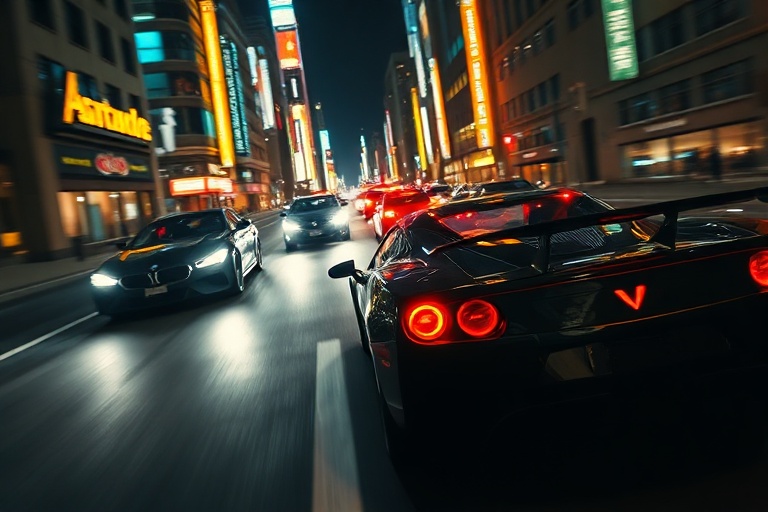
The Evolution and Impact of Car Chases in Film and Life
“`html
The Thrill and Controversy of the Car Chase
The car chase has long been a staple of action cinema, television, and real-life drama. Whether it’s the high-speed pursuits of Hollywood blockbusters or the tense moments captured on dashboard cameras, these sequences blend adrenaline with narrative tension. They serve as more than just spectacle; they reflect societal attitudes toward law, order, and rebellion.
Across cultures, car chases have evolved from simple getaways into complex set pieces that define genres. From the gritty streets of American crime dramas to the neon-lit highways of Japanese cyberpunk, the chase scene adapts to its environment while maintaining its core appeal: the clash between pursuit and escape.
The Evolution of the Car Chase in Film
The car chase as we know it today began in the early days of cinema. One of the earliest examples is Bullitt (1968), which featured a 10-minute chase through the streets of San Francisco. Director Peter Yates and editor Frank P. Keller set a new standard for realism and intensity, using long takes and practical effects to immerse audiences in the action. This sequence remains a benchmark for filmmakers.
In the 1970s and 1980s, car chases became synonymous with entertainment. Films like The French Connection (1971) and Smokey and the Bandit (1977) turned high-speed pursuits into crowd-pleasing set pieces. The chases were less about realism and more about spectacle, often involving improbable stunts and larger-than-life characters.
By the 1990s, filmmakers began experimenting with more stylized approaches. Quentin Tarantino’s Pulp Fiction (1994) included a tense carjacking scene, while The Matrix (1999) redefined the chase with its bullet-time sequences. The turn of the millennium saw a resurgence of practical effects, as seen in The Bourne Identity (2002), which used shaky camera work to create a documentary-like intensity.
Today, car chases continue to evolve. Films like Baby Driver (2017) blend music and movement seamlessly, while the Fast & Furious franchise pushes the boundaries of physics-defying stunts. The genre has expanded beyond action movies, appearing in comedies, dramas, and even animated films.
A Global Perspective: Chases in Different Cultures
The car chase is not limited to Hollywood. Around the world, filmmakers have adapted the trope to reflect local cultures, histories, and social issues. In India, for example, the car chase has become a staple of Bollywood action films. Movies like Dhoom (2004) feature elaborate sequences set to music, blending spectacle with romance and comedy. These chases often take place on crowded streets, emphasizing the chaos of urban life.
In Japan, car chases are often tied to the country’s love of technology and futuristic aesthetics. Anime films like Akira (1988) and Redline (2009) feature high-speed pursuits through neon-lit cities and dystopian landscapes. These sequences are less about realism and more about pushing the boundaries of animation and design. They reflect Japan’s fascination with cyberpunk and its blend of tradition and futurism.
In Europe, car chases often take on a grittier tone. French filmmaker Jacques Audiard’s A Prophet (2009) includes a tense escape sequence through the French countryside, emphasizing the isolation and desperation of the protagonist. Similarly, Italian cinema has used car chases to explore themes of crime and corruption, as seen in films like The Hardboiled Wonderland (1995).
In the Middle East, car chases have been used to reflect the region’s political turmoil. Palestinian filmmaker Elia Suleiman’s The Time That Remains (2009) includes a surreal car chase that critiques the Israeli-Palestinian conflict. The sequence blends humor and tragedy, highlighting the absurdity of life under occupation.
Notable International Car Chase Films
- The Raid (2011, Indonesia) – A martial arts film that features a car chase as part of its relentless action sequences.
- Oldboy (2003, South Korea) – Includes a brutal, dialogue-free car chase that underscores the film’s themes of revenge and despair.
- Head-On (2004, Germany/Turkey) – A drama that uses a car crash as a metaphor for cultural clashes and personal struggles.
- District 13 (2004, France) – A sci-fi action film that features parkour and car chases in a dystopian Paris.
The Real-Life Car Chase: From Crime to Cop Shows
While fictional car chases captivate audiences, real-life pursuits are a different story. Police chases are a controversial aspect of law enforcement, blending public safety concerns with the thrill of the hunt. According to a 2022 study by the News outlet USA Today, over 400 people died in police chases in the U.S. alone in a single year. The majority of these incidents involved unarmed suspects or minor offenses.
In response, some cities have implemented policies to limit high-speed pursuits. In Los Angeles, for example, the police department restricts chases to violent felonies only. Other departments use technology like GPS trackers and drone surveillance to avoid dangerous chases altogether. These measures reflect a growing awareness of the risks involved, not just for suspects but for bystanders and officers as well.
On the other hand, car chases have also become a staple of reality television. Shows like World’s Wildest Police Videos and Top Gear have turned pursuits into entertainment. These programs often emphasize the spectacle over the consequences, blurring the line between education and exploitation. Critics argue that they glorify reckless behavior while downplaying the real-world dangers.
The Future of the Car Chase
The car chase is evolving alongside technology. Electric vehicles (EVs) and autonomous cars are changing the dynamics of pursuit. EVs, with their instant torque and quiet operation, offer new possibilities for high-speed chases—but they also pose challenges for law enforcement. Autonomous cars, meanwhile, could eliminate the need for human drivers altogether, raising questions about who is responsible in a crash.
Another trend is the rise of “virtual chases” in video games. Titles like Need for Speed and Forza Horizon allow players to experience the thrill of a chase without real-world risks. These games often feature hyper-realistic physics and graphics, blurring the line between simulation and reality. As virtual reality (VR) technology improves, the line may disappear entirely.
Yet, despite these changes, the car chase remains a powerful storytelling tool. It embodies the tension between freedom and control, rebellion and authority. Whether in film, television, or real life, the chase continues to captivate audiences, offering a glimpse into the human desire to escape—and the forces that pursue us.
Why the Car Chase Endures
- Universal Appeal: The thrill of a chase is ingrained in human culture, from ancient myths to modern-day cinema.
- Technological Innovation: Filmmakers and engineers constantly push the boundaries of what’s possible in a chase sequence.
- Cultural Reflection: Chases adapt to reflect societal fears, desires, and conflicts, making them a mirror of their time.
- Emotional Resonance: At its core, a chase is about survival, escape, and the fight against overwhelming odds.
As long as there are open roads and restless spirits, the car chase will remain a vital part of our storytelling—and our reality.
Conclusion
The car chase is more than just a sequence of screeching tires and flashing lights. It is a cultural artifact, a technological playground, and a reflection of our deepest anxieties and desires. From the streets of Hollywood to the highways of Mumbai, the chase transcends borders, languages, and genres. It challenges filmmakers to innovate, law enforcement to adapt, and audiences to stay on the edge of their seats.
As we move into an era of electric and autonomous vehicles, the chase will continue to evolve. But one thing is certain: the thrill of the pursuit will never fade. Whether in fiction or reality, the car chase remains a timeless symbol of escape—and the forces that seek to stop it.