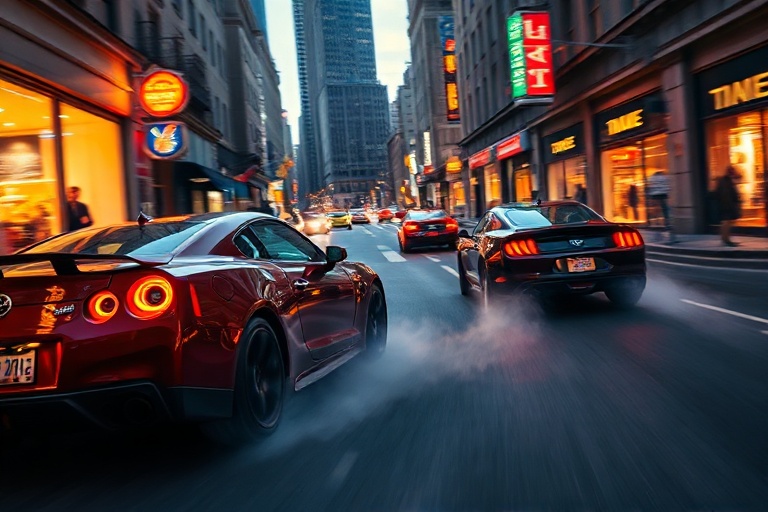
The Thrilling History and Real Dangers of Car Chases
“`html
The Thrill and Danger of the Car Chase
The car chase has long been a staple of action cinema, reality TV, and even real-life crime reports. It blends adrenaline, danger, and spectacle into a high-stakes sequence that keeps audiences on the edge of their seats. But beyond the entertainment value, car chases reveal deeper truths about human nature, law enforcement, and the risks of high-speed pursuits.
The Evolution of the Car Chase in Pop Culture
The car chase as we know it today didn’t emerge overnight. It evolved alongside automotive technology and cinematic techniques. In the early days of film, car chases were rudimentary, often relying on simple camera tricks or staged collisions. The 1968 chase in Bullitt, however, changed everything. Steve McQueen’s Mustang tearing through San Francisco’s streets set a new standard for realism and intensity, influencing generations of filmmakers.
Television soon followed suit. Shows like Cops turned real-life pursuits into prime-time entertainment, blurring the line between drama and documentary. Meanwhile, video games like Need for Speed and Grand Theft Auto allowed players to experience the thrill of high-speed chases without the real-world consequences. Each medium adapted the car chase to its own rules, shaping public perception of what these sequences represent.
Why Car Chases Capture Our Attention
At its core, the car chase taps into primal instincts. The high stakes—lives hanging in the balance, the thrill of speed, the tension of a close call—create an emotional rollercoaster. Sociologists suggest that car chases trigger a mix of fear and excitement, a phenomenon known as “dangerous thrill-seeking.” This explains why audiences are drawn to them, even when they’re aware of the risks involved.
There’s also a psychological element at play. The chase sequence often mirrors life’s unpredictability. Will the protagonist escape? Will justice prevail? These questions keep viewers engaged long after the credits roll. Even in reality TV, where the outcomes are real, the unpredictability of a car chase adds an element of suspense that scripted dramas can’t replicate.
Key Elements That Make a Car Chase Memorable
- Speed and Stakes: The faster the chase, the higher the tension. A slow-speed pursuit through a crowded city can be just as gripping as a desert highway sprint, but the risks feel more immediate.
- Obstacles and Creativity: Whether it’s weaving through traffic, jumping over barricades, or crashing through buildings, the obstacles in a chase sequence often define its memorability.
- Sound Design: The roar of engines, screeching tires, and blaring sirens all contribute to the immersive experience. In cinema, sound is as crucial as the visuals.
- Realism vs. Spectacle: Some chases prioritize realism, while others embrace pure spectacle. The best ones strike a balance, making the danger feel tangible without sacrificing excitement.
The Real-World Consequences of Car Chases
While car chases are entertaining on screen, their real-world counterparts can be deadly. According to the National Highway Traffic Safety Administration (NHTSA), police pursuits result in hundreds of deaths every year in the U.S. alone. Innocent bystanders, fleeing suspects, and even officers themselves are often caught in the crossfire.
Critics argue that high-speed chases are more about ego than necessity. Some law enforcement agencies have adopted “no-chase” policies or stricter pursuit guidelines to minimize risks. Cities like Los Angeles and New York have seen significant reductions in pursuit-related fatalities by limiting when officers can engage in high-speed chases.
Yet, the debate continues. Proponents of aggressive pursuits argue that they’re necessary to apprehend dangerous criminals. The question remains: Where do we draw the line between justice and endangerment?
The Future of the Car Chase
As technology advances, so too does the car chase. Electric vehicles, with their instant torque and quieter engines, are already changing the dynamics of high-speed pursuits. Drones and AI-assisted tracking systems are also being integrated into law enforcement, potentially reducing the need for dangerous chases altogether.
In entertainment, filmmakers are experimenting with new ways to keep chases fresh. The Fast & Furious franchise has pushed the boundaries of physics-defying stunts, while directors like George Miller (Mad Max: Fury Road) have redefined the genre with practical effects and real stunts. Virtual reality could even allow audiences to experience car chases from the driver’s seat, blurring the line between spectator and participant.
Yet, despite these innovations, the core appeal of the car chase remains unchanged. It’s a high-stakes drama that tests human limits, whether on screen or in real life. As long as there’s danger and speed, the car chase will continue to captivate audiences for generations to come.
Conclusion
The car chase is more than just a thrilling spectacle—it’s a cultural touchstone that reflects our fascination with speed, danger, and justice. From the streets of San Francisco to the highways of Hollywood, it has evolved alongside society, adapting to new technologies and changing attitudes. Whether in film, television, or real life, the car chase remains a powerful narrative device, one that challenges us to consider the balance between excitement and responsibility.
As we look to the future, the car chase will continue to evolve, shaped by innovation and necessity. But one thing is certain: Its ability to captivate and thrill audiences will never fade.
For more on high-speed action and automotive culture, explore our Entertainment and Automotive categories.