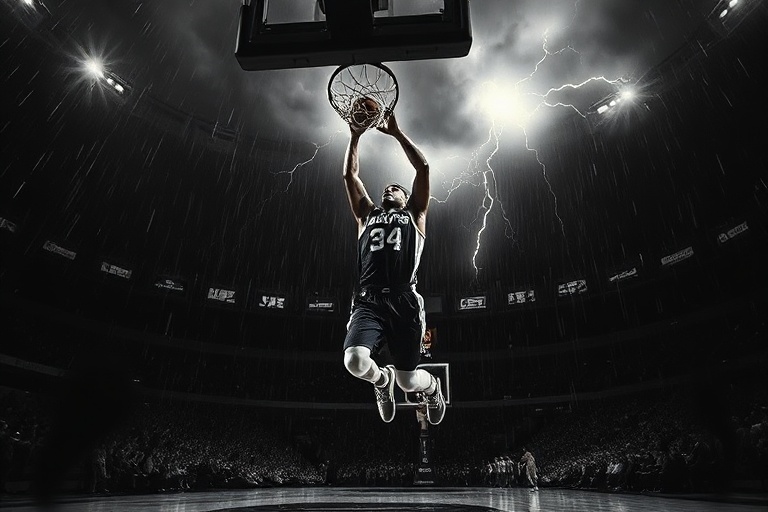
The NBA has always been a stage for rivalries that extend beyond wins and losses, and few matchups have carried as much weight with such quiet intensity as the Oklahoma City Thunder versus the San Antonio Spurs. While the Thunder-Spurs games never reached the fever pitch of Lakers-Celtics or Bulls-Pistons, their postseason battles from 2012 to 2017 shaped eras, defined careers, and reflected deeper shifts in global basketball culture.
This rivalry was less about trash talk and more about tactical brilliance. It was about the rise of a dynamic young team against the disciplined, system-driven machine. It was about identity—what it means to play with heart versus how to build a dynasty through fundamentals. In an era when the NBA’s global influence was expanding rapidly, the Thunder and Spurs became symbols of two contrasting philosophies of the game.
The Origins: A Clash of Philosophies
The Thunder entered the league as the relocated Seattle SuperSonics in 2008, inheriting a core led by Kevin Durant, Russell Westbrook, and James Harden. They played fast, scored in transition, and relied on individual brilliance within a team framework. Their style was electric, emotional, and perfectly suited to the rise of social media and highlight-driven fandom.
The Spurs, meanwhile, were the antithesis of flash. Coached by Gregg Popovich and anchored by Tim Duncan, Tony Parker, and Manu Ginóbili, they embodied fundamental basketball: ball movement, defensive discipline, and unselfish play. They had already won championships under Popovich, but their 2012 playoff run against the Thunder marked a changing of the guard—not just in the Western Conference, but in the league’s cultural imagination.
In Game 1 of the 2012 Western Conference Finals, the Spurs dismantled the Thunder 101–98 in a game that lasted 110 minutes due to three overtimes. It was a statement. The Spurs didn’t just win; they imposed their will through depth, poise, and execution. The Thunder, despite Durant’s 36 points, were left searching for answers.
Global Eyes on a Local Rivalry
The NBA’s international growth in the 2010s meant that games between the Thunder and Spurs weren’t just watched by fans in Oklahoma City or San Antonio—they were broadcast in over 200 countries. The rivalry became a showcase for how basketball was evolving globally.
In Europe, where basketball had long been a secondary sport, the Spurs’ emphasis on fundamentals resonated with coaches and players who valued the European style of play. Meanwhile, the Thunder’s fast-paced, high-scoring games appealed to younger fans in markets like China and the Philippines, where highlight culture was thriving.
This dual appeal highlighted a broader tension in global basketball: tradition versus innovation. The Spurs represented the old guard—players who mastered the game through repetition and understanding. The Thunder embodied the new wave—athletes who grew up watching YouTube highlights and playing in AAU tournaments where style often mattered more than structure.
As the rivalry continued through 2013 and 2014, fans around the world began to take sides. Social media amplified every possession, every play, and every call. The NBA’s global audience wasn’t just watching basketball; it was participating in a cultural conversation about what the sport should be.
The 2014 Moment That Echoed Globally
The 2014 Western Conference Finals between the Thunder and Spurs became one of the most analyzed playoff series in NBA history. The Spurs swept Oklahoma City, but the manner in which they did it was what captivated global audiences.
In Game 6, the Spurs won 112–107 in a game that featured a 33-point third quarter. Kawhi Leonard, the quiet superstar, dropped 26 points on 10-for-13 shooting. The Thunder, despite Durant’s 34 points, were outplayed in every facet of the game. To fans in Tokyo, Berlin, and São Paulo, it wasn’t just a loss—it was a masterclass.
This series became a teaching moment. Coaches worldwide studied the Spurs’ ball movement, their defensive rotations, and their ability to exploit mismatches. The Thunder, meanwhile, became a cautionary tale about relying too heavily on one or two stars without sufficient role players.
- Global Impact of the 2014 Series:
- Increased viewership in international markets, particularly in Asia and Latin America.
- Coaching clinics worldwide began incorporating Spurs-style drills and concepts.
- The NBA expanded its global outreach programs, targeting markets where the Spurs’ style resonated.
- Young players in Europe and Australia began modeling their games after Tony Parker’s mid-range mastery.
Legacy: More Than Just a Rivalry
The Thunder-Spurs rivalry faded as both teams entered rebuilds, but its impact endured. It was a reminder that great basketball isn’t just about scoring or style—it’s about philosophy. The Spurs’ dominance forced the Thunder to evolve, while the Thunder’s resilience inspired a generation of players who valued both flash and fundamentals.
From a global perspective, the rivalry underscored the NBA’s transformation into a truly international league. It showed how a matchup between two teams from relatively small markets could capture the imagination of fans worldwide. It proved that basketball is not just a sport, but a cultural bridge.
As the NBA continues to expand, with teams like the Thunder and Spurs serving as pioneers, their rivalry remains a touchstone. It’s a reminder of a time when basketball was more than just entertainment—it was a conversation about what the game could be.
Where Are They Now?
The Thunder’s core of Durant, Westbrook, and Harden eventually split apart, with each player going on to new challenges. Durant joined the Warriors, Westbrook was traded to the Rockets, and Harden found success with the Rockets and Nets. The team has since rebuilt around young talent like Shai Gilgeous-Alexander and Chet Holmgren.
The Spurs, after Duncan’s retirement and Popovich’s stepped-back role, entered a new era under coach Gregg Popovich and general manager Brian Wright. While they haven’t returned to the Finals, their emphasis on international scouting and player development has kept them competitive.
Both franchises remain integral to the NBA’s global identity. The Thunder’s emphasis on analytics and international talent has made them a model for modern front offices, while the Spurs’ commitment to fundamentals continues to influence coaches at all levels.
For fans of the game, the Thunder-Spurs rivalry is more than a memory. It’s a testament to how basketball can shape culture, inspire innovation, and bring the world together—one possession at a time.
To explore more about how rivalries shape the NBA’s global influence, visit our Sports section. For deeper analysis on team philosophies and their cultural impact, check out our Analysis category.