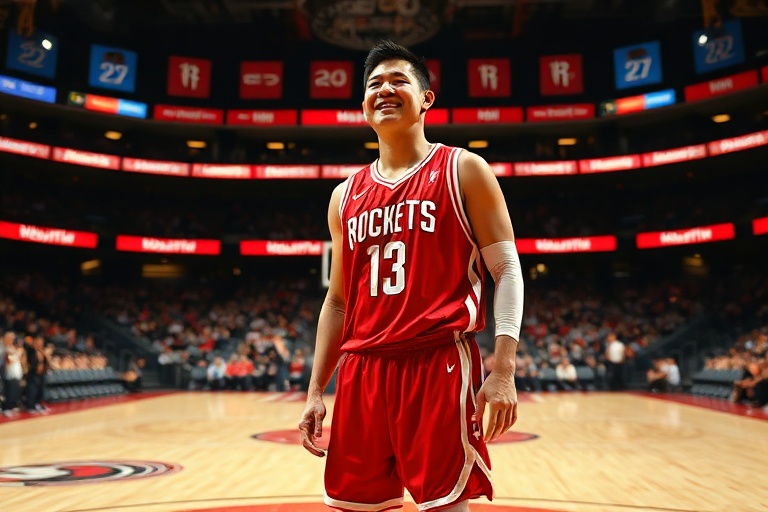
From Shanghai to Houston: The Making of an NBA Legend
Yao Ming’s journey from the basketball courts of Shanghai to the bright lights of the NBA remains one of sports’ most compelling narratives. Born in 1980 to two former professional basketball players, Yao was introduced to the game at age 9 through a rigorous youth program designed to identify China’s next athletic prodigies. By 15, he was already playing professionally for the Shanghai Sharks in the Chinese Basketball Association (CBA), where his 7’6″ frame and developing skills drew immediate attention.
The NBA took notice during the 1997 Asian Championship, where Yao averaged 19.6 points and 10.3 rebounds per game against international competition. His performance at the 2000 Summer Olympics in Sydney further solidified his reputation as a once-in-a-generation talent. The Houston Rockets selected him with the first overall pick in the 2002 NBA Draft, making him the first international player to be chosen first overall without prior U.S. college experience. This milestone marked the beginning of Yao’s role as a global ambassador for the sport, bridging the gap between Eastern and Western basketball cultures.
The Cultural Impact of Yao Ming in the NBA
Yao Ming’s arrival in the NBA in 2002 was more than a draft-day story—it was a cultural watershed moment. At a time when the league was still expanding its global footprint, Yao became the face of international basketball. His rookie season drew massive attention from Chinese media outlets, with state television broadcasting games live despite the time difference. In Houston alone, attendance at Rockets games surged by 30% during his debut season, a testament to his drawing power.
Yao’s presence forced NBA teams to reconsider their global strategies. Teams began investing in international scouting, and the league actively marketed games in Asia. His eight All-Star selections from 2003 to 2009 weren’t just personal achievements; they were strategic victories for the NBA’s global expansion. Yao also played a pivotal role in the league’s relationship with China, a market that now generates over $500 million annually in revenue. His ability to connect with fans transcended language barriers, making him one of the first truly global athletes in team sports history.
Beyond Basketball: Yao’s Global Humanitarian Work
While Yao Ming’s basketball legacy is well-documented, his humanitarian contributions have left an equally indelible mark on global society. In 2007, he established the Yao Ming Foundation, which later evolved into the Yao Ming Charity Fund, focusing on education and sports development in rural China. One of his most notable initiatives was the education program that provided scholarships to underprivileged students, ensuring access to secondary schooling in regions where dropout rates were historically high.
Yao also became a prominent advocate for wildlife conservation, particularly in combating the illegal ivory trade. After retiring from basketball in 2011, he shifted his focus to environmental activism, serving as a spokesperson for WildAid, an organization dedicated to reducing global consumption of wildlife products. His 2012 documentary, Saving the Elephants, brought international attention to the poaching crisis in Africa and Asia, leading to policy changes in China regarding ivory sales. In recognition of his efforts, Yao received the Champions of the Earth award from the United Nations in 2016, the highest environmental honor awarded by the organization.
The Business of Yao: A Brand Built on Legacy and Influence
Yao Ming’s business acumen has been as impressive as his athletic career. His endorsement portfolio reads like a who’s who of global brands, from McDonald’s and Visa to Apple and Gillette. Unlike many athletes who struggle to transition into business after retirement, Yao leveraged his global recognition into a diversified portfolio that includes real estate, technology, and sports management. In 2016, he became the majority owner of the Shanghai Sharks, the team where his professional career began, further cementing his influence in Chinese sports.
Yao also ventured into technology with investments in AI-driven sports analytics and esports ventures. His Shanghai-based company, Yao Capital, focuses on early-stage investments in startups with global potential. This strategic pivot reflects a broader trend among retired athletes who recognize that their personal brand can drive innovation as much as their on-field performance once did. In 2020, Forbes estimated Yao’s net worth at over $150 million, a figure that includes his business ventures, endorsements, and post-retirement earnings.
Yao Ming’s Enduring Legacy in Sports and Society
Yao Ming’s retirement in 2011 didn’t mark the end of his influence; rather, it signaled a new chapter in his ability to shape sports and culture. In 2014, he became the first Chinese player inducted into the Naismith Memorial Basketball Hall of Fame, a recognition that underscored his impact on the game. Two years later, the NBA named him one of its 75 Greatest Players in league history, placing him among legends like Michael Jordan, Kareem Abdul-Jabbar, and LeBron James.
His legacy extends beyond statistics and trophies. Yao Ming redefined what it meant to be a global athlete, proving that sports could be a powerful tool for diplomacy and cultural exchange. His work with the NBA’s Basketball Without Borders program, which promotes basketball and education in underprivileged communities worldwide, has impacted thousands of young athletes. In China, his influence persists through basketball academies that bear his name and initiatives that encourage youth participation in sports.
Even in retirement, Yao remains a sought-after figure in both sports and philanthropy. His ability to navigate multiple cultural landscapes—from the rigid structures of Chinese youth sports to the competitive intensity of the NBA—demonstrates a rare adaptability. Whether he’s negotiating business deals in Shanghai or advocating for wildlife conservation in Africa, Yao Ming continues to embody the qualities that made him a legend: discipline, vision, and an unwavering commitment to making a difference.
Lessons from Yao Ming’s Career
Yao Ming’s career offers several key lessons for athletes, entrepreneurs, and global citizens alike. Here are a few takeaways from his journey:
- Cultural bridge-building: Yao’s ability to connect with diverse audiences showcases the importance of cultural fluency in a globalized world. His success in the NBA was as much about understanding American culture as it was about mastering the game.
- Leveraging influence for good: Unlike many athletes who focus solely on their sport, Yao used his platform to drive social and environmental change. His work with WildAid proves that sports figures can have a lasting impact beyond their careers.
- Adaptability in transition: Yao’s post-retirement success in business and philanthropy highlights the value of reinvention. His willingness to explore new industries demonstrates how athletes can extend their influence long after their playing days end.
- The power of representation: As one of the first global Asian sports icons, Yao broke barriers and paved the way for future generations. His career underscores the importance of representation in sports and media.