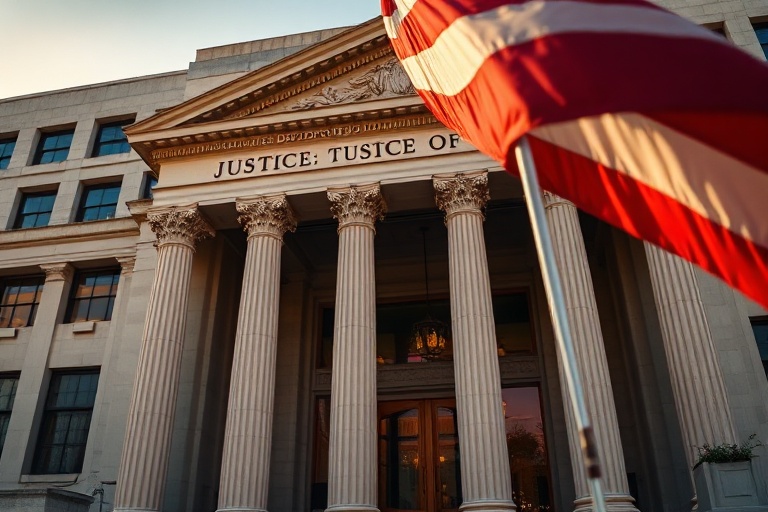
Understanding the DOJ: Structure, Role, and Impact on U.S. Justice
“`html
The United States Department of Justice: A Comprehensive Overview
The United States Department of Justice (DOJ) stands as one of the most influential federal agencies in the country. Established in 1870, its mission is to enforce the law and defend the interests of the United States according to the law. This agency plays a critical role in maintaining justice, upholding civil rights, and combating crime at both the national and international levels. Below, we explore its structure, responsibilities, and broader implications for American society.
The DOJ’s Core Structure and Leadership
The DOJ operates under the leadership of the Attorney General of the United States, who serves as the nation’s top law enforcement officer. The Attorney General is appointed by the President and confirmed by the Senate. This position holds immense power, as it oversees federal prosecutions, provides legal advice to the executive branch, and ensures the fair administration of justice.
The DOJ is divided into several key components, each specializing in distinct areas of law and enforcement. These include the:
- Federal Bureau of Investigation (FBI): The primary federal law enforcement agency, tasked with investigating violations of federal law, counterterrorism, cybercrime, and public corruption.
- Drug Enforcement Administration (DEA): Focuses on combating drug trafficking and narcotics-related crimes.
- Bureau of Alcohol, Tobacco, Firearms and Explosives (ATF): Regulates and investigates crimes involving firearms, explosives, and alcohol/tobacco.
- U.S. Marshals Service: Handles federal court security, fugitive apprehension, and asset forfeiture.
- Office of the Solicitor General: Represents the U.S. government in Supreme Court cases, shaping legal precedents.
Each of these agencies operates with a high degree of autonomy while remaining under the DOJ’s umbrella. This structure allows the department to address a wide range of legal and criminal challenges effectively.
Key Responsibilities and Functions
The DOJ’s responsibilities extend far beyond traditional law enforcement. While prosecuting federal crimes is a central function, the department also plays a vital role in protecting civil rights, overseeing immigration enforcement, and managing the federal prison system. Below are some of its most critical functions:
- Prosecution of Federal Crimes: The DOJ handles cases involving federal offenses, such as bank robbery, terrorism, and cybercrime. It works closely with U.S. Attorneys’ offices across the country to ensure consistent enforcement of federal law.
- Civil Rights Enforcement: The DOJ’s Civil Rights Division investigates and prosecutes violations of civil rights laws, including hate crimes, human trafficking, and police misconduct. This division is instrumental in ensuring equal justice under the law.
- Immigration Enforcement: Through its Executive Office for Immigration Review, the DOJ oversees immigration courts and adjudicates cases involving deportation, asylum, and other immigration-related matters.
- Corporate and White-Collar Crime: The DOJ’s Fraud Section and other divisions focus on prosecuting corporate fraud, financial crimes, and environmental violations. High-profile cases, such as those involving Enron or Wells Fargo, have demonstrated the DOJ’s commitment to holding powerful entities accountable.
- Asset Forfeiture and Financial Crimes: The DOJ manages programs that seize assets derived from criminal activity, disrupting illicit financial networks and funding recovery efforts for victims.
The DOJ’s work is not confined to domestic issues. It also collaborates with international organizations to combat transnational crime, money laundering, and human trafficking. This global reach underscores the department’s role as a key player in international law enforcement.
The DOJ’s Influence on American Society
The decisions made by the DOJ have far-reaching consequences for American society. Its policies and enforcement actions shape public trust in the justice system, influence political discourse, and impact marginalized communities. Here are some of the broader implications of the DOJ’s work:
- Public Trust and Accountability: High-profile cases, such as the prosecution of police officers involved in civil rights violations or the investigation of former President Donald Trump’s classified documents case, highlight the DOJ’s role in holding individuals and institutions accountable. These actions can either bolster or erode public trust in the justice system, depending on their perceived fairness and transparency.
- Political Polarization: The DOJ often finds itself at the center of political debates. Accusations of politicization—whether justified or not—can undermine its credibility. For example, decisions to prosecute or decline charges in politically sensitive cases frequently spark controversy.
- Economic and Social Equity: The DOJ’s enforcement of civil rights laws and anti-discrimination statutes plays a crucial role in promoting equity. However, critics argue that enforcement disparities persist, particularly in cases involving racial profiling or disparities in sentencing.
- Technological Advancements and Cybersecurity: As cybercrime becomes more sophisticated, the DOJ’s Cyber Division faces growing challenges. The department’s response to ransomware attacks, data breaches, and online fraud will shape the future of digital security in the U.S.
The DOJ also plays a pivotal role in shaping legal precedents through its involvement in Supreme Court cases. Its Office of the Solicitor General often submits amicus briefs or represents the government in landmark cases, influencing the interpretation of laws for decades to come.
Challenges and Criticisms Facing the DOJ
Despite its critical role, the DOJ is not without its challenges and criticisms. One of the most persistent issues is the perception of politicization. The department’s independence is often scrutinized, particularly during election years or when high-profile figures are involved. Critics argue that political pressure can influence prosecutorial decisions, while supporters contend that the DOJ operates with integrity regardless of external influences.
Budget constraints and resource allocation also pose significant challenges. The DOJ must balance its vast responsibilities with limited funding, leading to prioritization dilemmas. For example, the rise in cybercrime has stretched the department’s resources thin, forcing it to allocate funds away from other critical areas.
Another area of concern is the DOJ’s role in immigration enforcement. The department’s immigration courts are often criticized for backlogs, lack of due process, and inconsistent rulings. Advocacy groups argue that these issues disproportionately affect vulnerable populations, including asylum seekers and undocumented immigrants.
The DOJ’s handling of corporate crime has also drawn criticism. Some argue that the department’s settlements with large corporations—while financially significant—often fail to hold executives personally accountable. This has led to calls for stricter enforcement and harsher penalties for white-collar crimes.
Conclusion: The DOJ’s Enduring Significance
The United States Department of Justice remains a cornerstone of the nation’s legal and law enforcement framework. Its work touches nearly every aspect of American life, from protecting civil rights to combating cybercrime and ensuring accountability at the highest levels of government and business. While the DOJ faces ongoing challenges—including political scrutiny, resource limitations, and evolving criminal landscapes—its role in upholding the rule of law is indispensable.
As society continues to evolve, so too will the demands placed on the DOJ. Whether through technological advancements, shifts in public policy, or emerging forms of crime, the department must adapt to meet the needs of a changing world. For citizens, understanding the DOJ’s structure, functions, and challenges is essential to appreciating its impact on justice, equity, and the rule of law in America.
For those interested in exploring legal and political topics further, visit Dave’s Locker Politics or Dave’s Locker News for additional insights and analysis.