Wakefield Trinity: A Club That Defines Rugby League’s Heart
Wakefield Trinity, often simply known as Wakefield Trinity Wildcats, stands as one of rugby league’s most storied and resilient clubs. Founded in 1873, it predates many of its competitors and has weathered financial storms, relegation battles, and shifting sporting landscapes to remain a cornerstone of the sport. While not always the most decorated team, Trinity’s legacy is built on tradition, community loyalty, and moments of brilliance that have left an indelible mark on rugby league history.
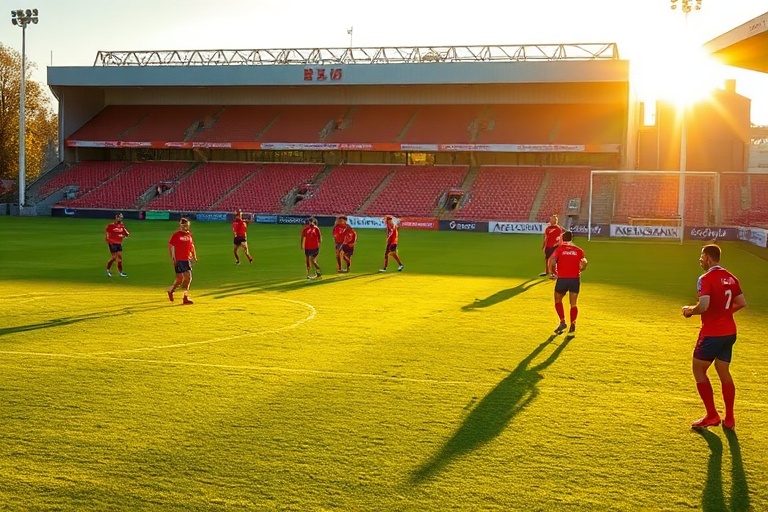
The club’s home ground, Be Well Support Stadium (formerly known as the Mobile Rocket Stadium and Belle Vue), has been its fortress since 1895. Located in Wakefield, West Yorkshire, the stadium’s intimate atmosphere and rich history amplify the club’s identity. It’s not just a venue; it’s a gathering place where generations of fans have shared in triumphs and heartbreaks, cementing Trinity’s role as a community hub.
The Early Years: Foundations of a Legacy
Wakefield Trinity’s origins trace back to a meeting at the Temperance Hall in Wakefield on August 21, 1873. Unlike many early rugby clubs that later split over the professionalism debate, Trinity embraced the shift toward paid play when the sport’s governing bodies allowed it in the 1890s. This decision positioned the club at the forefront of rugby league’s formation in 1895, when it became a founding member of the Northern Rugby Football Union—later renamed the Rugby Football League.
In those formative decades, Trinity quickly established itself as a competitive force. By 1909, the team reached its first Challenge Cup Final, though it fell short against Bramley. The 1920s and 1930s saw Trinity become a regular contender in the league, with a playing style that emphasized physicality and tactical discipline. Though the club never claimed a top-flight title during this era, it developed a reputation for being a tough opponent—earning the nickname “The Dreadnoughts” during the 1920s due to their fearsome forward pack.
Post-War Triumphs and the Challenge Cup Glory
The post-World War II period marked Wakefield Trinity’s golden age. Under the leadership of legendary coach Jim Challinor, the club won its first major trophy in 1946, lifting the Challenge Cup with a 13–12 victory over Wigan in a thrilling final at Wembley. This triumph was more than a sporting achievement; it was a beacon of hope for a community rebuilding after the war. Trinity’s backline, led by standout players like Billy Stott and Gordon Ratcliffe, dazzled fans with a blend of flair and determination.
That success was not a one-off. In 1960, Trinity captured its second Challenge Cup, defeating Hull 32–13 in a dominant display. The 1960s also saw the club claim its first and only Rugby Football League Championship in 1967, capping a decade of sustained excellence. These achievements cemented Trinity’s place among rugby league’s elite, and their style of play—fast, fluid, and fearless—remains a reference point for historians and fans alike.
Yet, despite these highlights, the club faced growing financial pressures and the broader challenges of professional rugby league. By the late 1980s, Trinity was struggling on and off the field, culminating in relegation to the Second Division in 1989—a rare low point for a club of its stature.
The Modern Era: Resilience and Revival
The 1990s and early 2000s were turbulent times for Wakefield Trinity. Relegation, financial instability, and near-administration loomed large. The club changed ownership multiple times, and its long-term future was often in question. Yet, through it all, the loyalty of the fanbase never wavered. Supporters continued to fill Belle Vue, chanting “Wakefield, Wakefield, Wakefield” with unwavering passion, even during lean seasons.
A turning point came in 2016 when Wakefield Trinity secured promotion to the Super League after defeating London Broncos in the Million Pound Game. This victory was more than a sporting milestone; it was a statement of intent. The club’s return to the top flight in 2017 marked the beginning of a new chapter, one defined by ambition and rebuilding.
Under head coach Chris Chester, Trinity has sought to blend experienced Super League players with emerging local talent. The club has emphasized youth development, partnering with academies and schools across Wakefield and the surrounding areas. This focus on homegrown players reflects a broader shift in rugby league, where clubs are increasingly investing in their communities as a pathway to long-term success.
In recent years, Trinity has also embraced innovation in fan engagement. The club launched its “Trinity Family” membership scheme, offering supporters greater access to players, behind-the-scenes content, and community initiatives. Digital platforms have become central to its strategy, with live streams, podcasts, and social media content helping to grow its audience beyond traditional boundaries.
The Role of Trinity in Rugby League’s Ecosystem
Wakefield Trinity plays a unique role within rugby league’s structure. Unlike clubs with massive global fanbases, Trinity thrives on local identity. Its supporters—many of whom are multigenerational—see the club as a point of pride for the Wakefield district. This connection is evident in initiatives like the “Trinity in the Community” program, which uses rugby league to engage young people in education, health, and social development.
The club’s rivalry with nearby teams such as Leeds Rhinos and Huddersfield Giants adds spice to the Yorkshire landscape. Matches between these sides are often fiercely contested, with bragging rights and local pride at stake. These fixtures are not just games; they are cultural events that draw large crowds and media attention.
Trinity also contributes to the broader narrative of rugby league’s evolution. As the sport grapples with issues of concussion protocols, financial sustainability, and fan engagement, clubs like Trinity serve as examples of resilience. They remind stakeholders that rugby league’s strength lies not just in elite clubs with massive budgets, but in the network of community teams that form its foundation.
Looking Ahead: What’s Next for Wakefield Trinity?
The future of Wakefield Trinity appears cautiously optimistic. The club’s return to Super League stability has provided a platform for growth. Financial management remains a priority, with a focus on sustainable investment rather than short-term splurges. On the field, Trinity aims to consolidate its position in the top flight while developing a competitive squad capable of challenging for playoff spots.
Key to this vision is the continued development of the Wakefield Trinity Academy, which has produced several first-team players in recent years. Strengthening pathways from youth to senior rugby is essential for building a sustainable model. Additionally, the club is exploring partnerships with local businesses and sponsors to enhance its commercial revenue while staying true to its community roots.
Off the field, Trinity is also considering stadium developments. Plans to modernize Belle Vue could improve matchday experiences, increase capacity, and generate additional income streams. Such upgrades would not only benefit the club but also enhance Wakefield’s appeal as a destination for sports and entertainment.
For fans, the hope is that Trinity can once again challenge for silverware. While immediate expectations may be tempered by financial realities, the club’s history shows that it often punches above its weight. A strong finish in the Super League or a deep run in the Challenge Cup could reignite the passion that has defined Trinity for over 150 years.
A Club That Lives Through Its People
What truly defines Wakefield Trinity is not just its trophies or league positions, but the people who have shaped it. From the players who wore the cherry-and-white jersey with pride to the volunteers who keep the club running behind the scenes, Trinity is a living institution. The fans, in particular, deserve recognition. Their loyalty through decades of highs and lows has ensured that the club remains a vital part of Wakefield’s identity.
As rugby league continues to evolve, Wakefield Trinity stands as a testament to the power of tradition and resilience. It’s a reminder that success is not always measured in trophies, but in the enduring connection between a club and its community. Whether in victory or adversity, Trinity’s spirit endures—and that is what makes it special.
For those looking to understand the soul of rugby league, a visit to Belle Vue on a cold winter’s afternoon, surrounded by passionate fans and steeped in history, offers a clearer picture than any highlight reel could provide.
To learn more about rugby league’s rich history and its impact on communities, explore our Sports section. For deeper analysis on club legacies and rivalries, visit our Analysis category.