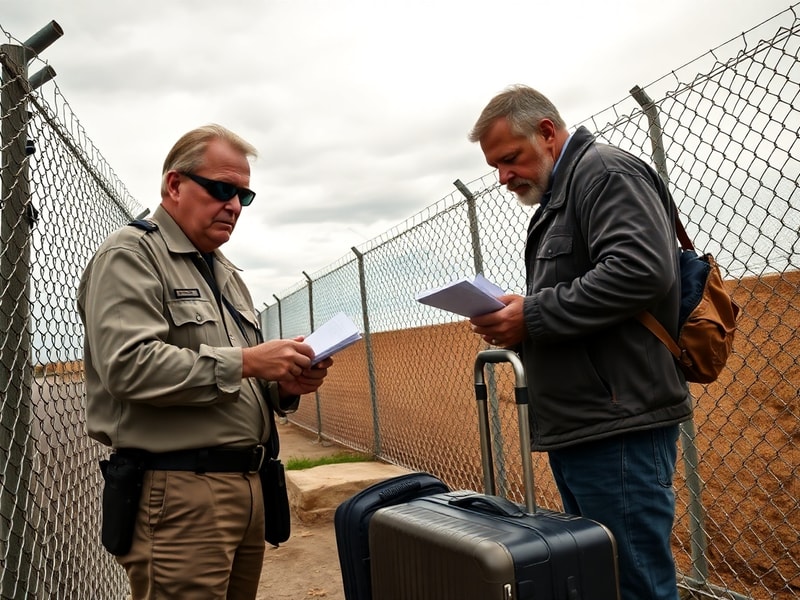
border control
“`html
Border Control: Balancing Security and Humanitarian Concerns
The concept of border control has evolved significantly over the past century, transforming from a simple act of regulating entry points to a complex system that balances national security with humanitarian obligations. In an era marked by global migration, technological advancements, and geopolitical tensions, the policies governing who crosses borders—and why—have become a defining issue of our time.
Nations worldwide grapple with the challenge of protecting their sovereignty while upholding international laws designed to prevent human rights abuses. This tension plays out daily at airports, seaports, and land crossings, where officials make split-second decisions that can alter lives. The stakes are high: too restrictive policies can lead to humanitarian crises, while overly permissive approaches may compromise national safety.
The Historical Evolution of Border Control
Border control as we know it today emerged from the Treaty of Westphalia in 1648, which established the principle of state sovereignty. However, the modern era of border management began in the late 19th and early 20th centuries, when industrialization and global trade required more structured systems. The first passport requirements appeared in Europe during World War I, as nations sought to control the movement of potential enemies.
After World War II, the United Nations introduced the 1951 Refugee Convention, creating legal obligations for nations to protect individuals fleeing persecution. This marked a turning point where humanitarian concerns became intertwined with border policies. By the late 20th century, the fall of the Berlin Wall and the expansion of the European Union further complicated border dynamics, necessitating regional cooperation while maintaining individual state controls.
Today, technological innovations such as biometric scanners, AI-driven risk assessment tools, and blockchain-based identity verification systems are reshaping how borders are managed. These tools promise greater efficiency but also raise concerns about privacy, data security, and potential biases in automated decision-making.
Key Challenges in Modern Border Management
One of the most pressing challenges in border control is the surge in global displacement. According to the UNHCR, over 110 million people were forcibly displaced worldwide at the end of 2023. This unprecedented number strains the resources of nations already struggling to process asylum claims efficiently. In places like the U.S.-Mexico border, the European Union’s external borders, and Southeast Asia’s maritime routes, officials face impossible choices between enforcing strict entry rules and upholding humanitarian obligations.
Another significant challenge is the rise of transnational crime. Smuggling networks, human trafficking, and drug cartels exploit gaps in border security, forcing governments to allocate increasing resources toward surveillance and interdiction. The U.S. Customs and Border Protection agency, for example, seized over 1.8 million pounds of narcotics at its Southwest border in fiscal year 2023 alone. Meanwhile, European authorities report rising incidents of migrant smuggling facilitated by organized crime syndicates.
Technological disparities further complicate border control efforts. Wealthier nations invest in advanced surveillance systems, while developing countries often rely on outdated methods that are easily circumvented. This imbalance creates vulnerabilities that criminal organizations exploit, turning certain borders into hotspots for illegal activity.
Balancing Act: Security vs. Human Rights
The debate over border control often centers on this fundamental tension. Proponents of strict enforcement argue that porous borders undermine national security, enable terrorism, and strain public resources. They point to incidents like the 2015 Paris attacks, where some perpetrators entered Europe via Greece as undocumented migrants, as evidence of the risks of lax controls.
On the other side, human rights advocates emphasize the moral duty to protect vulnerable populations. They highlight cases where asylum seekers are turned away at borders only to face persecution or death. The tragic deaths of migrants attempting to cross the Mediterranean Sea or the Sonoran Desert underscore the human cost of restrictive policies.
This debate has led to the development of tiered border control strategies. Some nations implement “smart borders,” using technology to pre-screen travelers and prioritize high-risk individuals. Others adopt “managed migration” policies that create legal pathways for certain categories of migrants, such as skilled workers or students, while maintaining strict enforcement for unauthorized entry.
Case Studies: Diverse Approaches to Border Control
Different regions have adopted varying strategies to manage their borders, often reflecting their unique geopolitical and economic contexts.
North America: The U.S.-Mexico Border
The U.S.-Mexico border stretches nearly 2,000 miles and is one of the most heavily fortified borders in the world. The U.S. has invested billions in physical barriers, drones, and sensors to monitor crossings. Under Title 42, a public health order implemented during the COVID-19 pandemic, authorities expelled over 2.8 million migrants without allowing them to seek asylum.
However, this approach has faced criticism for violating international law and humanitarian principles. The Biden administration has sought to reverse some policies while maintaining strict enforcement in certain areas. Meanwhile, Mexico has become an essential partner in border control, deploying its own security forces to intercept migrants before they reach the U.S.
Europe: The Schengen Zone and External Borders
The European Union’s Schengen Area allows for passport-free travel among 27 member states, creating one of the world’s largest single travel zones. However, this freedom relies on strict controls at the EU’s external borders, particularly in countries like Italy, Greece, and Spain, which are primary entry points for migrants crossing the Mediterranean.
The EU’s approach combines search-and-rescue operations with efforts to deter irregular migration. The Frontex agency, Europe’s border and coast guard, plays a central role in coordinating these efforts. Yet, the policy has sparked controversy, with accusations of pushbacks—where migrants are intercepted and returned to sea without proper asylum assessments—and inadequate rescue operations leading to drownings.
Asia-Pacific: Australia’s Offshore Processing
Australia’s border control strategy is among the most restrictive in the world. Since 2013, the government has implemented a policy of intercepting asylum seekers at sea and transferring them to offshore detention centers in Nauru and Papua New Guinea. This approach, known as “Operation Sovereign Borders,” has drawn global condemnation for its harsh conditions and prolonged detention periods.
Critics argue that the policy violates international law and fails to address the root causes of displacement. Supporters, however, point to Australia’s relatively low numbers of unauthorized arrivals as evidence of its effectiveness. The policy remains a contentious example of how far a nation will go to control its borders.
Innovations and Future Trends in Border Control
The future of border control will likely be shaped by three key trends: technology, climate change, and geopolitical shifts. First, artificial intelligence and machine learning are being integrated into border management systems to analyze vast datasets and identify potential threats. The U.S. Department of Homeland Security’s “Automated Targeting System” uses algorithms to assess the risk posed by travelers and cargo, while the EU’s “iBorderCtrl” project employs AI-powered lie detection to streamline border crossings.
Second, climate change is altering migration patterns, creating new challenges for border control. Rising sea levels, droughts, and extreme weather events are displacing millions, particularly in vulnerable regions like the Sahel, South Asia, and Central America. Nations are beginning to recognize “climate refugees” as a distinct category, though international law has yet to formally define their status.
Third, the shifting balance of global power is redefining border dynamics. The rise of China, tensions between Russia and the West, and the growing influence of non-state actors like cartels and terrorist groups are forcing nations to rethink their security strategies. The war in Ukraine, for instance, has led to a surge in refugees seeking safety in neighboring countries, testing the EU’s capacity to manage large-scale displacement.
As these trends unfold, the debate over border control will only intensify. Will nations prioritize security at the expense of human rights, or will they find ways to reconcile these competing demands? The answer may well define the future of global migration and international relations.
The Role of International Cooperation
No single nation can address the challenges of border control in isolation. International cooperation is essential to manage migration flows, combat transnational crime, and uphold humanitarian standards. Organizations like the International Organization for Migration (IOM) and the UNHCR play critical roles in coordinating global responses, while regional blocs such as the EU and ASEAN facilitate cross-border collaboration.
However, cooperation is often hindered by political disagreements and competing national interests. The 2016 EU-Turkey deal, which aimed to stem migration flows by providing Turkey with financial aid in exchange for hosting refugees, exemplifies both the potential and pitfalls of international agreements. While the deal reduced arrivals to Greece by over 90%, it also drew criticism for outsourcing responsibility to a non-EU state with questionable human rights records.
As the world becomes increasingly interconnected, the need for cooperative border control strategies will grow. Yet, the path forward remains fraught with challenges, from funding disparities to ideological divides.
Conclusion: Toward a More Equitable Border Control System
Border control is not merely a matter of enforcing laws; it is a reflection of a nation’s values and priorities. The most effective systems will be those that balance security with compassion, efficiency with fairness, and sovereignty with solidarity. Achieving this balance requires not only robust policies but also a commitment to addressing the root causes of migration, such as poverty, conflict, and climate change.
For nations like the United States, which faces complex challenges at its southern border, and for Europe, which grapples with the ethical implications of its external border policies, the path forward must involve both firm enforcement and humane treatment. Technological advancements offer promising tools, but they must be deployed responsibly, with safeguards against bias and abuse.
Ultimately, the future of border control will depend on how well societies navigate the competing demands of security and humanity. As global migration continues to rise, the choices made today will shape the world of tomorrow—for better or for worse. Nations that embrace a holistic approach, one that combines strong enforcement with compassionate policies, will set the standard for responsible border management in the 21st century.
For more insights into global migration trends and policy debates, explore our News and Analysis sections.
—METADATA—
{
“title”: “Border Control