Understanding Severe Weather: Risks, Patterns, and Preparedness
“`html
Understanding Severe Weather: Risks, Patterns, and Preparedness
The past decade has seen a marked increase in severe weather events worldwide, from hurricanes to heatwaves. These events disrupt lives, strain infrastructure, and challenge emergency response systems. While weather has always been unpredictable, the intensity and frequency of severe weather suggest broader environmental shifts.
Meteorologists point to climate change as a contributing factor, though natural variability still plays a role. Understanding severe weather requires examining not just the events themselves but their broader implications for society, policy, and public safety.
The Science Behind Severe Weather Patterns
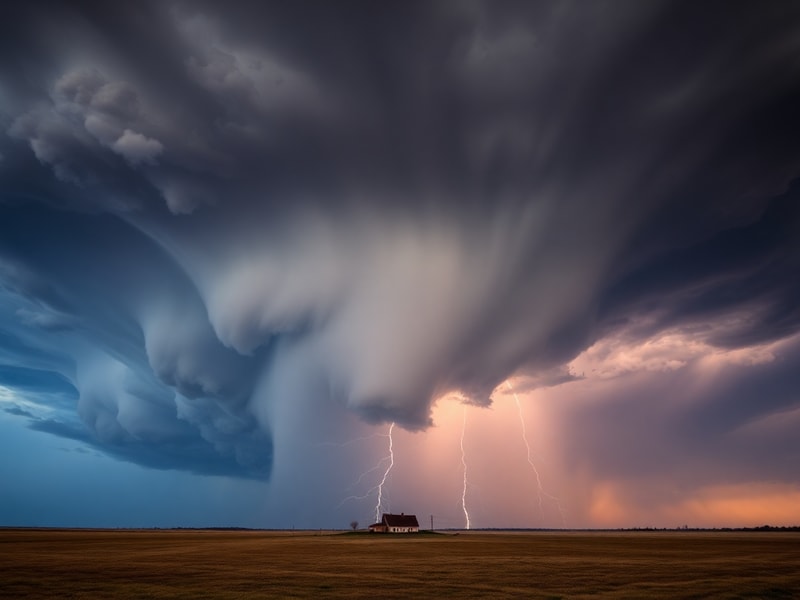
Severe weather encompasses a range of phenomena, including thunderstorms, tornadoes, hurricanes, blizzards, and extreme heat or cold. These events are driven by complex atmospheric interactions, often intensified by warmer global temperatures.
Warmer air holds more moisture, fueling heavier rainfall and increasing flood risks. Meanwhile, shifting jet streams contribute to prolonged heatwaves and erratic storm tracks. The National Oceanic and Atmospheric Administration (NOAA) notes that the U.S. alone experienced 22 separate billion-dollar weather disasters in 2020, a record at the time.
Researchers are also studying how climate change may alter the behavior of hurricanes. While the total number of storms may not increase, their intensity could rise, leading to more destructive landfalls. A 2021 study in Nature Communications found that tropical cyclones are becoming more likely to rapidly intensify, leaving communities with less time to prepare.
Key Factors Influencing Severe Weather
- Temperature gradients: Greater differences between air masses can spawn powerful storms.
- Moisture availability: Warmer air increases evaporation, feeding heavy precipitation.
- Atmospheric instability: Unstable air masses create ideal conditions for thunderstorms and tornadoes.
- Human activity: Urbanization and deforestation can exacerbate flood risks by altering natural drainage.
Human and Economic Costs of Severe Weather
The economic toll of severe weather is staggering. In 2023, global insured losses from natural disasters exceeded $100 billion, according to Swiss Re. Beyond financial costs, severe weather displaces communities, damages ecosystems, and strains healthcare systems.
Agriculture is particularly vulnerable. The U.S. Department of Agriculture reports that drought alone costs farmers billions annually in lost crops and livestock. Meanwhile, extreme heat increases the risk of wildfires, which have scorched millions of acres in recent years.
Urban areas face unique challenges. Heat islands—where concrete and asphalt trap heat—can make cities up to 10°F warmer than surrounding rural areas. This intensifies heatwaves, posing health risks, especially for vulnerable populations like the elderly and low-income residents.
Vulnerable Populations and Disproportionate Impacts
- Low-income communities: Often lack resources for early warning systems or resilient housing.
- Rural areas: Face longer emergency response times and limited access to healthcare.
- Indigenous groups: Some rely on traditional knowledge that may no longer align with shifting weather patterns.
- Outdoor workers: Extreme heat increases risks for those in construction, agriculture, and other outdoor industries.
Preparedness and Policy Responses
Mitigating the impacts of severe weather requires a combination of individual preparedness, community planning, and policy action. Governments are increasingly investing in early warning systems, infrastructure upgrades, and climate adaptation strategies.
The Federal Emergency Management Agency (FEMA) emphasizes the importance of having an emergency kit, including water, non-perishable food, medications, and a battery-powered radio. For those in tornado-prone regions, reinforced safe rooms can mean the difference between life and death.
At the policy level, cities are adopting green infrastructure to manage flooding, such as permeable pavements and rain gardens. Meanwhile, the Inflation Reduction Act of 2022 allocated $369 billion toward climate resilience, including funds for wildfire prevention and coastal restoration.
Steps Communities Can Take
- Develop evacuation plans: Ensure residents know routes and shelters in advance.
- Invest in resilient infrastructure: Upgrade power grids, roads, and communication networks to withstand extreme conditions.
- Educate the public: Workshops on disaster preparedness can save lives during crises.
- Strengthen building codes: Enforce standards for wind and flood resistance in high-risk areas.
Looking Ahead: The Future of Severe Weather
Climate models predict that severe weather will continue to intensify as global temperatures rise. The Intergovernmental Panel on Climate Change (IPCC) warns that even if warming is limited to 1.5°C, some changes are irreversible. This underscores the urgency of both mitigation and adaptation.
Innovation offers some hope. Advances in weather forecasting, such as AI-driven models, are improving prediction accuracy. Companies like IBM are developing hyper-local forecasts that could give residents hours of extra warning before a storm hits.
Yet technology alone cannot solve the problem. Global cooperation on reducing emissions remains critical. The 2015 Paris Agreement set targets for limiting warming, but progress has been uneven. Without collective action, communities worldwide will face greater risks from severe weather in the coming decades.
For now, the focus must be on resilience—building systems that can withstand shocks and protecting the most vulnerable. Severe weather is not a distant threat; it is a present reality requiring immediate attention.
For more on disaster response and climate science, visit Science and News on Dave’s Locker.