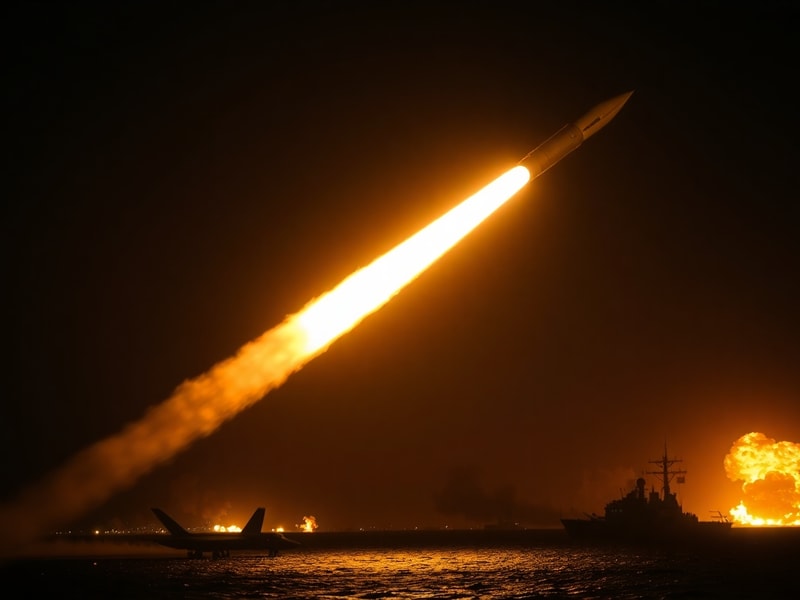
military strike
“`html
Understanding Military Strikes: Objectives, Execution, and Consequences
The use of military force in the form of a strike remains one of the most consequential decisions a government can make. Whether conducted as a targeted operation or a broader campaign, such actions are designed to achieve specific strategic, tactical, or deterrent objectives. Military strikes can take many forms—precision airstrikes, artillery barrages, naval blockades, or special operations raids—each tailored to the mission at hand. While their immediate purpose may be clear, the ripple effects often extend far beyond the battlefield.
The Strategic Purpose Behind Military Strikes
Military strikes are rarely launched without clear intent. Governments and military leaders weigh political, strategic, and humanitarian factors before ordering such actions. One of the most common objectives is deterrence: demonstrating resolve to prevent future aggression. For example, a sudden airstrike on a weapons depot may signal to an adversary that further escalation will result in costly consequences. This was evident during the 2020 U.S. strike that killed Iranian General Qasem Soleimani, which aimed to disrupt Iranian-backed militia activities in the region.
Another frequent goal is the degradation of enemy capabilities. Precision strikes can cripple critical infrastructure, disrupt supply lines, or neutralize key personnel without committing ground forces. The 2011 NATO intervention in Libya, which included sustained airstrikes, sought to halt Muammar Gaddafi’s forces from attacking civilians, ultimately contributing to his downfall. However, such operations carry risks, including civilian casualties and unintended escalation.
Humanitarian intervention also drives some military strikes. When governments or international bodies determine that atrocities are being committed, limited use of force may be authorized to protect populations. The 1999 NATO bombing of Yugoslavia, for instance, was justified by the need to stop ethnic cleansing in Kosovo. Yet, even these morally framed operations face scrutiny over proportionality and long-term regional stability.
How Military Strikes Are Executed
The execution of a military strike depends on its scale, objectives, and the capabilities of the forces involved. Precision airstrikes, often conducted by fighter jets or drones, rely on intelligence, surveillance, and reconnaissance (ISR) assets to identify and track targets. Modern guided munitions, such as Joint Direct Attack Munitions (JDAMs), allow for high accuracy with minimal collateral damage when properly employed. The 2018 U.S. strike on a Syrian chemical weapons facility utilized such precision to avoid civilian harm.
Special operations forces (SOF) play a critical role in direct-action strikes, particularly when high-value targets must be captured or eliminated with minimal exposure. The 2011 raid in Abbottabad, Pakistan, which resulted in the death of Osama bin Laden, exemplified the effectiveness of SOF in high-risk missions. These operations require meticulous planning, real-time intelligence, and the ability to extract personnel swiftly under pressure.
Naval and artillery strikes offer different strategic advantages. A naval blockade, for example, can cut off supplies to an enemy without immediate combat, as seen during the Cuban Missile Crisis. Artillery barrages provide concentrated firepower but are less precise and risk higher civilian casualties. The balance between effectiveness and proportionality is a constant challenge for military planners.
Cyber operations have also emerged as a component of modern military strikes. Disabling an enemy’s command-and-control systems or financial networks can achieve strategic objectives without kinetic action. The 2010 Stuxnet cyberattack, widely attributed to U.S. and Israeli intelligence, sabotaged Iran’s nuclear enrichment program by targeting industrial control systems. While not a traditional strike, such operations underscore the evolving nature of modern warfare.
The Human and Political Consequences
The immediate aftermath of a military strike is often marked by debate over its legitimacy and proportionality. International law, particularly the United Nations Charter, permits the use of force in self-defense or when authorized by the UN Security Council. However, unilateral strikes—those not sanctioned by the UN—frequently draw condemnation as violations of sovereignty. The 2003 U.S.-led invasion of Iraq, framed as a preemptive strike against weapons of mass destruction, remains a contentious example of how such actions can reshape global perceptions of military intervention.
Civilian casualties and infrastructure damage are among the most damaging long-term consequences. Even precision strikes can result in unintended harm, as seen in the 2020 Baghdad airstrike that killed Iranian military commander Qasem Soleimani alongside Iraqi militia members. The incident sparked outrage in Iraq and Iran, leading to retaliatory attacks and strained diplomatic relations. The psychological impact on local populations can be profound, fostering resentment and fueling cycles of violence.
Domestically, military strikes can influence public opinion and political careers. Leaders who order successful strikes often see short-term boosts in approval ratings, a phenomenon known as the “rally ’round the flag” effect. However, failed operations or excessive civilian casualties can erode trust in government. The 1980 failed U.S. hostage rescue attempt in Iran, codenamed Operation Eagle Claw, damaged President Jimmy Carter’s reelection bid and highlighted the risks of poorly executed military operations.
Strategic miscalculations can also have global repercussions. A strike perceived as disproportionate may unite previously divided factions against the attacking nation. The 2014 Israeli airstrikes in Gaza, for example, drew international criticism and strengthened Hamas’s narrative of resistance. Conversely, a well-timed strike can weaken an adversary’s position, as seen in the 2019 U.S. strike that killed ISIS leader Abu Bakr al-Baghdadi, which dealt a significant blow to the terrorist organization’s operational capacity.
Case Studies: Lessons from Recent Military Strikes
Examining specific military strikes provides insight into their complexities and outcomes. Below are three notable examples, each illustrating different objectives, execution methods, and consequences:
- Operation Inherent Resolve (2014–Present): The U.S.-led coalition’s airstrikes against ISIS in Iraq and Syria aimed to degrade and ultimately destroy the terrorist group. Utilizing precision-guided munitions and intelligence-sharing with local forces, the campaign significantly reduced ISIS’s territorial control. However, civilian casualties in airstrikes, such as the 2017 Mosul airstrike that killed hundreds, raised ethical concerns. The operation also highlighted the challenges of defeating an insurgency without a long-term political solution.
- 2020 U.S. Airstrike in Baghdad: The targeted killing of Iranian General Qasem Soleimani marked a dramatic escalation in U.S.-Iran tensions. The strike, conducted via drone, eliminated a high-value target but also killed Iraqi militia members and civilians. The backlash was immediate: Iran launched missile strikes on U.S. bases in Iraq, and the Iraqi parliament voted to expel U.S. troops. The event underscored the risks of escalation in regional conflicts and the blurred lines between military and political objectives.
- 2018 Syrian Chemical Weapons Strikes: After a suspected chemical attack in Douma, the U.S., UK, and France launched coordinated airstrikes targeting Syrian chemical weapons facilities. The operation, intended to enforce international norms against chemical warfare, avoided civilian casualties but failed to deter further attacks by the Assad regime. The strikes demonstrated the limitations of limited military action in resolving entrenched conflicts.
The Future of Military Strikes in Modern Warfare
As technology advances, the nature of military strikes continues to evolve. Autonomous drones and AI-driven targeting systems promise greater precision but also raise ethical questions about accountability. The 2020 Nagorno-Karabakh conflict between Armenia and Azerbaijan showcased the devastating effectiveness of drone warfare, with both sides using Turkish-made Bayraktar TB2 drones to devastating effect. Such capabilities could make future strikes faster and more lethal but also risk lowering the threshold for armed conflict.
Hybrid warfare, which blends conventional military strikes with cyberattacks, disinformation, and economic pressure, complicates traditional notions of deterrence. Russia’s 2014 annexation of Crimea, which included covert military operations alongside cyberattacks and propaganda, demonstrated how modern conflicts can avoid clear declarations of war. In such environments, military strikes may become one tool among many in a broader strategy of coercion.
International norms are also shifting. The rise of drone warfare has led to calls for stricter regulations on autonomous weapons, while the use of private military companies (PMCs) blurs the lines between state and non-state actors. The 2019 drone strike in Yemen that killed 10-year-old Nawar al-Awlaki, granddaughter of an al-Qaeda leader, reignited debates over the legality and morality of targeted killings. As these discussions intensify, the international community may seek new frameworks to govern the use of force.
The future of military strikes will likely be shaped by three key factors: technological innovation, geopolitical realignment, and public opinion. Nations must balance the need for decisive action with the risks of escalation and unintended consequences. For policymakers and military leaders, the challenge will be to harness the power of strikes while minimizing their humanitarian and strategic costs.
Conclusion
Military strikes are a double-edged sword: they can achieve strategic objectives and uphold international norms, but they can also escalate conflicts and cause profound human suffering. The decision to launch such an operation is never made lightly, as it involves weighing immediate military gains against long-term political and ethical considerations. From precision airstrikes to covert special operations, the methods of execution vary widely, as do their consequences.
As warfare continues to evolve, the role of military strikes will remain a topic of intense debate. The lessons from past operations—whether successful or disastrous—offer critical insights for future leaders. Ultimately, the challenge lies in using military force judiciously, ensuring that strikes serve broader goals of peace and stability rather than fueling endless cycles of violence.
For those interested in further reading on military strategy and global conflicts, explore our News and Analysis sections for in-depth coverage of evolving geopolitical dynamics.
—
METADATA
{
“title”: “Military Strikes Explained: Objectives, Execution & Consequences”,
“metaDescription”: “Explore the strategic goals, execution methods, and consequences of military strikes, with real-world case studies and future trends in modern warfare.”,
“categories”: [“News”, “Analysis”],
“tags”: [“military strikes”, “airstrikes”, “modern warfare”, “international conflict”, “defense strategy”],
“imageDescription”: “A precision-guided munition striking a military target at night, with tracer fire illuminating the sky, surrounded by military personnel in tactical gear observing from a safe distance. The scene conveys both the precision and the gravity