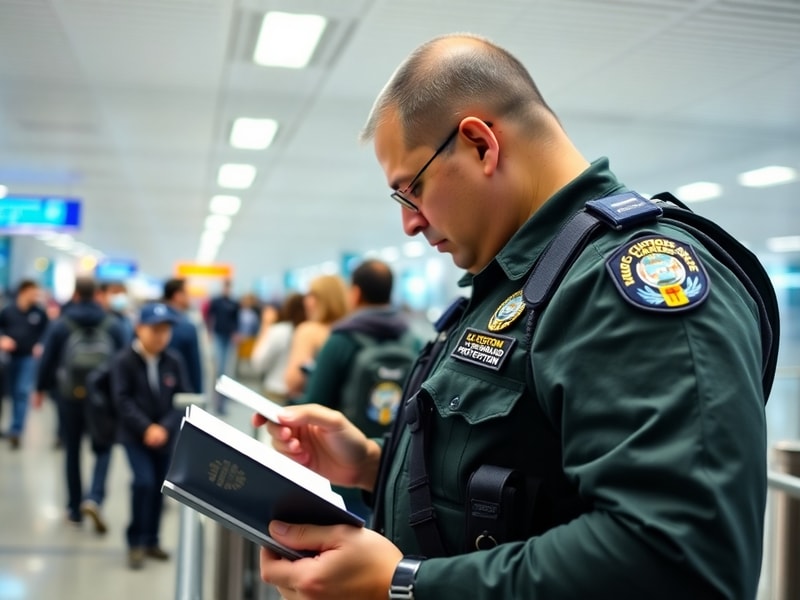
How U.S. Customs and Border Protection Balances Security and Trade
“`html
U.S. Customs and Border Protection: Guardians of the Nation’s Gateways
At any given moment, thousands of travelers and millions of shipments cross into the United States through more than 300 official ports of entry. Ensuring the safety, security, and economic vitality of these crossings falls to a single federal agency: U.S. Customs and Border Protection (CBP). As the nation’s first line of defense, CBP operates under the Department of Homeland Security (DHS) with a dual mission that is as complex as it is critical. It must facilitate lawful trade and travel while preventing the entry of illicit goods, contraband, and individuals who pose a threat to national security.
The Dual Mission: Security and Facilitation
CBP’s work is defined by two seemingly opposing goals: to protect the country from threats and to support the flow of legitimate commerce and tourism. This balance is not easily struck, yet the agency manages it daily across air, land, and sea ports of entry. The volume of activity is staggering. In fiscal year 2023 alone, CBP processed over 440 million travelers, including nearly 130 million air arrivals, and seized more than 1.8 million pounds of narcotics at ports of entry. These numbers reflect not just enforcement, but the scale of America’s global connectivity.
The agency’s enforcement role extends beyond drugs and weapons. CBP officers are trained to detect financial crimes, intellectual property violations, and agricultural pests that could devastate crops. Meanwhile, its trade mission supports an economy where imports and exports totaled nearly $5 trillion in 2023. Each day, CBP processes over 60,000 cargo entries, collecting duties and taxes that fund public services. The dual mandate requires sophisticated technology, highly trained personnel, and constant adaptation to evolving threats.
Key Enforcement Priorities
CBP’s enforcement strategy is guided by layered security, combining intelligence, technology, and human expertise. The agency prioritizes several high-risk areas:
- Drug Interdiction: CBP remains the nation’s primary drug interdiction agency, targeting smuggling routes at ports of entry and along the borders.
- Counterterrorism: Through the National Targeting Center and advanced screening systems, CBP identifies high-risk travelers and cargo before they reach U.S. soil.
- Trade Compliance: CBP enforces trade laws to prevent unfair competition and protect intellectual property rights.
- Agriculture Protection: Inspectors intercept invasive plant and animal pests that could threaten food security and ecosystems.
- Human Trafficking and Smuggling: CBP works with partners to disrupt criminal networks exploiting vulnerable migrants.
Technology and Innovation: The Modern CBP
CBP has emerged as a leader in applying cutting-edge technology to border security. The use of non-intrusive inspection (NII) systems, such as large-scale X-ray and gamma-ray imaging, allows officers to examine cargo without disrupting legitimate trade. These systems have become essential in detecting hidden compartments used to smuggle drugs, weapons, and even humans. In 2023, NII technology helped seize over 24,000 concealed compartments across ports of entry.
Artificial intelligence and machine learning are now being integrated into targeting algorithms to improve risk assessment. The Automated Targeting System (ATS) uses historical data to flag suspicious shipments before they arrive. Facial recognition technology is also expanding at airports, with CBP reporting over 98% accuracy in matching travelers to their passports. While these tools enhance efficiency, they also raise privacy and civil liberties concerns, prompting ongoing oversight and public debate.
The agency’s use of drones, sensors, and unmanned aerial systems along the southern border has increased situational awareness, though critics argue such surveillance disproportionately impacts rural and indigenous communities. Still, the technological transformation of CBP reflects a broader trend in government: the shift from reactive enforcement to predictive, data-driven security.
Challenges and Controversies: Navigating a Complex Landscape
Despite its successes, CBP faces persistent challenges. Staffing shortages, particularly among Border Patrol agents, have stretched resources thin. The agency reported over 23,000 vacant positions in 2023, contributing to longer wait times and reduced inspection capacity. Meanwhile, the humanitarian crisis at the southern border has intensified scrutiny of CBP’s treatment of migrants, with reports of overcrowding and inadequate conditions in detention facilities drawing congressional and media attention.
CBP’s authority to conduct searches without warrants has also sparked legal challenges. Courts have upheld broad discretion in border searches under the “border search exception,” but civil rights organizations argue that such powers are increasingly being used beyond traditional border zones. The use of Title 42—a public health policy that allowed rapid expulsions during the pandemic—highlighted the tension between public health and humanitarian obligations, leaving thousands in legal limbo.
Another critical issue is the agency’s role in addressing climate-related migration. As drought, violence, and economic instability drive more people northward, CBP must adapt to a reality where climate change is reshaping migration patterns. This adds another layer of complexity to an already multifaceted mission.
Looking Ahead: The Future of Border Security
As global trade and travel continue to expand, CBP’s role will only grow in importance. The agency is preparing for the next generation of threats, including cyber-enabled smuggling, drone-based narcotics delivery, and synthetic drugs like fentanyl. In response, CBP is investing in advanced analytics, biometric screening, and international partnerships to stay ahead of criminal networks.
Yet, the agency’s future is not solely defined by technology or enforcement. Public trust remains essential. CBP has made strides in transparency, launching the CBP Trusted Traveler Programs and expanding community engagement initiatives. Still, rebuilding confidence among immigrant communities and civil rights advocates remains an ongoing challenge.
One promising development is the expansion of the CBP Innovation Hub in El Paso, Texas. This facility serves as a testbed for new screening technologies and training methods, fostering collaboration with tech startups, universities, and international partners. By embracing innovation while upholding constitutional principles, CBP can navigate the complexities of 21st-century border security.
Ultimately, U.S. Customs and Border Protection stands at the intersection of national security, economic prosperity, and human dignity. Its work ensures that the nation remains both safe and open to the world. As threats evolve and global dynamics shift, CBP’s ability to balance these priorities will define its legacy for decades to come.
For those interested in the intersection of technology and border security, explore our Technology section. To learn more about immigration policy and its broader implications, visit our Politics coverage.
Conclusion
U.S. Customs and Border Protection remains one of the most visible and vital agencies in the Department of Homeland Security. Its dual mission of facilitating trade and travel while preventing threats is a delicate balancing act that demands constant vigilance, innovation, and accountability. As the world becomes more interconnected, CBP’s role will only grow more complex. Yet, through transparency, technology, and a commitment to fairness, the agency can continue to fulfill its mission with integrity and resolve. The stakes are high—not only for national security, but for the values that define the nation itself.