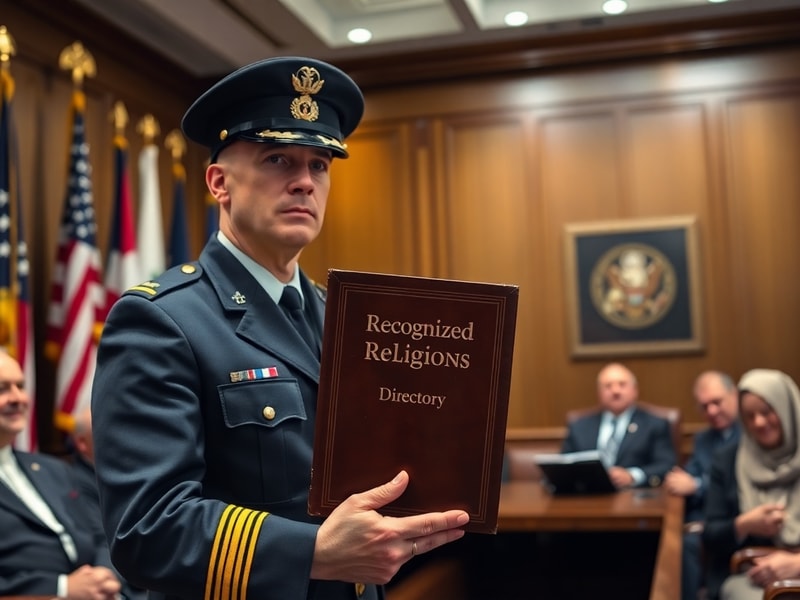
The United States Department of Defense (DoD) maintains a list of religions that are officially recognized for chaplaincy services within the military. This roster reflects both historical traditions and the evolving spiritual landscape of the armed forces. While rooted in American military policy, the list offers a fascinating lens through which to examine broader themes of religious pluralism, secular governance, and cultural representation in institutions.
The recognition of religions by the DoD is not merely an administrative formality. It directly impacts service members’ access to spiritual support, dietary accommodations, and even burial rites. The list also shapes the cultural fabric of military communities, where religious diversity has become an increasingly visible aspect of modern service life. To understand its significance, it’s worth examining how the list is compiled, who it includes, and why certain traditions gain recognition while others do not.
The Criteria for Recognition: Balancing Tradition and Inclusion
The DoD’s recognition process is governed by specific criteria outlined in Department of Defense Instruction 1300.17. This policy requires that a religious group demonstrate a substantial number of adherents within the military, possess a clear and consistent body of religious teachings, and maintain a defined clergy structure. The group must also exhibit stability, continuity, and a history of participation in military chaplaincy.
These standards serve a dual purpose. On one hand, they ensure that recognized religions have a meaningful presence within the armed forces. On the other, they create a framework that inherently favors established traditions over newer or less centralized faiths. The result is a list that reflects both the military’s historical ties to major religious institutions and its gradual adaptation to contemporary spiritual diversity.
For example, Christianity—particularly Protestantism and Catholicism—has long dominated the list due to its historical prevalence in American society. However, the DoD has expanded recognition to include traditions such as Judaism, Islam, Hinduism, and Buddhism, reflecting the growing religious diversity of the U.S. population. This evolution underscores the military’s efforts to balance tradition with inclusivity, a challenge faced by many modern institutions.
A Global Lens: Religious Recognition Beyond U.S. Borders
While the DoD’s list is specific to the U.S. military, its principles resonate globally. Many nations grapple with similar questions of religious accommodation within their armed forces. For instance, the United Kingdom recognizes a broader array of faiths, including Sikhism and Paganism, in its chaplaincy programs. Similarly, Canada’s military chaplaincy reflects the country’s multicultural identity, with services available for Indigenous spiritual traditions alongside more conventional religions.
These international examples highlight a broader trend: the militarization of religion is not unique to the U.S. Instead, it mirrors larger societal shifts toward recognizing diverse spiritual identities. In countries with colonial histories, such as India or South Africa, military chaplaincy often intersects with post-colonial identity politics, adding another layer of complexity to religious recognition.
In contrast, some nations take a more secular approach. France, for example, officially separates religion and state, which limits formal recognition of faiths within its military. Instead, chaplaincy services are often provided by humanist or interfaith organizations. This divergence underscores how cultural attitudes toward religion shape institutional policies, even in similar contexts like national defense.
The Impact on Service Members: Spiritual Support in Uniform
For service members, the DoD’s recognized religions list has tangible effects on daily life. Recognized faiths receive chaplaincy support, ensuring that soldiers, sailors, and airmen have access to spiritual guidance during deployments and training. This support extends beyond religious services to include rituals like weddings, funerals, and rites of passage, all of which are critical for maintaining morale and mental well-being.
However, the list also creates disparities. Service members of unrecognized traditions may struggle to find spiritual support that aligns with their beliefs. In some cases, they rely on informal networks or civilian clergy, which can be inconsistent or inaccessible. This gap has prompted advocacy groups to push for broader recognition of minority faiths, including Wicca, Unitarian Universalism, and various Indigenous traditions.
The military’s approach to religious accommodation has evolved over time. During World War II, for instance, Jewish and Catholic chaplains were rare, and their presence was often met with resistance. Today, the DoD’s chaplain corps includes representatives from a wide range of traditions, reflecting the changing demographics of the armed forces. This progress is not without ongoing debate, particularly as new religious movements gain adherents among younger service members.
The Cultural Significance of Military Chaplaincy
Military chaplaincy is more than a logistical support system; it is a cultural institution. Chaplains serve as bridges between religious communities and the military, helping to foster understanding and mitigate conflicts. Their role is especially critical in multicultural units, where service members may hail from vastly different backgrounds. In this sense, the DoD’s recognized religions list is not just a bureaucratic tool—it is a reflection of the military’s evolving identity.
Consider the case of Islam. The recognition of Islam by the DoD in 1994 marked a significant shift, reflecting the growing number of Muslim service members. Today, military bases often feature dedicated prayer spaces for Muslims, and chaplains receive training in Islamic traditions. This inclusion is part of a broader effort to ensure that the military reflects the diversity of the society it serves.
Yet, challenges remain. The rise of secularism and the decline of organized religion in some segments of the population have led to questions about the future of military chaplaincy. Some argue that the system should be reformed to accommodate non-religious service members, who currently have limited options for spiritual support. Others advocate for a more flexible approach that recognizes emerging spiritual movements, such as secular humanism or New Age practices.
The Future of Religious Recognition in the Military
The DoD’s recognized religions list is not static. As American society becomes more religiously diverse, the list will likely continue to evolve. One area of potential growth is the recognition of Indigenous spiritual traditions, which have historically been marginalized in military contexts. Efforts to include these traditions could help address historical injustices and foster greater inclusion for Native American service members.
Another trend to watch is the increasing visibility of non-traditional faiths. For example, the Church of Jesus Christ of Latter-day Saints (Mormonism) gained recognition relatively recently, in 1986. Similarly, the DoD has faced calls to recognize the Church of Scientology, which has a growing membership among service members. These debates highlight the tension between tradition and innovation in military policy.
The military’s approach to religious recognition also intersects with broader discussions about secularism and pluralism. Some critics argue that the chaplaincy system privileges religion over secular worldviews, creating an uneven playing field. In response, the DoD has explored interfaith and humanist chaplaincy programs, though these remain less established than traditional religious chaplaincies.
Ultimately, the future of the DoD’s recognized religions list will depend on a balance between tradition and adaptation. As the military continues to diversify, its policies must evolve to reflect the spiritual needs of its members. This process is not without controversy, but it offers an opportunity to redefine what it means to serve in a pluralistic institution.
Conclusion: A Reflection of Broader Societal Trends
The Defense Department’s recognized religions list is more than a bureaucratic document—it is a mirror held up to society. It reveals the complex interplay between religion, governance, and identity, both in the U.S. and abroad. As the military grapples with questions of diversity, inclusion, and secularism, its approach to religious recognition will continue to shape the experiences of service members for generations to come.
For those interested in exploring the intersection of faith and military service further, cultural analysis and historical context provide valuable perspectives. By examining these themes, we gain a deeper understanding of how institutions adapt—or struggle to adapt—to the changing tides of belief and identity.