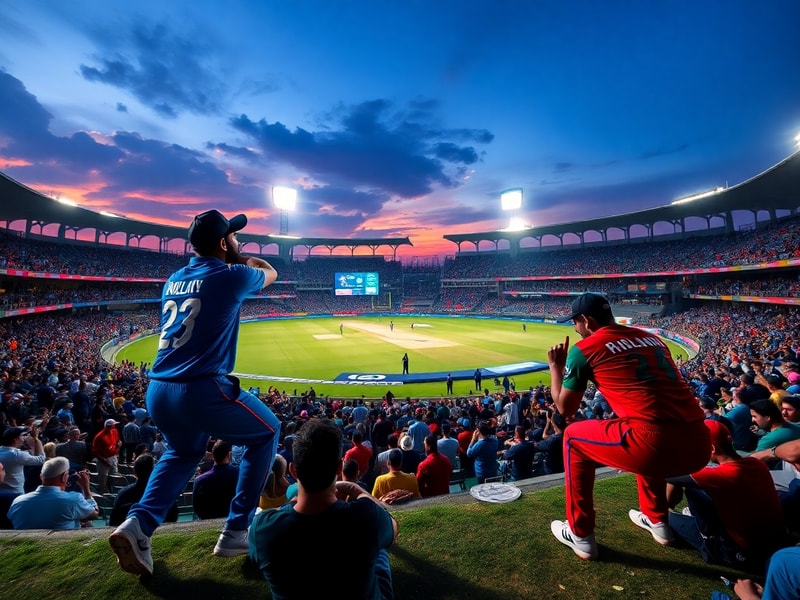
India vs Afghanistan: A Cricket Rivalry Beyond the Boundary
The India vs Afghanistan cricket match transcends sport. It represents a collision of cricketing philosophies, national pride, and the evolving narrative of global cricket. While India boasts a star-studded lineup and a cricket-crazed fanbase, Afghanistan brings raw talent, resilience, and a story of rebuilding from the ground up. This rivalry is not just about points on a scoreboard; it’s about cultural identity, strategic evolution, and the global reach of the game.
Cricket is more than a sport in South Asia. It is woven into the fabric of society, a language spoken across borders. In India, cricket is a unifying force, a source of joy during festivals, and a subject of heated debates in tea stalls and boardrooms alike. Afghanistan’s cricket team, on the other hand, emerged from adversity. The sport became a symbol of hope for a nation recovering from decades of conflict. Their journey from playing in refugee camps to competing on the world stage is one of the most inspiring stories in modern cricket.
A Tale of Two Cricketing Cultures
The contrast between India and Afghanistan’s cricketing cultures is stark. India’s cricket ecosystem is a well-oiled machine. It features world-class academies, lucrative domestic leagues like the Indian Premier League (IPL), and a vast pool of talent nurtured from childhood. The Board of Control for Cricket in India (BCCI) wields immense financial power, enabling it to sign top-tier broadcast deals and attract global talent. This infrastructure has produced legends such as Sachin Tendulkar, Virat Kohli, and MS Dhoni—icons who inspire generations.
Afghanistan’s rise is a testament to the democratizing power of cricket. Despite limited resources, the Afghanistan Cricket Board (ACB) has prioritized grassroots development. The country’s youth, often inspired by players like Rashid Khan and Mohammad Nabi, have taken to the sport with fervor. Afghanistan’s team is a blend of raw pace, spin wizardry, and fearless batting. Their players are not just athletes; they are ambassadors of a nation rebuilding its identity.
This clash of cultures was evident during the 2022 Asia Cup. Afghanistan stunned India by defending a modest total, thanks to disciplined bowling and sharp fielding. The win was symbolic—proof that talent, when coupled with belief, can challenge even the mightiest opponents.
The Global Implications of India vs Afghanistan Matches
The rivalry extends beyond the subcontinent. Cricket’s growth in Afghanistan has attracted global audiences, particularly in regions where the sport is gaining traction. Matches between India and Afghanistan are now prime-time events in countries like the UAE, Australia, and even the UK. The ICC has recognized Afghanistan’s potential, granting them full international status and ensuring their participation in major tournaments.
For India, matches against Afghanistan are not just another fixture. They are opportunities to test young talent and experiment with strategies. Virat Kohli, Rohit Sharma, and Jasprit Bumrah have all played pivotal roles in these contests, often using them as a platform to groom the next generation of stars. Meanwhile, Afghanistan’s players see these matches as a chance to prove that they belong among the elite.
From a commercial perspective, India vs Afghanistan games are goldmines. Broadcasters in India, where cricket is a religion, report record viewership. Brands leverage these matches to connect with millions of fans. Yet, the financial disparity between the two boards is glaring. While the BCCI’s revenue runs into billions, the ACB operates on a shoestring budget. This imbalance raises questions about the future of cricket’s global governance and whether the sport can truly level the playing field.
Key Moments That Defined the Rivalry
The India vs Afghanistan rivalry is still young, but it has already produced unforgettable moments. Here are a few that stand out:
- 2018 Asia Cup (Bowling Test): Afghanistan restricted India to 162 all out in a rain-affected match. Kuldeep Yadav and Jasprit Bumrah were stifled by Rashid Khan’s spin and disciplined bowling. The win announced Afghanistan’s arrival on the global stage.
- 2019 ICC World Cup: Afghanistan nearly pulled off a miracle against India, requiring just 11 runs off the last over. Mohammad Nabi’s heroics with the bat kept hopes alive until the final ball. Though India held on, the match was a statement.
- 2022 T20 World Cup: Afghanistan’s bowlers dismantled India’s top order in Adelaide. They won by 6 wickets, with Virat Kohli and Rohit Sharma struggling against Fazalhaq Farooqi’s pace and Mujeeb Ur Rahman’s off-spin.
- 2023 ODI World Cup: India’s 300-plus total was too much for Afghanistan’s batting lineup. Yet, the match highlighted Afghanistan’s potential to challenge India in the 50-over format.
These moments underscore a growing trend: Afghanistan is no longer the underdog. They are a team capable of upsetting even the strongest opponents. Their fearless approach to cricket has forced established teams to rethink their strategies.
The Cultural Exchange Beyond the Game
The India vs Afghanistan rivalry is also a cultural exchange. Fans in India admire Afghanistan’s players for their passion and humility. Social media often highlights their camaraderie, with Indian cricketers like Virat Kohli and Jasprit Bumrah publicly praising their Afghan counterparts. Conversely, Afghan fans see Indian cricket as a benchmark for excellence, aspiring to reach similar heights.
This mutual respect is rare in modern sports, where rivalries often turn toxic. In a world where cricket diplomacy is a term often tossed around, India and Afghanistan’s interactions offer a glimpse of what the sport can achieve beyond competition. Their matches are not just about winning; they are about celebrating the spirit of cricket.
However, the geopolitical context cannot be ignored. Afghanistan’s recent history has been marred by conflict, and cricket has provided a rare source of unity. The Taliban’s takeover in 2021 raised concerns about the future of Afghan cricket. Yet, the sport has persisted, with players continuing to represent their country despite the challenges. This resilience has earned them admiration worldwide.
What’s Next for This Rivalry?
The future of India vs Afghanistan cricket looks promising. Afghanistan’s inclusion in the 2024 ICC T20 World Cup and 2027 ODI World Cup ensures more high-stakes encounters. India, meanwhile, will look to maintain its dominance while grooming young talent to face the challenges posed by Afghanistan’s fearless cricket.
For fans, these matches are a reminder of cricket’s power to inspire. They highlight the importance of nurturing talent, regardless of a nation’s resources. They also serve as a call to action for cricket’s governing bodies to ensure a level playing field.
One thing is certain: the India vs Afghanistan rivalry is here to stay. It will continue to evolve, shaped by the talents of players like Rahmanullah Gurbaz, Azmatullah Omarzai, and India’s emerging stars like Yashasvi Jaiswal and Tilak Varma. These matches are no longer just about pride; they are about the future of cricket itself.
As the world watches, India and Afghanistan will continue to write new chapters in this fascinating rivalry. And in doing so, they will remind us that cricket is more than a game—it’s a celebration of culture, resilience, and the unbreakable human spirit.