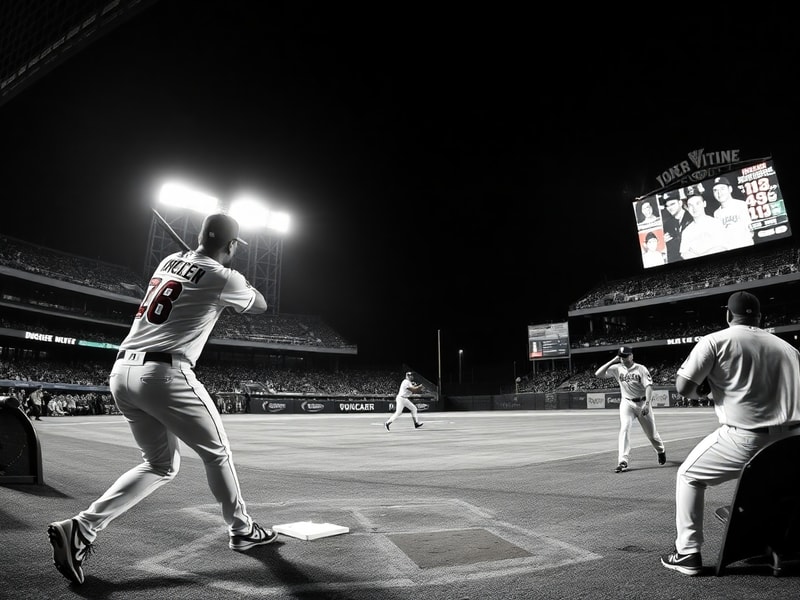
The Los Angeles Angels and Los Angeles Dodgers represent two distinct baseball identities within the same city. While they share the same metropolitan area, their rivalry exists more in perception than in direct competition. The Angels, established in 1961, and the Dodgers, who relocated from Brooklyn in 1958, have coexisted in Southern California for decades. Their matchups, known as the Freeway Series, carry cultural weight beyond mere standings.
The Origins of a Cross-Town Contrast
The Angels were founded as an American League expansion team, initially playing in Los Angeles before moving to Anaheim in 1966. The Dodgers, meanwhile, brought National League baseball to the West Coast with their arrival in L.A. The two teams first met in interleague play in 1997, a year after the Angels moved into Edison International Field (now Angel Stadium).
This rivalry is unique because it’s not rooted in decades of playoff battles or heated postseason clashes. Instead, it thrives on contrast. The Dodgers have historically been a team of star power and sustained success, winning multiple World Series titles. The Angels, though occasionally competitive, have struggled to match that consistency, often relying on individual brilliance—like the years of Mike Trout’s dominance—to stay relevant.
Key Moments in the Freeway Series
While the Angels and Dodgers don’t face each other frequently, their interleague matchups have produced memorable moments:
- 2002 World Series Champions: The Angels won their first and only championship that year, defeating the Giants in a dramatic seven-game series. Their path included a sweep of the Dodgers in June, a series that felt like a statement.
- 2019 Mike Trout vs. Clayton Kershaw: In a nationally televised game, Trout hit a go-ahead home run off Kershaw, showcasing the kind of individual duels that define this rivalry.
- 2021 Pitching Duel: Shohei Ohtani and Julio Urías faced off in a high-profile matchup, with Urías striking out Ohtani twice in a game that highlighted the contrast between the two teams’ pitching philosophies.
- 2023 Shohei Ohtani’s Debut in Blue: When Ohtani, then an Angel, returned to Dodger Stadium as a visitor, the crowd gave him a standing ovation—a rare moment of unity in a rivalry defined by division.
Cultural and Financial Implications
The Angels-Dodgers dynamic extends beyond the diamond. Financially, the Dodgers have long been one of baseball’s most valuable franchises, thanks to lucrative TV deals and consistent success. The Angels, while profitable, have lagged behind in revenue generation, partly due to their inconsistent performance and the challenges of competing in a market dominated by the Dodgers.
Culturally, the rivalry reflects broader themes in Los Angeles sports. The Dodgers embody the city’s blue-collar, immigrant-rooted history, while the Angels represent a more corporate, Disney-influenced era. The Angels’ branding—once tied to the “Anaheim Angels” and later rebranded as the “Los Angeles Angels of Anaheim”—has mirrored their struggles with identity, both on and off the field.
Why This Rivalry Matters More Than You Think
Unlike traditional rivalries fueled by geographic proximity or historical grudges, the Angels-Dodgers feud is about something subtler: market identity. Los Angeles is one of the few cities where two MLB teams can coexist without direct competition for fan loyalty. Yet, their interleague matchups serve as a referendum on the city’s baseball culture.
The Dodgers’ recent dominance—including multiple World Series appearances and a roster packed with superstars—has overshadowed the Angels, who have cycled through stars like Trout and Ohtani without sustained postseason success. This disparity raises questions about the Angels’ ability to build a championship-caliber team in a market where the Dodgers set the standard.
For fans, the rivalry is less about hatred and more about pride. Dodgers supporters dismiss the Angels as a secondary team, while Angels fans argue that their players are just as elite—if not more so—than their cross-town counterparts. The 2022 trade deadline, when the Angels sent Brandon Drury to the Dodgers, added a layer of personal drama, underscoring how these matchups can feel even when the stakes are lower.
The Future of the Freeway Series
With Shohei Ohtani’s free agency looming and the Angels’ front office under scrutiny, the next chapter of this rivalry could shift dramatically. If Ohtani were to sign with the Dodgers, it would instantly elevate the Angels-Dodgers dynamic into something resembling a true rivalry. Conversely, if the Angels finally build a team around Trout and Ohtani that competes consistently, their matchups with the Dodgers could take on new meaning.
For now, the rivalry remains a sideshow to the Dodgers’ championship aspirations and the Angels’ quest for relevance. But in a city as fragmented as Los Angeles, even a secondary rivalry can spark passion. The Freeway Series may never achieve the intensity of Yankees-Red Sox or Dodgers-Giants, but it offers something just as compelling: a study in contrasts, ambition, and the enduring allure of baseball in Southern California.
As interleague play continues to evolve, so too will this rivalry. Whether through individual performances, managerial decisions, or the occasional playoff implications, the Angels and Dodgers will keep providing baseball fans with reasons to tune in—even if just for a few games a year.
For more on the evolution of MLB rivalries and franchise dynamics, explore our Analysis and Sports sections on Dave’s Locker.
Conclusion
The Angels vs. Dodgers rivalry is a reminder that not all baseball rivalries are born from hatred or history. Sometimes, they’re born from contrast, from the tension between expectation and reality, from the struggle to carve out an identity in a crowded market. In Los Angeles, where dreams are as big as the Hollywood sign, this rivalry is about more than wins and losses. It’s about what it means to be a baseball team in a city that demands excellence.
The next time the Angels and Dodgers take the field, pay attention not just to the scoreboard, but to the story unfolding in front of you. It’s a tale of two teams, one city, and the enduring allure of baseball in the City of Angels.