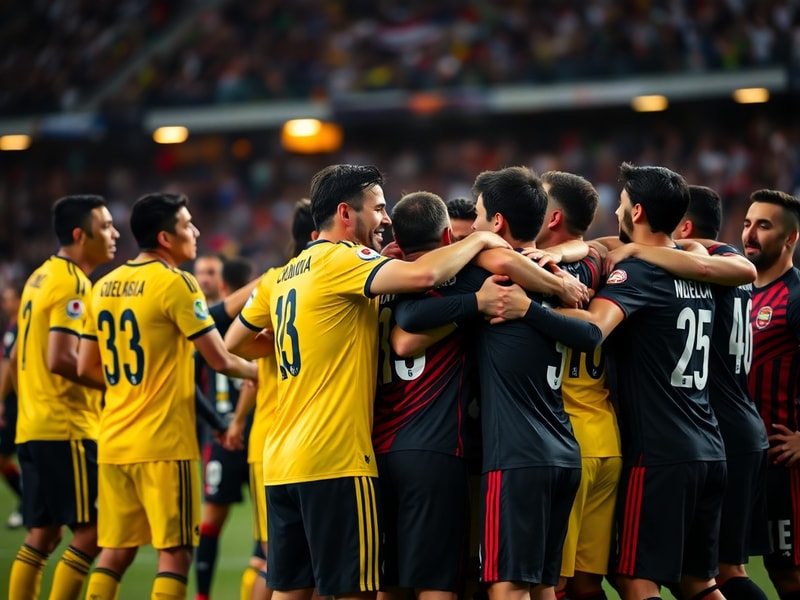
When Colombia faced Jordan in an international friendly last month, the matchup wasn’t just another game on the calendar. It was a collision of contrasting football philosophies—Colombia’s free-flowing creativity against Jordan’s disciplined pragmatism. The 2-0 result for Colombia masked deeper tactical intricacies that revealed more than just a scoreline.
The game took place in Amman, under the watchful gaze of a passionate home crowd. Jordan, ranked 66th in the FIFA standings, entered the match with a reputation for resilience, while Colombia, sitting at 12th, brought flair and attacking intent. What unfolded was a microcosm of modern football’s shifting dynamics, where preparation and adaptability often outweigh raw talent.
Tactical Blueprint: How Colombia Adapted
Colombia’s manager made a bold decision before the match: deploy a 4-2-3-1 formation with a double pivot designed to stifle Jordan’s midfield creativity. Juan Guillermo Cuadrado was stationed on the right wing, tasked not only with crossing but also tracking back to support the defense. This positional discipline frustrated Jordan’s attempts to build from the back.
In midfield, Colombia relied on a deep-lying playmaker, Jefferson Lerma, to dictate tempo while shielding the back four. This allowed the more creative players—James Rodríguez and Luis Díaz—to drift into half-spaces, where Jordan’s midfielders struggled to contain them. Colombia’s high press, particularly in the first 20 minutes, forced several rushed clearances from Jordan’s defenders, setting the tone for the game.
The second half saw adjustments. With a 1-0 lead, Colombia dropped slightly deeper, inviting Jordan forward before exploiting the counter. This tactical flexibility is becoming a hallmark of modern South American sides under European-influenced management.
Jordan’s Grit: A Performance Built on Structure
Jordan entered the match with a clear game plan: absorb pressure, limit turnovers in dangerous areas, and rely on set-pieces to create chances. Their defensive shape was compact, with a mid-block that compressed space between the lines. This made it difficult for Colombia to play through the thirds, forcing them to go wide or attempt long passes into the box.
Despite the loss, Jordan’s performance revealed their evolution. Their defensive organization under manager Hussein Ammouta is now more sophisticated than ever. They pressed in waves when the opportunity arose, particularly in the 60th minute when a quick interchange between Musa Al-Taamari and Yazan Al-Naimat nearly caught Colombia off guard.
Where Jordan struggled most was in transition. Every time they won the ball, they lacked the individual brilliance to break down Colombia’s low block. Their two best chances came from corners—clear evidence of their reliance on dead-ball situations. This reliance, while pragmatic, highlights an ongoing challenge: converting possession into quality chances.
Key Takeaways from the Match
- Tactical Discipline Wins Games: Colombia’s ability to shift between high press and low block showed why adaptability is now a prerequisite for success at the international level.
- Set-Pieces Remain a Double-Edged Sword: Jordan created their best chances from dead-ball situations, but poor delivery limited their effectiveness. Colombia, meanwhile, punished Jordan’s set-piece weaknesses with clinical finishes.
- Midfield Mastery Decides Tight Games: The battle between Lerma and Jordan’s creative trio—Khalil Bani Attiah, Ahmed Samir, and Al-Taamari—was a microcosm of midfield control deciding matches.
- Home Advantage Matters, But Not Enough: Jordan’s crowd fueled their intensity, yet their inability to capitalize on moments of pressure exposed mental fragility under pressure.
Broader Implications for Both Teams
The result extends beyond a single match. For Colombia, it reinforces their status as a team in transition—no longer the fearsome attacking unit of James Rodríguez’s prime, but a side evolving under new leadership. Their next challenge, a World Cup qualifier against Uruguay, will test whether this tactical maturity can be sustained against higher-ranked opponents.
For Jordan, the performance was a statement of intent. While they remain outside the top 50 in FIFA rankings, their defensive structure and set-piece threat suggest they are no longer a pushover. Their upcoming AFC Asian Cup campaign will be their biggest test yet, and performances like this against top opposition provide valuable experience.
What’s clear is that both teams are moving in different directions. Colombia is refining its identity, while Jordan is building one. The gap between them may be narrowing—not in terms of results, but in terms of ambition and professionalism.
Looking Ahead: What Comes Next?
Colombia’s next fixture is against a tougher opponent in Uruguay, a team that shares similar ambitions. If they can replicate this level of tactical discipline, they could secure a crucial point or even a win. Their manager’s ability to rotate and adapt will be key, especially with players like Radamel Falcao nearing the end of his international career.
Jordan, meanwhile, must use this match as a springboard. Their defensive solidity is commendable, but they need to develop a more proactive style. Their upcoming AFC Asian Cup campaign will be their chance to showcase progress, and performances like this against strong sides will boost confidence.
One thing is certain: football is no longer just about talent. It’s about systems, preparation, and the ability to adjust. Colombia showed why. Jordan showed promise. Both will continue to evolve—and the rest of the world should pay attention.
For fans of the game, this match was more than a friendly. It was a reminder that football’s beauty lies in its unpredictability, and that even underdogs can teach giants a lesson or two.
As the dust settles, one question lingers: Will we see Colombia and Jordan face off again in a more high-stakes setting? If their current trajectories continue, the answer might be yes—and soon.
For more analysis on international football tactics, visit our Sports section or our Analysis archive.