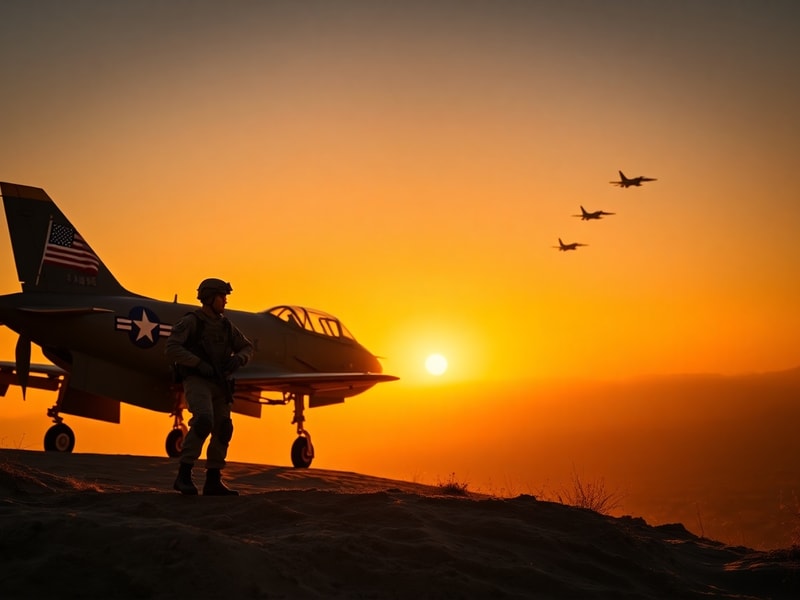
The United States Armed Forces stand as the backbone of national defense and global stability. Comprising the Army, Navy, Air Force, Marine Corps, Space Force, and Coast Guard, this unified military structure operates under the Department of Defense. With over 1.3 million active-duty personnel and nearly 800,000 reserve members, it remains the most technologically advanced and globally deployed military force in history.
Beyond its sheer size, the U.S. military serves multiple roles: deterring aggression, responding to crises, and projecting power across oceans and continents. Its reach extends from cyber warfare units to special operations forces deployed in nearly every time zone. But how did this institution evolve? What are its core components today? And what challenges does it face in an era of shifting geopolitical tensions?
The Branches and Their Core Responsibilities
Each branch of the U.S. Armed Forces is uniquely structured and trained for specific missions, though they often operate in integrated ways during major conflicts or humanitarian missions.
- United States Army: The oldest and largest branch, responsible for land-based operations. It includes infantry, armor, aviation, and artillery units. The Army also plays a key role in disaster relief, such as during Hurricane Katrina and the 2023 Turkey-Syria earthquake response.
- United States Navy: A global force operating 11 aircraft carriers, dozens of submarines, and hundreds of surface vessels. It ensures sea control, conducts maritime security, and projects air power through carrier strike groups.
- United States Air Force: Dominates air and space domains with over 5,000 aircraft, including stealth fighters, bombers, and satellites. It leads in intelligence, surveillance, reconnaissance (ISR), and rapid global strike capabilities.
- United States Marine Corps: A rapid-response expeditionary force trained for amphibious assaults and expeditionary operations. The Marines are often the first boots on the ground in crises, from the Middle East to the Pacific.
- United States Space Force: The newest branch, established in 2019, focuses on protecting U.S. interests in space. It manages satellite networks, missile warning systems, and emerging threats like anti-satellite weapons.
- United States Coast Guard: Operates under the Department of Homeland Security in peacetime but can be transferred to the Navy during war. It enforces maritime law, conducts search and rescue, and interdicts drug smuggling.
While each branch has distinct roles, joint operations are increasingly common. For instance, during the 2020 withdrawal from Afghanistan, every branch contributed to the largest non-combatant evacuation in U.S. history, involving over 5,000 troops and complex coordination between Army helicopters, Air Force transport planes, and Marine security details.
Modernization and Technological Leadership
The U.S. military is not just large—it is a pioneer in military technology. Over the past decade, the Department of Defense has invested heavily in artificial intelligence, hypersonic weapons, unmanned systems, and quantum computing.
One standout initiative is the National Defense Strategy, which prioritizes long-range strike capabilities, resilient communications, and space-based missile defense. Programs like the B-21 Raider bomber, the Columbia-class submarine, and the XQ-58 Valkyrie drone reflect this push toward next-generation warfare.
However, technological advantage comes with risks. Cyber warfare has emerged as a critical battleground. The 2020 SolarWinds hack, attributed to Russian operatives, exposed vulnerabilities in military logistics and communications. In response, the Pentagon created the Cybersecurity Maturity Model Certification (CMMC) to standardize security practices across contractors and bases.
Global Presence and Strategic Alliances
The U.S. military maintains approximately 750 overseas installations in 80+ countries. These range from large bases like Ramstein Air Base in Germany to small forward operating sites in the Pacific. This global footprint enables rapid deployment and strengthens alliances with NATO, Japan, South Korea, and Australia.
Alliances are not just about geography—they are about interoperability. During NATO’s 2023 Baltic Air Policing mission, U.S. F-35s flew alongside German and Polish jets to deter Russian air incursions. Similarly, joint exercises like RIMPAC, the world’s largest maritime drill, bring together forces from 25 nations to practice amphibious landings and anti-submarine warfare.
Yet, global presence also invites scrutiny. Critics argue that overseas bases drain resources and provoke geopolitical tensions. For example, the U.S. withdrawal from Afghanistan in 2021 raised questions about the sustainability of long-term troop commitments in unstable regions.
Challenges: Recruitment, Retention, and Public Perception
Despite its prestige, the U.S. military faces growing challenges in recruitment and retention. The Army missed its 2023 recruiting goal by 25%, and the Air Force fell short by 10%. Several factors contribute to this trend:
- Competition with the private sector: Tech giants and defense contractors offer higher salaries and flexible work environments.
- Physical and mental health concerns: Recruits must meet rigorous fitness standards, and mental health support remains uneven across units.
- Public skepticism: A 2023 Pew Research poll found only 37% of Americans aged 18-29 view the military favorably, down from 50% in 2018.
To address these issues, the Department of Defense has expanded outreach programs targeting STEM graduates, women, and historically underrepresented groups. It has also increased signing bonuses and streamlined enlistment waivers for minor disciplinary records.
Another challenge lies in public perception. While military service is widely respected, fewer Americans have direct connections to it. Over 70% of active-duty personnel come from military families, creating a gap between service members and civilian society. This disconnect can lead to misunderstandings about military life, budget priorities, and the realities of modern conflict.
Conclusion: A Force in Transition
The United States Armed Forces remain a cornerstone of global security, but the nature of that role is evolving. Technological innovation, shifting alliances, and changing public attitudes all demand adaptation. The military is responding with agility—expanding cyber capabilities, rethinking recruitment strategies, and reaffirming partnerships with allies.
Yet, the ultimate test lies not just in hardware or strategy, but in human capital. As the world faces new threats—from AI-driven disinformation to climate-induced migration—the U.S. military must continue to attract and retain the best talent. Only then can it preserve its position as a stabilizing force in an increasingly complex world.
For those considering service or those simply seeking to understand its role, the U.S. Armed Forces represent more than just a fighting force. They are a reflection of national values, technological ambition, and the enduring need for preparedness in an uncertain era.