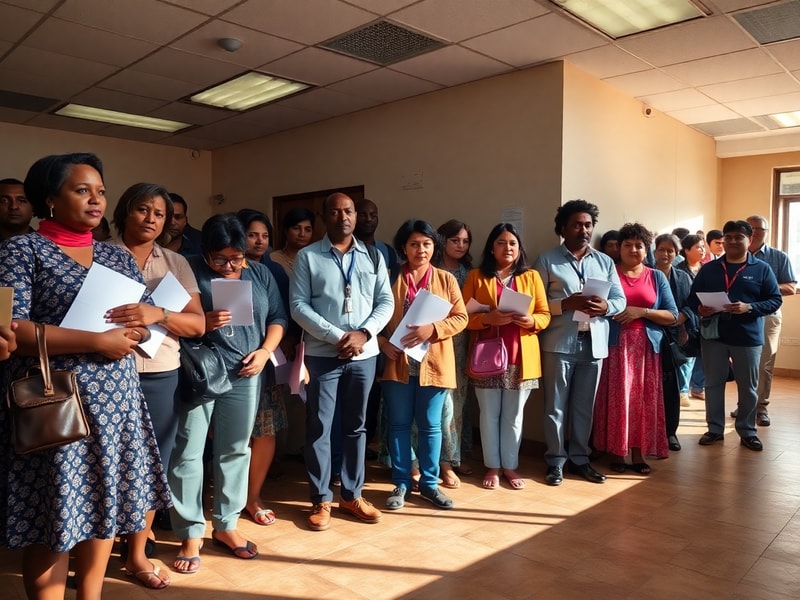
What Citizenship Really Means in a Globalized World
“`html
The Foundations of Citizenship
Citizenship is more than a legal status—it is a social contract between individuals and the communities they inhabit. Historically, citizenship emerged in ancient civilizations such as Athens and Rome, where it was tied to participation in civic life and allegiance to a city-state. Today, the concept has evolved into a multifaceted framework that encompasses rights, responsibilities, and identity.
At its core, citizenship grants individuals access to protections under law, including political participation, social services, and mobility within a nation. Yet this relationship is not unilateral. In return, citizens are expected to uphold shared values, contribute to public welfare, and abide by the rule of law. This dynamic reflects a balance between individual freedoms and collective responsibility—a balance constantly renegotiated through social movements, policy shifts, and technological change.
Legal Frameworks and National Identity
Each country defines citizenship differently, shaped by its history and values. Some nations, like the United States, operate under jus soli (right of the soil), granting citizenship to anyone born within the territory. Others, such as Germany, traditionally relied on jus sanguinis (right of blood), where citizenship is inherited through ancestry.
These distinctions have profound implications. For example, jus soli systems tend to be more inclusive of immigrants and second-generation residents, fostering a sense of belonging rooted in place. In contrast, jus sanguinis systems can preserve cultural continuity but may exclude long-term residents who lack ancestral ties. Over time, many countries have begun blending these models, reflecting the realities of global migration and demographic change.
National identity often becomes intertwined with citizenship laws. In France, the principle of laïcité—secularism—plays a central role in defining civic identity, requiring cultural assimilation as part of national belonging. Meanwhile, Canada’s policy of multiculturalism actively protects cultural diversity within its citizenship framework, emphasizing inclusion over assimilation. These approaches highlight how citizenship is not only a legal status but also a cultural narrative.
The Rise of Dual Citizenship and Global Mobility
One of the most significant shifts in modern citizenship is the normalization of dual citizenship. Once rare and sometimes prohibited, dual nationality is now permitted in over 100 countries. This reflects the realities of globalization, where individuals maintain ties across borders—whether through family, work, or cultural heritage.
Dual citizens often serve as bridges between nations, facilitating trade, diplomacy, and cultural exchange. Yet they also face complex obligations, such as tax reporting and military service, which can vary widely between countries. Some nations, like China, still restrict dual citizenship, requiring individuals to choose between nationalities upon adulthood.
Global mobility has further complicated the idea of citizenship. Programs like Portugal’s Golden Visa or Malta’s citizenship-by-investment schemes allow wealthy individuals to acquire EU passports in exchange for financial contributions. While these initiatives boost economies, they also spark debate about the commodification of citizenship and the dilution of its civic meaning.
Meanwhile, international organizations such as the United Nations have introduced concepts like global citizenship, advocating for a broader sense of belonging that transcends national borders. While not legally binding, this idea encourages solidarity on issues like climate change and human rights—proving that citizenship can exist beyond the confines of a passport.
Citizenship in the Digital Age: Rights, Activism, and Surveillance
Technology has transformed how citizenship is practiced and perceived. Social media platforms have become modern agoras, where citizens debate policy, organize movements, and hold governments accountable. The Arab Spring, Black Lives Matter, and climate strikes all demonstrate how digital networks amplify civic engagement across borders.
Yet digital citizenship carries risks. Governments increasingly monitor online activity under the guise of national security. China’s social credit system, for instance, assigns scores based on behavior, restricting access to services for those deemed disloyal. Meanwhile, misinformation and algorithmic bias threaten the integrity of public discourse, challenging the very foundation of informed civic participation.
For marginalized groups, digital spaces can be both liberating and perilous. Refugees and stateless persons, who lack formal citizenship, may find community online—but also face surveillance and exclusion. Platforms like AI-driven identity verification systems are being used to determine access to services, raising ethical questions about who truly belongs in a digital society.
Conclusion: A Living Concept in Flux
Citizenship today is less a fixed identity and more a living process—one that evolves with migration, technology, and shifting values. As borders become more porous and identities more fluid, the traditional definition of citizenship is being challenged. What does it mean to belong in a world where people move freely, ideas spread instantly, and loyalties are increasingly complex?
The answer may lie not in rigid legal definitions, but in the active practice of civic responsibility. Whether through voting, volunteering, or advocating for justice, citizenship is ultimately about participation. In an era of rapid change, the most resilient forms of citizenship will be those that remain inclusive, adaptable, and rooted in shared humanity.