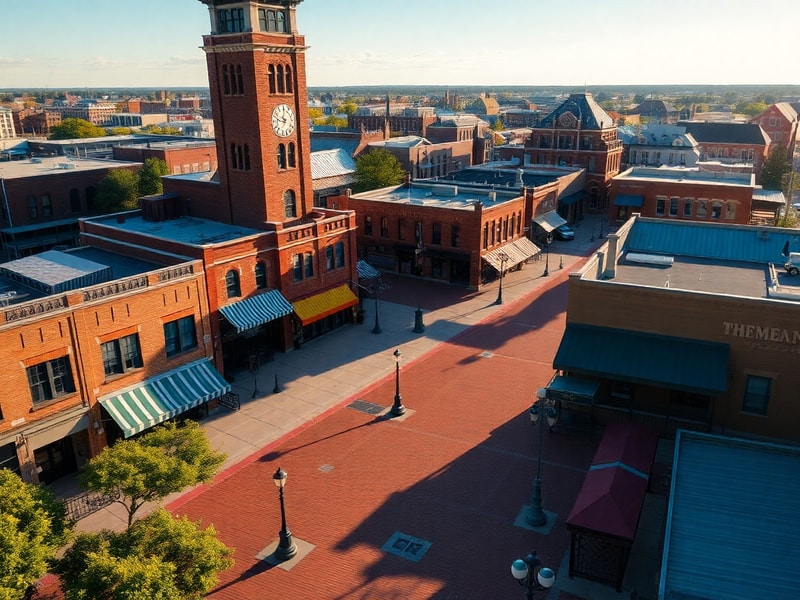
McKinney, Texas, often overshadowed by its larger neighbors like Dallas and Fort Worth, has quietly transformed into one of America’s most desirable suburban destinations. With a population nearing 200,000 and a reputation for affordability, safety, and economic opportunity, the city has become a model for balanced urban growth. Its blend of historic charm, modern amenities, and cultural diversity offers lessons for communities worldwide facing similar pressures of expansion and identity.
The city’s origins trace back to 1848, when it was founded near a natural spring. Originally a trading post for settlers moving westward, McKinney evolved into a hub for agriculture, particularly cotton. Today, its historic downtown district preserves this legacy with well-preserved 19th-century buildings, including the Collin County Courthouse, a striking example of Romanesque Revival architecture. This juxtaposition of old and new mirrors the experiences of many global cities—places where rapid modernization coexists with deep-rooted traditions.
Economic Resilience and Innovation
McKinney’s economic story is one of adaptability. In the early 20th century, the city thrived as a railroad and cotton-processing center. By the late 20th century, it had diversified into manufacturing, healthcare, and technology. Today, it ranks among the fastest-growing cities in the U.S., with a median household income above the national average and a low unemployment rate. This success stems from a business-friendly environment, top-rated schools, and strategic investments in infrastructure.
The city’s economic diversity is evident in its employment sectors. Major employers include healthcare providers like Medical City McKinney, financial services firms, and a burgeoning tech scene. The latter has been particularly notable, with companies like McKesson Corporation and local startups contributing to the city’s reputation as a business-friendly enclave. This mirrors global trends where secondary cities—rather than traditional metropolitan cores—are becoming engines of innovation. Places like Eindhoven in the Netherlands or Manchester in the UK have followed similar trajectories, leveraging niche strengths to attract investment and talent.
A Global Perspective on Suburban Growth
McKinney’s growth reflects broader patterns in suburbanization, a phenomenon reshaping cities from Asia to Europe. Unlike sprawling metropolises such as Los Angeles or Mumbai, where congestion and inequality are rampant, McKinney has managed to grow sustainably. Its master-planned communities, such as Craig Ranch and Serenity, offer a mix of housing options, green spaces, and amenities designed to foster community. This approach contrasts with the car-centric sprawl of mid-20th-century American suburbs, which often prioritized quantity over quality.
Globally, cities are grappling with how to accommodate growth without sacrificing livability. In Japan, suburban areas like Fukuoka have adopted policies to decentralize economic activity, reducing pressure on Tokyo. In Germany, cities like Freiburg have pioneered eco-friendly suburban developments that prioritize walkability and public transit. McKinney’s success suggests that smaller cities can achieve similar balance by focusing on infrastructure, education, and quality of life—key drivers of long-term prosperity.
Cultural Diversity and Community Identity
McKinney’s cultural fabric is as rich as its economic portfolio. The city’s population is a mosaic of ethnicities, with significant Hispanic, Asian, and African American communities. This diversity is reflected in its culinary scene, festivals, and educational institutions. For instance, the annual McKinney International Festival celebrates global cultures through music, dance, and food, drawing visitors from across North Texas. Such events are not just recreational; they foster social cohesion in an era where polarization is a global concern.
The city’s public schools, part of the highly regarded McKinney Independent School District, reflect this diversity. With programs in world languages, Advanced Placement courses, and partnerships with local universities, the district prepares students for a globalized workforce. This emphasis on education aligns with trends in countries like Finland and Singapore, where investment in human capital has been a cornerstone of economic success.
The Role of Arts and Public Spaces
Art and public spaces play a pivotal role in McKinney’s cultural identity. The Heard-Craig Center for the Arts, housed in a historic mansion, offers exhibitions, workshops, and performances that engage residents of all ages. Meanwhile, the city’s parks and trails, such as the 26-mile North Texas Tollway Authority (NTTA) Regional Trail, provide spaces for recreation and connection. These initiatives demonstrate how smaller cities can cultivate creativity and well-being without the resources of larger urban centers.
Globally, cities like Reykjavik in Iceland and Porto in Portugal have leveraged arts and culture to revitalize neighborhoods and attract tourism. McKinney’s approach is more modest but equally effective, proving that cultural vitality doesn’t require massive budgets—just vision and community engagement.
Challenges and the Path Forward
Despite its successes, McKinney faces challenges common to fast-growing cities. Housing affordability is a concern, with rising property values pricing out long-time residents. Traffic congestion, particularly on major arteries like Highway 380, has worsened as commutes to Dallas and other employment hubs grow longer. These issues mirror those in cities like Austin, Texas, or Bangalore, India, where rapid growth has outpaced infrastructure development.
To address these challenges, McKinney has turned to long-term planning. The city’s comprehensive plan, “McKinney 2040,” outlines strategies for sustainable growth, including mixed-use developments, expanded public transit options, and affordable housing initiatives. Such foresight is critical for cities worldwide, where unchecked growth often leads to social and environmental degradation.
The city’s approach also highlights the importance of community input. Public forums, surveys, and partnerships with local organizations ensure that development aligns with residents’ needs. This collaborative model is increasingly adopted in cities like Melbourne, Australia, where citizen engagement has shaped policies on everything from urban greening to digital infrastructure.
Lessons for the World
McKinney’s story offers several lessons for cities navigating growth and change. First, economic diversification is key to resilience. Cities that rely too heavily on a single industry—be it oil, manufacturing, or tech—are vulnerable to shocks. Second, investing in education and cultural amenities fosters a skilled workforce and cohesive community. Third, proactive planning and community engagement can mitigate the pitfalls of rapid growth, from traffic congestion to housing shortages.
These lessons resonate far beyond Texas. In Africa, cities like Kigali are adopting sustainable urban planning to avoid the mistakes of older metropolises. In Europe, towns are repurposing historic centers to attract remote workers and digital nomads. McKinney’s experience shows that even smaller cities can become laboratories for solutions that benefit communities globally.
Conclusion
McKinney, TX, is more than just a suburban success story—it’s a case study in balanced growth, cultural vitality, and community-driven development. Its ability to evolve while preserving its heritage offers a blueprint for cities worldwide facing similar challenges. As the world urbanizes at an unprecedented pace, places like McKinney remind us that progress doesn’t require sacrificing identity or livability. Instead, it demands innovation, collaboration, and a commitment to the people who call these cities home.
For observers and policymakers alike, McKinney stands as a testament to the power of thoughtful planning and community engagement. Its journey from a humble trading post to a dynamic suburb is a narrative that transcends borders, offering insights for anyone invested in the future of cities.