racing
“`html
The Need for Speed: Why Racing Captures Our Imagination
Few human experiences blend raw emotion with technical precision quite like racing. It’s a sport that distills competition into its purest form: man versus machine, strategy versus instinct, speed versus control. Whether on a winding mountain road, a sun-baked oval track, or a digital racetrack in a video game, racing demands mastery over chaos.
This obsession with speed isn’t new. Ancient chariot races thrilled crowds in Rome. The first organized automobile race in 1894 stretched 79 miles from Paris to Rouen. Today, racing has splintered into countless disciplines—Formula 1, NASCAR, drifting, endurance racing, even e-sports versions like sim racing. Each variant offers its own flavor of intensity, yet all share a fundamental truth: racing is as much about the psychology of competition as it is about mechanical prowess.
The Psychology Behind the Thrill
What draws millions to watch—and millions more to participate—in racing? The answer lies in the brain’s response to speed and risk. Studies in neuroscience show that high-speed activities trigger the release of dopamine, the neurotransmitter linked to pleasure and reward. When a driver navigates a corner at 180 mph or a rider leans into a turn on a MotoGP bike, the brain experiences a surge of adrenaline and focus that’s nearly impossible to replicate in everyday life.
But racing isn’t just about individual thrill-seeking. It’s a team sport. A Formula 1 driver may be the face of victory, but behind every podium finish is a crew of engineers, strategists, and mechanics working in unison. This duality—individual brilliance versus collective effort—creates a narrative that resonates deeply with audiences. Fans don’t just cheer for a car; they cheer for a system, a culture, a story unfolding in real time.
Consider the psychological pressure in motorsport. Drivers must maintain razor-sharp focus for hours, often under life-or-death conditions. A single lapse in concentration can end a race—or a career. This high-stakes environment fosters respect for precision and humility in the face of mechanical limits. It’s a humbling reminder that even the fastest machines are only as good as the humans who operate them.
The Evolution of Racing Technology
Racing has always been a proving ground for automotive innovation. Nearly every major advancement in car technology—disc brakes, aerodynamics, hybrid powertrains—has first appeared on a racetrack. Formula 1, in particular, operates as a rolling laboratory. Teams spend millions developing hybrid power units, energy recovery systems, and advanced aerodynamics that later trickle down to consumer vehicles.
The push for speed has also driven safety innovations. The halo device in F1, introduced after Romain Grosjean’s fiery crash in 2020, has saved lives. Head-and-neck restraint systems, reinforced cockpits, and improved fireproof suits all emerged from the crucible of competition. Racing doesn’t just chase speed—it demands safer speed.
Digital technology has expanded racing’s reach. Sim racing platforms like iRacing and Assetto Corsa allow amateurs to experience the thrill of competition from their living rooms. These virtual environments replicate real-world physics with astonishing accuracy, offering a bridge between couch gaming and professional motorsport. Even esports leagues now mirror real-world series, with teams like McLaren and Ferrari fielding digital squads.
Key Milestones in Racing Technology
- 1950s: Introduction of disc brakes in racing, later adopted in road cars.
- 1960s: Aerodynamic wings first used in F1, revolutionizing downforce.
- 1990s: Active suspension systems debuted in F1, though later banned for cost.
- 2010s: Hybrid power units introduced in F1, paving the way for road-going hybrids.
- 2020s: AI-driven telemetry and machine learning optimize race strategies in real time.
Racing as a Cultural Mirror
Beyond the technical and psychological dimensions, racing reflects broader societal values. The 1960s and 1970s saw racing as a symbol of freedom and rebellion—think Steve McQueen’s Le Mans or the muscle car era. Today, racing is increasingly tied to sustainability. Formula 1’s push toward carbon-neutral racing by 2030 and the rise of electric series like Formula E signal a shift toward eco-conscious competition.
Racing also serves as a microcosm of globalization. Teams, drivers, and sponsors hail from every corner of the world. The Monaco Grand Prix isn’t just a race; it’s a global spectacle where billionaires, celebrities, and engineers converge. This interconnectedness mirrors the modern economy, where borders blur and collaboration is essential.
Yet racing isn’t immune to criticism. The sport’s environmental impact, safety risks, and exorbitant costs have sparked debate. Should a 20-car field consume enough fuel to power a small town for a day? Is the spectacle worth the risk of life-altering injuries? These questions force the industry to confront its contradictions. The answer isn’t to abandon racing but to evolve it—toward cleaner, safer, more inclusive forms of competition.
The Future of Racing: Where Do We Go From Here?
The next frontier in racing is sustainability and accessibility. Formula 1’s hybrid era is just the beginning. The sport is exploring 100% sustainable fuels, and Formula E has proven that electric racing can be exciting without compromising performance. Meanwhile, grassroots series like NASCAR’s Pro Late Model and amateur endurance races keep the spirit of competition alive for everyday drivers.
Technology will continue to democratize racing. Affordable electric go-karts, VR training simulators, and online leagues are lowering barriers to entry. The dream of becoming a professional racer is no longer confined to those with wealthy backers or factory contracts. Anyone with talent and determination can rise through the ranks—digitally, if not yet physically.
Yet, for all its evolution, racing’s core appeal remains unchanged. It’s a celebration of human ingenuity, courage, and the relentless pursuit of perfection. Whether on a track or a screen, racing reminds us that progress isn’t just about moving faster—it’s about moving smarter, safer, and more sustainably.
What’s Next for Racing?
- Sustainable Fuels: F1 and other series are testing carbon-neutral fuels derived from non-food biomass.
- AI and Data: Machine learning will refine race strategies, predicting pit stops and tire wear with unprecedented accuracy.
- Fan Engagement: Augmented reality could let viewers switch between driver POVs in real time.
- Accessibility: More affordable electric racing series aim to attract diverse talent, including women and drivers from underrepresented regions.
Racing is more than a sport. It’s a lens through which we examine technology, culture, and human ambition. As it hurtles toward the future, it challenges us to ask: How fast is too fast? How green can we go? And what does victory even mean in an era of climate crisis and digital transformation?
One thing is certain. The need for speed isn’t going away. It’s just getting smarter.
—
METADATA
{
“title”: “Why Racing Remains the Ultimate Test of Speed and Skill”,
“metaDescription”: “From F1 to sim racing, explore how speed, technology, and psychology shape motorsport’s enduring appeal.”,
“categories”: [“Sports”, “Technology”],
“tags”: [“motorsport”, “racing history”, “Formula 1”, “sim racing”, “automotive innovation”],
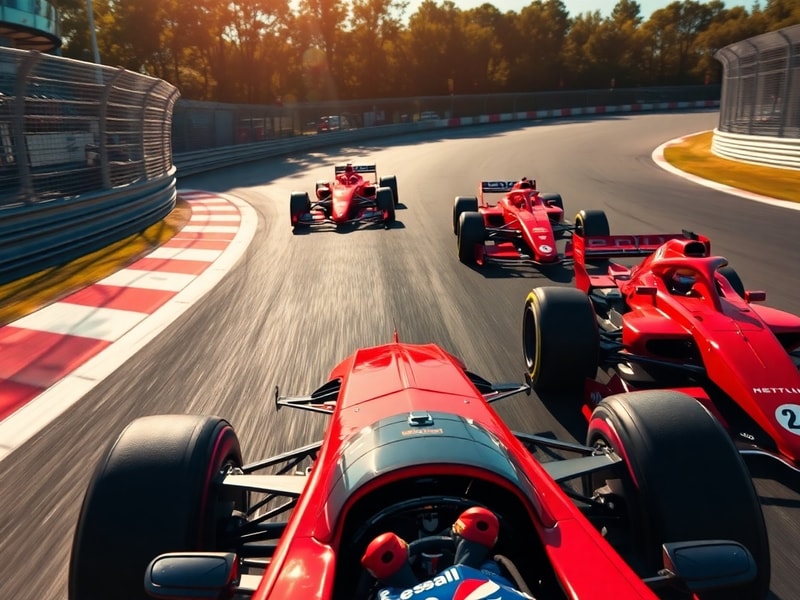
“imageDescription”: “A dynamic racing scene featuring a Formula 1 car mid-corner on a modern street circuit, surrounded by blurred motion effects to emphasize speed. The setting includes a mix of sleek grandstands and urban architecture under a bright, slightly overcast sky.”
}
—END METADATA—
“`